




Trekking poles Wide baskets vs narrow baskets – when to use each?
Baskets—those small discs just above the tip of your trekking pole—are among the most overlooked yet critical components for terrain-specific performance. They serve one primary purpose: preventing the pole tip from sinking too deeply into soft ground. Choose the wrong basket, and you risk either punching through snow without support or dragging unnecessary resistance across hardpack. Choose the right one, and your poles become perfectly tuned to the conditions beneath your feet. This guide explains the functional differences between wide and narrow baskets, the terrain each is designed for, and how to make the right choice for your adventure.
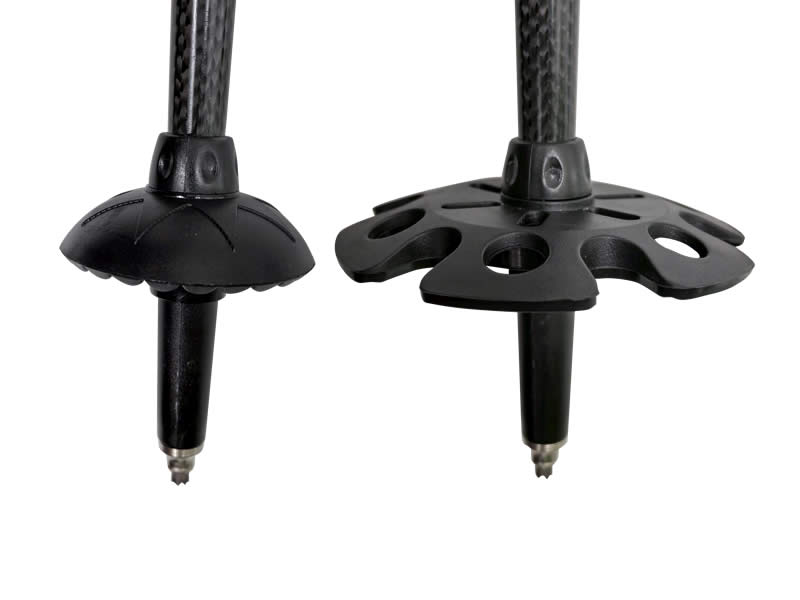
Recommended trekking pole purchase link: https://s.click.aliexpress.com/e/_c4M7OWaN
What Baskets Actually Do
A trekking pole basket acts as a load-bearing platform. When you plant your pole on soft ground—whether snow, mud, sand, or loose soil—the tip penetrates first. The basket then contacts the surface, distributing your weight across a larger area and preventing the pole from plunging deeper than intended. Without a basket (or with one too small), your pole sinks excessively, robbing you of stability and forcing you to lift the pole higher with each stride—a surprisingly tiring inefficiency.
Conversely, on firm surfaces, a large basket is unnecessary and actively detrimental. It creates drag, catches on rocks and roots, and adds weight without benefit.
Wide Baskets: For Soft, Deep Conditions
Typical diameter: 3 to 5 inches (75–125 mm)
Best for:
- Powder snow: The classic use. Wide baskets prevent poles from sinking into deep snow, allowing efficient poling for snowshoeing, winter hiking, and mountaineering.
- Loose mud: In boggy or rain-soaked terrain, wide baskets keep poles from plunging into thick mud, maintaining your rhythm and preventing stuck poles.
- Deep sand: On beach hikes or desert dunes, wide baskets distribute weight so poles don’t disappear into the sand with each plant.
- Soft, loamy soil: After heavy rain or in freshly tilled ground, wide baskets provide extra floatation.
How they work: The broad surface area acts like a small snowshoe for your pole. Instead of the tip driving deep and the pole leaning at an angle, the basket stops descent at the surface, giving you consistent purchase and a stable platform to push off.
Trade-offs: Wide baskets are heavy, create noticeable drag on firm surfaces, and can snag on brush, rocks, or tree roots. They are also less precise—you feel less of the tip’s contact with the ground.
Narrow Baskets: For Firm, Packed Surfaces
Typical diameter: 1.5 to 2.5 inches (38–63 mm)
Best for:
- Hardpack snow: On groomed trails, packed snow, or icy crust, narrow baskets provide just enough resistance to prevent the tip from sinking while minimizing drag.
- Summer trails: For dirt, gravel, and rocky terrain, narrow baskets (or none at all) allow the carbide tip to engage directly with the ground while preventing the pole from punching through loose surface layers.
- Mud with firm base: When there is a thin layer of mud over solid ground, narrow baskets keep the tip from sinking too deep without the drag of a wide basket.
- Mixed terrain: When you encounter varied conditions (rock, dirt, occasional soft patches), narrow baskets offer a reasonable compromise.
How they work: Narrow baskets are essentially “just enough.” They stop the tip from sinking in shallow softness but allow the carbide tip to bite into hard surfaces directly. The reduced surface area also means less resistance when lifting and planting, keeping your stride efficient.
Trade-offs: In deep snow or soft mud, narrow baskets will not prevent sinking. Your poles will plunge deep, forcing you to lift higher and work harder.
When to Use No Baskets
Many hikers remove baskets entirely for summer use on firm, rocky trails. Without a basket:
- The carbide tip engages fully with rock and hardpack for maximum grip
- There is no drag or snagging
- Weight is minimized
Caveat: On loose gravel or scree, a basket (even a narrow one) prevents the pole from punching through unexpectedly. Consider conditions before going basket-free.
Interchangeable Systems: The Smart Approach
The most versatile poles feature interchangeable basket systems. A simple twist or snap allows you to swap baskets as conditions change:
- Spring skiing? Wide baskets.
- Summer backpacking? Narrow baskets or none.
- Fall mud season? Medium-width baskets.
If your poles do not have interchangeable baskets, you can often purchase aftermarket baskets that fit over the tip (though fit varies by brand). For serious hikers who encounter multiple seasons and terrains, interchangeable systems are a worthwhile investment.
Comparison Summary
| Condition | Wide Basket (3–5″) | Narrow Basket (1.5–2.5″) | No Basket |
|---|---|---|---|
| Deep powder snow | Essential | Ineffective | Ineffective |
| Packed snow | Good | Ideal | Poor (sinks) |
| Loose mud | Ideal | Marginal | Poor |
| Deep sand | Essential | Marginal | Ineffective |
| Summer dirt/gravel | Overkill | Ideal | Good |
| Rocky terrain | Poor (snags) | Good | Ideal |
| Weight/drag | High | Moderate | Minimal |
The Verdict
Choose wide baskets when you are moving through soft, deep surfaces—powder snow, thick mud, or deep sand. They prevent sinking, maintain your rhythm, and reduce the effort of each stride.
Choose narrow baskets (or none) for firm, packed surfaces—summer trails, hardpack snow, and rocky terrain. They provide just enough resistance without unnecessary drag, keeping your poles responsive and efficient.
For hikers who travel across seasons or varied landscapes, an interchangeable basket system is the ultimate solution. One set of poles, a few interchangeable baskets, and you are equipped for whatever the trail throws at you.
Match your baskets to the ground beneath your feet. Your poles—and your shoulders—will thank you.




