




Bent pole repair – fix or replace?
A bent trekking pole is a common sight after a hard fall, a misstep in a rock crevice, or simply years of hard use. The question that follows is almost always the same: can I bend it back, or do I need to buy a new pole? The answer depends entirely on the material, the severity of the bend, and your tolerance for risk. This guide walks you through the decision process, explaining when a repair might be acceptable and when replacement is the only safe option.
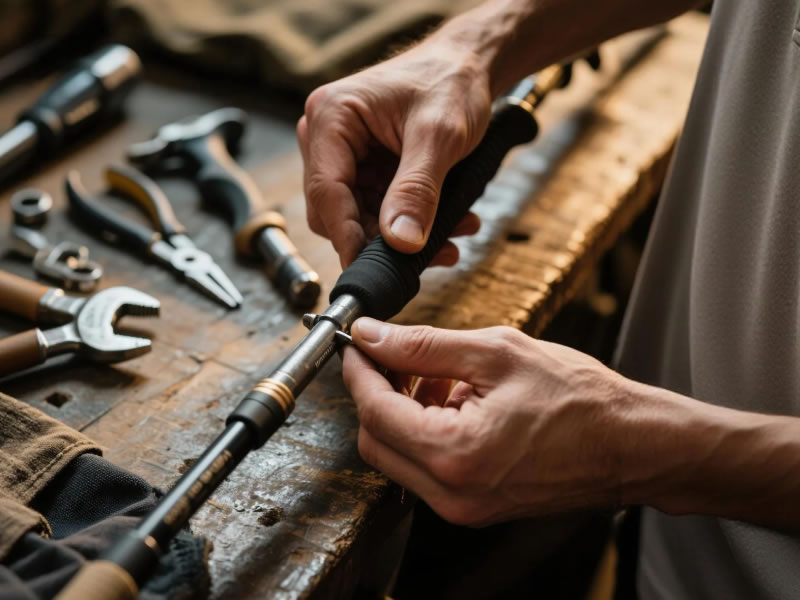
Recommended trekking pole purchase link: https://s.click.aliexpress.com/e/_c4M7OWaN
Understanding How Materials Fail
Aluminum is ductile. When overloaded, it bends rather than snaps. A bend in an aluminum pole is visible evidence that the material has yielded—it has passed its elastic limit and undergone plastic deformation. The metal in and around the bend is now work‑hardened and weaker than the surrounding areas. However, because aluminum gives warning before failing, a carefully straightened pole can sometimes be used again for light to moderate duty.
Carbon fiber behaves very differently. Carbon is brittle. It does not bend; it cracks, delaminates, or shatters. If a carbon pole appears bent, what you are actually seeing is internal structural failure—the fibers have broken or separated from the resin. Straightening a carbon pole is impossible; any attempt will further damage the compromised structure. A bent carbon pole is a failed pole.
Assessing the Bend
Before deciding on repair or replacement, evaluate:
- Material: Aluminum or carbon? This is the primary factor.
- Location: Is the bend in a section that can be replaced individually (e.g., a lower section that unscrews) or in a fixed section of a folding pole?
- Severity: A gentle, gradual curve without a crease is less serious than a sharp kink or a bend at a joint.
- Lock mechanism: Does the bend affect the lock’s ability to secure the section?
Repairing Aluminum Poles
For a minor, gradual bend in a straight section of an aluminum pole, careful straightening may restore functionality:
- Remove the lower section from the pole (if possible) to work on it separately.
- Place the bent section on a flat, solid surface (a piece of plywood or a workbench).
- Apply slow, controlled pressure—never strike the pole with a hammer. Use your body weight gradually, rolling the section until it is reasonably straight.
- Inspect for creases or cracks. If you see either, the section is done—replace it.
- Reassemble and test the lock. If the lock no longer holds securely because the tube is no longer perfectly round, the section must be replaced.
Even after successful straightening, the aluminum is weakened. A pole that has been bent and straightened should be considered downgraded. It may still serve for day hikes or light loads, but it is no longer reliable for heavy backpacking or technical terrain. Mark the pole so you remember which one was damaged.
Do not attempt to straighten a bend at a joint—the stress on the locking mechanism will almost certainly compromise its function.
Repairing Carbon Poles
Do not attempt to straighten carbon fiber poles. If a carbon pole is bent:
- It is structurally compromised. Internal fibers have broken.
- Using it risks sudden, catastrophic failure that could cause a fall or injury.
- If the pole is a folding Z‑pole with a replaceable section, order a new section from the manufacturer. Many brands (Black Diamond, Leki, Gossamer Gear) sell individual sections.
- If the pole is a one‑piece carbon design and not repairable by replacing a section, retire it entirely.
There is no safe “field repair” for a bent carbon pole.
When Replacement Is the Only Answer
Replace the pole (or the affected section) if:
- The material is carbon.
- The aluminum bend includes a crease or crack.
- The bend affects the lock—the section no longer holds securely.
- The pole is a folding Z‑pole and the bend is in the upper sections that contain the locking buttons.
- You are unsure about the repair or will be using the pole for heavy loads, remote trips, or technical terrain.
Cost‑Benefit Analysis
| Scenario | Action | Cost |
|---|---|---|
| Minor aluminum bend, no crease, light‑duty use | Straighten carefully; mark as downgraded | $0 |
| Aluminum bend with crease | Replace section | $20–40 |
| Carbon bend (any) | Replace section or whole pole | $20–80 (section) or $100–200 (new poles) |
| Folded pole (Z‑pole) with bent section | Replace individual section (if available) | $15–40 |
| Lock damaged by bend | Replace section or pole | Varies |
A replacement section is almost always cheaper than a new pair of poles. However, if your poles are older and replacement sections are no longer available, investing in a new pair may be the most sensible path.
The Safety Bottom Line
A bent pole is a warning that the pole has been stressed beyond its normal operating range. While a carefully straightened aluminum pole can serve for many more miles, it is no longer as strong as it once was. If you choose to repair, reserve that pole for less demanding hikes. For carbon, there is no repair—only replacement.
When in doubt, replace. The cost of a new pole is small compared to the potential injury from a pole that fails on steep, exposed terrain. Trust your gear, and when it tells you it has been hurt, listen.
Bend it back carefully, or let it go. Your safety is worth the price of a new section.




