




What is a heavy duty carabiner?
A heavy duty carabiner is a high-strength connecting device engineered for critical load-bearing applications where failure could result in serious injury or catastrophic consequences. Unlike standard carabiners used for everyday purposes, heavy duty carabiners undergo rigorous testing and certification to ensure they can withstand extreme forces in demanding environments. These essential safety tools serve as reliable connection points in climbing, rescue operations, industrial work, and outdoor adventures, providing the vital link between personnel and their safety systems.
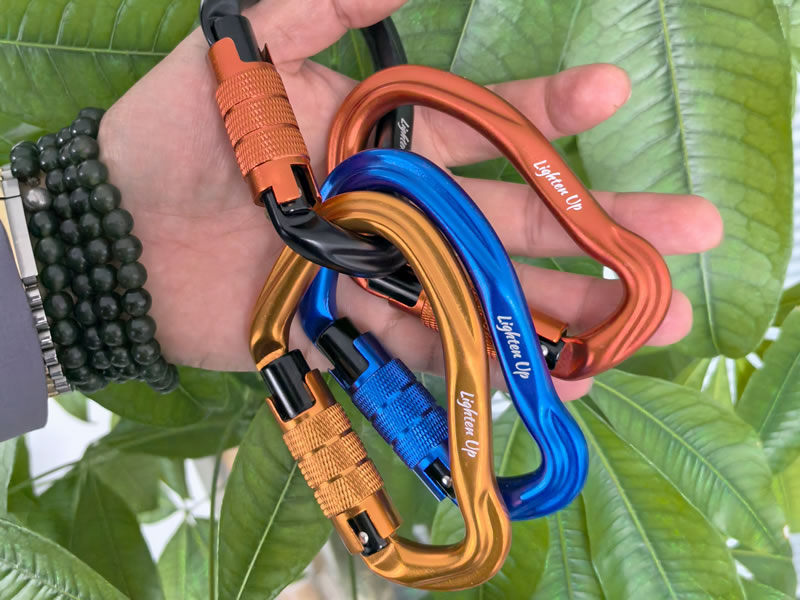
Defining Characteristics and Strength Ratings
Heavy duty carabiners are distinguished by their exceptional strength ratings, typically measured in kilonewtons (kN). One kilonewton equals approximately 225 pounds of force. These carabiners generally feature strength ratings of 22 kN (approximately 4,945 pounds) or higher, with many professional models exceeding 30 kN (6,744 pounds). The strength rating varies depending on the direction of force application:
Major Axis Strength (gate closed): Typically 22-30 kN for heavy duty models
Minor Axis Strength: Usually 7-10 kN, representing the carabiner's strength when force is applied across its width
Gate Open Strength: Generally 6-9 kN, indicating reduced strength when the gate is open
These ratings reflect minimum breaking strengths, meaning the carabiner should withstand at least these forces before failure. Professional-grade carabiners often far exceed these minimum requirements.
Materials and Construction
The performance of heavy duty carabiners depends significantly on their materials and manufacturing processes:
Aluminum Alloys: Most climbing carabiners use 7075 aluminum alloy, known for its excellent strength-to-weight ratio. These carabiners are lightweight yet incredibly strong, making them ideal for situations where weight matters, such as alpine climbing or rescue operations.
Steel Carabiners: For maximum strength and durability, steel carabiners offer superior resistance to abrasion and wear. While significantly heavier than aluminum counterparts, they excel in industrial settings, fixed anchor applications, and situations where the carabiner might be subjected to repeated loading or harsh environmental conditions.
Manufacturing Processes: High-quality heavy duty carabiners are typically forged rather than cast, creating a stronger molecular structure. The finishing process often includes anodizing for aluminum carabiners to enhance corrosion resistance and surface hardness.
Types of Heavy Duty Carabiners
Screw-Gate Carabiners: Feature a threaded locking sleeve that must be manually screwed shut. These provide reliable security but require user attention to ensure proper locking.
Auto-Locking Carabiners: Incorporate spring-loaded mechanisms that automatically lock when the gate closes. Examples include twist-lock, push-button, and ball-lock systems. These offer enhanced safety by reducing human error.
Non-Locking Carabiners: While not typically considered "heavy duty" for life-support applications, some non-locking carabiners have high strength ratings and are used in appropriate contexts where accidental opening isn't a concern.
Certification Standards and Testing
Reputable heavy duty carabiners undergo rigorous certification processes:
UIAA Certification: The International Climbing and Mountaineering Federation sets standards specifically for climbing equipment, including carabiners. UIAA certification ensures the carabiner meets minimum strength requirements and functional standards.
CE Certification: The European Conformity mark indicates compliance with European safety standards. For carabiners, this typically means meeting EN 12275 standards for mountaineering equipment.
NFPA Compliance: For rescue applications, carabiners may need to meet National Fire Protection Association standards, particularly NFPA 1983 for life safety rope and equipment.
Proper Usage and Safety Considerations
Using heavy duty carabiners correctly is as important as their inherent strength:
Loading Direction: Always load carabiners along their major axis (long dimension) with the gate closed and properly locked. Transverse loading significantly reduces strength and can cause failure at much lower forces.
Gate Function: Regularly check that gates open and close smoothly without sticking. Dirty or damaged gates compromise safety and may prevent proper locking.
Compatibility: Ensure carabiners are compatible with other connecting elements. Avoid situations where multiple carabiners or other hardware might create cross-loading or gate interference.
Inspection: Before each use, inspect carabiners for cracks, sharp edges, groove wear, gate malfunction, and other signs of damage or wear. Retire any carabiner showing significant wear or damage.
Applications and Industries
Heavy duty carabiners serve critical functions across numerous fields:
Rock Climbing and Mountaineering: Connecting climbers to ropes, anchors, and protection systems. These applications demand reliability under dynamic loading conditions.
Rescue Operations: Used by fire departments, search and rescue teams, and industrial rescue teams for technical rope rescue situations.
Industrial Safety: In construction, window cleaning, and other aerial work where fall protection systems are required.
Arboriculture: For tree climbing and working at height in forestry applications.
Adventure Sports: Including via ferrata, ziplining, and challenge course elements where safety connections are paramount.
Selection Criteria
Choosing the appropriate heavy duty carabiner involves considering several factors:
Intended Use: Match the carabiner to its specific application. A carabiner suitable for recreational climbing may not meet the requirements for industrial rope access.
Weight vs. Strength: Balance the need for lightweight equipment against strength requirements. Aluminum carabiners typically offer the best balance for most applications.
Gate Type: Consider whether manual screw-gate or auto-locking mechanisms better suit your needs. Auto-locking gates provide added safety but may be slower to operate.
Size and Shape: Different shapes (D, oval, asymmetric) offer varying strengths, gate openings, and handling characteristics. Choose based on your specific needs.
Maintenance and Retirement
Proper maintenance extends carabiner life while ensuring safety:
Cleaning: Regularly clean carabiners with mild soap and water, removing dirt and debris that could affect gate operation.
Lubrication: Use dry lubricants specifically designed for climbing hardware on moving parts.
Retirement Criteria: Retire carabiners that have been subjected to extreme loads, show visible damage, or exhibit gate malfunction. Even without visible damage, consider retiring carabiners after prolonged heavy use.
Conclusion
Heavy duty carabiners are engineered life-saving devices that deserve respect and understanding. Their sophisticated design and rigorous testing make them incredibly reliable when used properly, but misunderstanding their limitations can have serious consequences. Whether you're a climber, rescue professional, or industrial worker, investing in quality heavy duty carabiners from reputable manufacturers and using them according to industry standards is essential for safety. Remember that the strongest carabiner is only as reliable as the knowledge and care of the person using it. Proper selection, regular inspection, and correct usage ensure that these critical safety tools perform as intended when lives depend on them.




