




Heavy duty carabiner material: steel vs aluminum.
Choosing between steel and aluminum for a heavy-duty carabiner is a fundamental decision that impacts performance, safety, and efficiency. This isn't a matter of one material being universally "better" than the other; rather, it's about selecting the right tool for the specific job. Understanding the core properties of each metal is essential for anyone whose safety depends on this critical piece of equipment, from climbers and arborists to rescue professionals and industrial riggers.
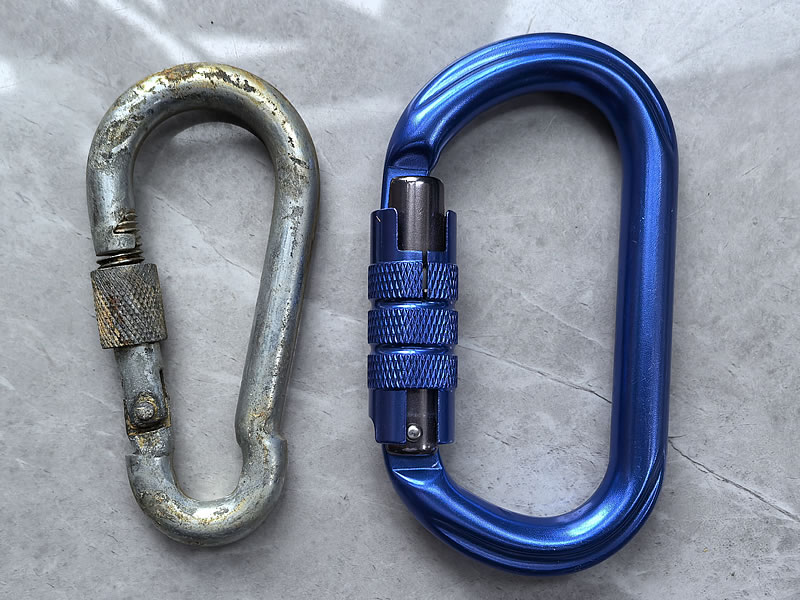
This guide will delve into the characteristics, advantages, and ideal applications of steel and aluminum carabiners, providing a clear framework for your decision-making process.
Aluminum Carabiners: The Gold Standard for Weight-Conscious Applications
Most carabiners used in recreational climbing and mountaineering are made from aluminum alloys, typically 7075-T6 or 7040-T6. These alloys are prized for their exceptional strength-to-weight ratio.
- Key Advantages:Lightweight: This is the most significant benefit. For a climber carrying dozens of carabiners on a long route or a big wall, reducing weight is crucial for conserving energy.High Strength: Modern aluminum alloys are incredibly strong. A standard climbing carabiner made from aluminum has a major axis strength of 22-28 kN (approximately 4,945-6,295 lbf), which is more than sufficient to withstand the dynamic forces of a fall.Corrosion Resistance: Aluminum forms a protective oxide layer that makes it highly resistant to corrosion from the elements.
- Disadvantages:Softer Material: Aluminum is softer than steel, making it more susceptible to wear and abrasion. Dragging an aluminum carabiner over rock can quickly gouge the surface, though this is typically a cosmetic issue rather than a significant strength concern unless deep.Lower Ultimate Strength: While strong enough for climbing, aluminum has a lower overall strength ceiling compared to steel.
- Ideal For: Rock climbing, ice climbing, mountaineering, via ferrata, and any situation where minimizing weight is a top priority without sacrificing necessary safety margins.
Steel Carabiners: The Benchmark for Ultimate Strength and Durability
Steel carabiners are the workhorses of industrial, rescue, and rigging environments. They are manufactured from high-tensile steel alloys and are defined by their robustness.
- Key Advantages:Superior Strength: Steel is significantly stronger than aluminum. Heavy-duty steel carabiners often have breaking strengths of 30 kN to 50 kN (6,740 to 11,240 lbf) or even higher. This provides an immense safety factor for critical loads.Exceptional Durability and Abrasion Resistance: Steel is extremely hard. It can withstand repeated abrasion against ropes, cables, and rough surfaces without significant wear, making it ideal for high-friction environments or long-term rigging setups.Higher Working Temperature: Steel retains its strength at higher temperatures better than aluminum, which can begin to weaken at lower temperatures (though both are rated for normal environmental ranges).
- Disadvantages:Heavy Weight: This is the primary drawback. A steel carabiner can be two to three times heavier than an aluminum one of similar size. This makes them impractical for activities requiring numerous carabiners.Susceptibility to Rust: Unless treated with a coating (like galvanization) or made from stainless steel, carbon steel is vulnerable to corrosion. Regular inspection and maintenance are required.
- Ideal For: Industrial rope access, fire and rescue operations, arborist work, permanent anchor systems, and any application where maximizing strength and abrasion resistance is more critical than minimizing weight.
Direct Comparison: A Quick-Reference Table
| Feature | Aluminum Carabiner | Steel Carabiner |
|---|---|---|
| Weight | Very Light | Very Heavy |
| Strength (Typical) | High (22-28 kN) | Very High (30-50+ kN) |
| Durability | Good (can abrasion) | Excellent |
| Corrosion Resistance | Excellent (oxide layer) | Good (Stainless Steel) / Poor (Carbon Steel) |
| Primary Use | Recreational Climbing, Mountaineering | Industrial, Rescue, Rigging |
Making the Right Choice: Application is Everything
The choice ultimately boils down to your primary need:
- Choose Aluminum if: You need to carry many carabiners and every gram counts. The strength of a modern aluminum carabiner is more than adequate for the vast majority of climbing and personal safety scenarios. Its light weight reduces fatigue and increases mobility.
- Choose Steel if: The carabiner will be subjected to extreme abrasion, high friction, or static loads near the upper limits of aluminum's capacity. If the carabiner is part of a permanent installation or used in rescue where the absolute highest safety margin is required, steel is the definitive choice.
The Universal Rule: Regardless of material, always check that the carabiner is certified to a relevant safety standard (like UIAA or ASTM) and visually inspect it before each use for signs of damage, wear, or corrosion. The material’s inherent properties are only one part of the safety equation; proper use and maintenance are equally critical.




