




Why are climbing carabiners shaped differently
Walk into any gear shop and you'll see a rack of carabiners that look similar at a glance, but on closer inspection, reveal a variety of shapes: classic ovals, curved D's, and asymmetrical pear-like forms. This isn't a matter of aesthetic preference; it's the result of decades of engineering evolution aimed at optimizing performance, safety, and efficiency for specific tasks. The shape of a carabiner directly influences its strength-to-weight ratio, how it handles the rope, and its overall functionality in a life-or-death system.
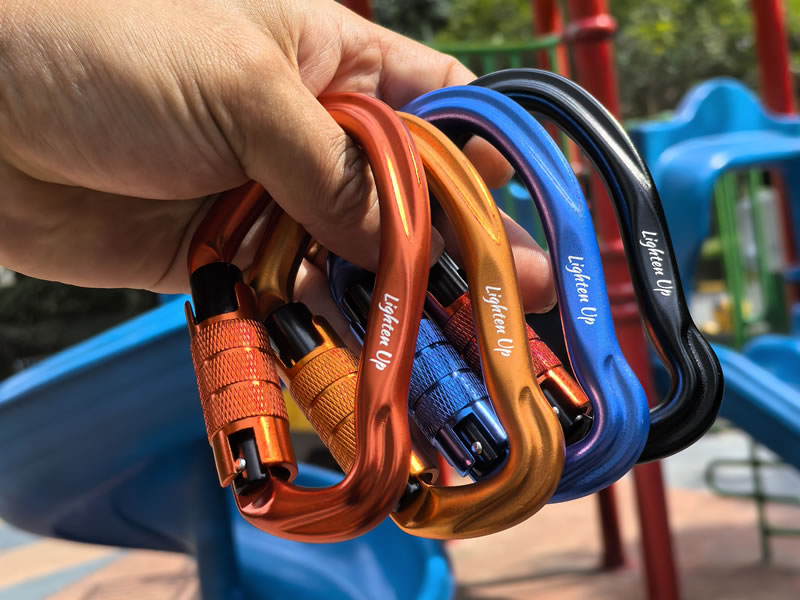
Understanding these shapes is key to selecting the right tool for the job and becoming a more knowledgeable and safer climber.
The Evolutionary Trio: Oval, D, and Asymmetric D
The progression of carabiner shapes tells a story of the pursuit of a perfect balance between strength and weight.
1. The Oval: The Classic Compromise
The oval was one of the earliest shapes used in climbing. Its symmetrical design is simple and versatile.
- Strength & Function: The load is distributed evenly across the carabiner. This makes it a good choice for certain anchor systems where you need multiple carabiners to sit flush against each other or for use with pulley systems, as the rope stays centered.
- The Drawback: This symmetry is also its weakness. The oval shape is the least efficient in terms of strength-to-weight ratio. Because the force is applied equally to both sides, the weaker gate side is bearing just as much load as the stronger spine side. To achieve the same strength as a D-shape, an oval must be made larger and heavier. For this reason, ovals have fallen out of favor for most mainstream climbing applications.
2. The D-Shape: The Strength Revolution
The D-shape was a major leap forward in carabiner design. By moving the spine to a straight, vertical plane and curving only the gate side, engineers achieved a fundamental improvement.
- Strength & Function: In a D-shape, virtually all of the load is directed onto the strong, solid spine. The gate side is primarily just a keeper. This allows manufacturers to create a carabiner that is significantly stronger for its weight, or much lighter for the same strength, compared to an oval.
- Real-World Benefit: This makes D-shaped carabiners the ideal all-rounder. They are strong, light, and their design naturally tends to orient the rope towards the spine, away from the gate, which is a safer configuration. They are the default choice for most non-locking carabiners on quickdraws.
3. The Asymmetric D (HMS or Pearabiner): The Functional Specialist
The asymmetric D-shape is an exaggerated version of the D, with a wide, rounded basket and a narrow gate end. This shape was developed for a very specific purpose: the Munter hitch (or Halbmastwurfsicherung, hence "HMS").
- Strength & Function: While its strength-to-weight ratio is slightly less efficient than a standard D, its function is unparalleled for belaying and rappelling. The large, open basket provides ample space for:Munter Hitch: To function without jamming.Belay Devices: Especially tubular devices, to rotate freely without being cross-loaded.Multiple Ropes: Accommodating two ropes for rappelling with ease.
- Modern Use: The HMS or pear-shaped carabiner is now the global standard for a belay carabiner. Its shape minimizes rope drag and reduces the risk of the carabiner being loaded in three directions, a dangerous situation known as "three-way loading."
Specialized Shapes for Specific Needs
Beyond the three main categories, further specialization exists:
- Wire-Gate Carabiners: These often feature a straight or slightly curved spine but are defined by their wire gate. The wire reduces weight and gate flutter (a rapid opening/closing during a fall), and makes them less prone to freezing shut in cold conditions.
- Bent-Gate Carabiners: A sub-category of D-shaped carabiners where the gate is subtly curved inward. This design is used exclusively on the rope-end of quickdraws to facilitate incredibly smooth and fast rope clipping, a crucial advantage for sport climbers and competition athletes.
Conclusion: Shape Dictates Performance
The different shapes of climbing carabiners are a perfect example of form following function. There is no single "best" shape; there is only the "most appropriate" shape for the task at hand.
- For building your sport climbing rack: You'll want D-shaped or wire-gate carabiners for your quickdraws for their light weight and strength.
- For your belay device: A large asymmetric D (HMS) locker is the universal choice for its functionality and safety.
- For complex anchor or pulley systems: An oval might still be the best tool for the job to keep everything aligned.
By understanding the "why" behind the shapes, you move from simply clipping gear to making intelligent, informed decisions that enhance both your safety and performance on the rock. The humble carabiner is a deceptively sophisticated piece of equipment, and its shape is the most visible clue to its intended purpose.




