




Are all climbing carabiners safe?
The short answer is a resounding no. While the climbing industry is built on a foundation of rigorous safety standards, the assumption that any carabiner marketed for climbing is inherently safe is a dangerous misconception. Safety is not an intrinsic property of the object itself, but the result of a three-part equation: Certified Design + Proper Use + Good Condition. A failure in any one of these components can turn a life-saving device into a catastrophic point of failure.
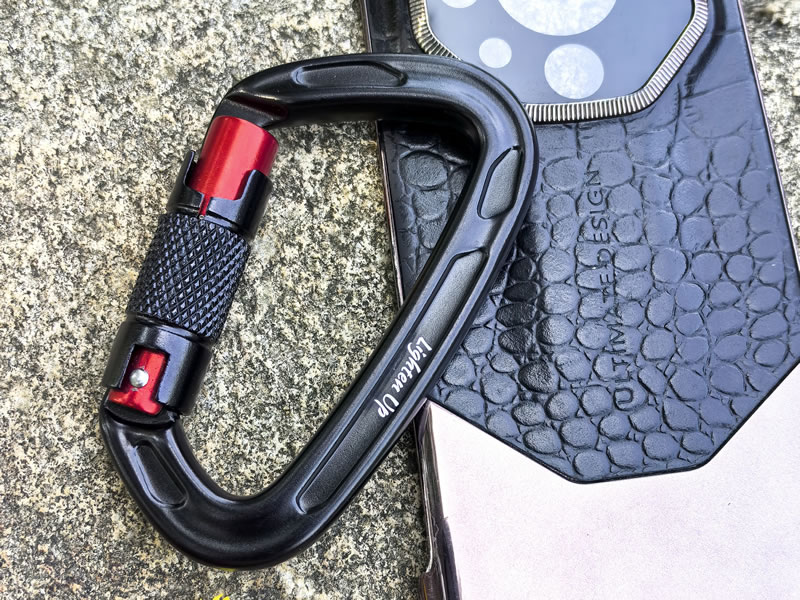
This article will dissect the critical factors that determine whether a climbing carabiner is truly safe for you to use.
The Foundation of Trust: Certification
The primary differentiator between a safe climbing carabiner and an unsafe "clipping device" is independent, third-party certification.
- The Gold Standard: UIAA and CE Marks. A carabiner stamped with the logos of the UIAA (International Climbing and Mountaineering Federation) and/or CE (European Conformity) has undergone a battery of destructive tests. These tests verify its strength in multiple loading scenarios (major axis, minor axis, gate open), its gate function after repeated use, and its resistance to accidental opening. This is your guarantee that the carabiner left the factory capable of performing to a verified safety standard.
- The Danger of Uncertified "Climbing" Carabiners. The market, particularly on online platforms, is flooded with cheap, uncertified carabiners that may look the part but are potentially lethal. They often use inferior materials, have poor or non-existent heat treatment, and feature weak gate mechanisms. Their failure points are unpredictable and can be far below the forces generated in a routine fall.
Rule #1: If it doesn't have a UIAA or CE mark, it is not a safe climbing carabiner.
The Human Factor: Proper Use and Application
Even a perfectly certified, brand-new carabiner can be rendered unsafe by user error. The carabiner's safety is conditional on how it is used.
- Correct Application: A carabiner certified for climbing is designed for the specific dynamic loads of a climbing fall. This does not automatically make it safe for all applications. For example, using a climbing carabiner on a backyard swing is hazardous. The constant, repetitive cyclical loading can lead to metal fatigue in a way that climbing falls do not, potentially causing failure over time.
- Correct Orientation: A carabiner is only at its full strength when loaded along its major axis (spine to base). If it is cross-loaded (force applied from the gate to the spine) or loaded with the gate open, its strength can be reduced by 70% or more. Using a locking carabiner for a belay device but failing to screw the sleeve shut is a classic and tragically common example of making a safe piece of gear unsafe.
- Compatibility: A carabiner must be compatible with other elements in the system. Using a large, pear-shaped HMS carabiner with a small wire-gate non-locker in an anchor can create dangerous three-way loading scenarios.
The Test of Time: Condition and Inspection
A carabiner that was safe when new does not remain safe forever. Its integrity must be maintained through vigilant inspection and care.
- The Enemies of Metal: Wear, corrosion, and impact are the primary culprits.Cracks and Grooves: Any visible crack, no matter how small, is an immediate retirement signal. Deep grooves worn by rope drag create stress concentrators that can lead to failure.Gate Malfunction: The gate must open and close smoothly and snap shut crisply. A gritty feeling, a sticking gate, or a weak spring compromises the entire mechanism.The "Drop Test": If a carabiner is dropped from a significant height onto a hard surface, it must be retired. The impact can create microscopic cracks that are invisible to the naked eye but severely compromise its strength.
The Grey Area: Counterfeits and Forgeries
A growing danger in the gear world is the proliferation of high-quality counterfeits. These are uncertified copies of popular models like those from Petzl or Black Diamond, often sold at too-good-to-be-true prices. They replicate the logos and even the stamped kN ratings, but they are not manufactured to the same standards. Buying from authorized retailers is the only way to mitigate this risk.
Conclusion: Safety is a Partnership
So, are all climbing carabiners safe? The answer is a definitive no. Safety is not a passive state granted by a purchase. It is an active, ongoing partnership.
- You are responsible for selecting a certified carabiner from a reputable brand and seller.
- You are responsible for learning and applying the correct techniques for its use.
- You are responsible for performing pre-use inspections and retiring gear that shows any signs of wear, damage, or a questionable history.
A climbing carabiner is a brilliantly engineered and tested tool, but its safety is only fully realized in the hands of a knowledgeable and conscientious user. Trust, but verify. Inspect, and never assume. Your life depends on this disciplined approach.




