




Best Climbing Carabiner for Beginners
Choosing the right carabiner is one of the most critical decisions for a new climber. As the primary link between your harness, rope, and protection system, a reliable carabiner ensures safety without complicating the learning process. For beginners, simplicity, versatility, and ease of use should guide your selection. Here’s a detailed breakdown to help you make an informed choice.
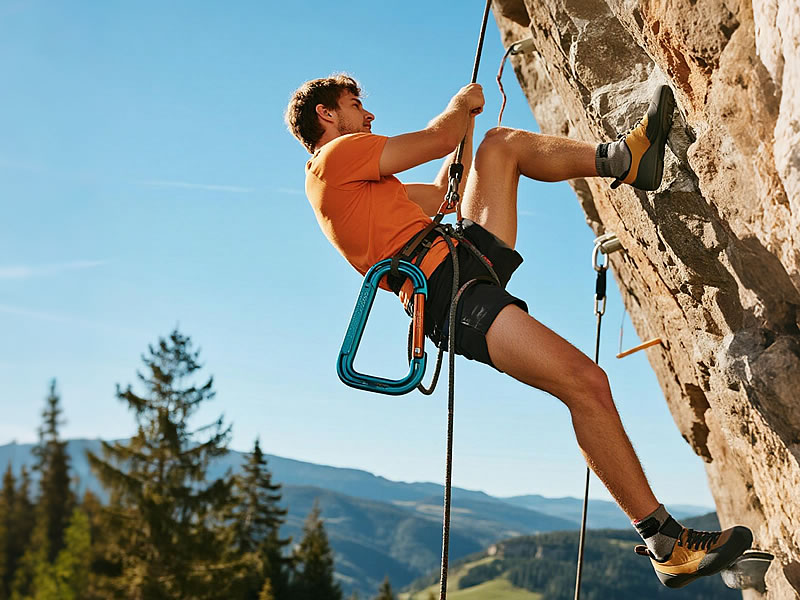
1. Type: Start with a Locking Carabiner
For your first carabiner, a locking carabiner is non-negotiable. Unlike non-locking variants (e.g., snap-gates), lockers feature a mechanism that prevents accidental opening, making them essential for life-support tasks like belaying or anchoring -1.
- Screw-Gate Lockers: Ideal for beginners due to their straightforward design. You manually screw a sleeve to lock the gate, ensuring a secure connection -2. While slightly slower to operate, they are affordable and less prone to debris-related issues compared to auto-locking models -1.
- Avoid Non-Lockers Early On: Non-locking carabiners (e.g., bent-gate or straight-gate) are designed for speed in sport climbing quickdraws but offer lower security. Beginners should prioritize safety over speed -1-6.
2. Shape: The Versatile Pear (HMS) Design
A pear-shaped (HMS) carabiner is the most versatile option for newcomers. Its asymmetrical, wide-mouthed design accommodates various knots (e.g., Munter hitch) and belay devices smoothly -2.
- Why HMS?: It excels in belaying, rappelling, and anchor-building scenarios. The enlarged gate area reduces rope drag and simplifies clipping -2-6.
- Alternatives: D-shaped carabiners offer higher strength by concentrating load on the spine but are less adaptable. O-shaped models, while affordable, distribute force evenly and are weaker on the gate side, making them niche for pulley systems -6-9.
3. Key Features to Prioritize
- Keylock Nose: This feature eliminates a protruding notch, preventing snagging on ropes or gear. It’s a small but valuable quality-of-life upgrade -4.
- Material: Aluminum alloys strike the best balance between strength and weight. They’re lighter than steel and sufficiently durable for recreational climbing -6-9.
- Size and Weight: Midsize carabiners (e.g., 85–100g) are easier to handle with gloves. Ultra-light models may sacrifice durability or usability -8.
- Certifications: Look for UIAA or CE stamps, which guarantee the carabiner meets safety standards for climbing (e.g., ≥20 kN longitudinal strength) -2-9.
4. Top Recommendations for Beginners
- Petzl Attache: A benchmark screw-gate HMS carabiner with a keylock nose. It’s robust, smooth-operating, and trusted for its reliability -1.
- DMM Phantom HMS: Known for its ergonomic design and excellent gate action, this model offers high strength without a premium price -1.
- Budget-Friendly Options: Brands like CAMP or Edelrid provide certified lockers at lower costs, though always verify their ratings -1.
5. Safety and Maintenance Tips
- Always Double-Check Locks: Before loading, ensure the sleeve is fully screwed down. Cross-loading (force applied sideways) can reduce strength by up to 70% -2-9.
- Clean Regularly: Dirt or sand can jam mechanisms. Rinse with water and avoid lubricants -9.
- Retire Damaged Gear: Replace carabiners with visible cracks, gate stickiness, or heavy wear.
Conclusion
For beginners, a screw-gate pear-shaped locking carabiner like the Petzl Attache or DMM Phantom HMS delivers the safety, versatility, and ease of use needed to build confidence. Pair it with foundational skills—such as proper locking and load checks—to foster a lifetime of safe climbing. Start with one or two quality lockers, and as you progress, you’ll better understand when to expand your kit with specialized designs. Happy climbing!




