




Wire Gate vs. Solid Gate Carabiner: Pros and Cons
For climbers building their rack, one of the most frequent choices is between wire gate and solid gate (often called "stock" gate) carabiners. This isn't just a matter of preference; each design has distinct advantages and trade-offs that make it better suited for specific situations. Understanding these pros and cons is crucial for selecting the right tool for your climbing discipline, whether it's a multi-pitch alpine adventure or a day at the local crag.
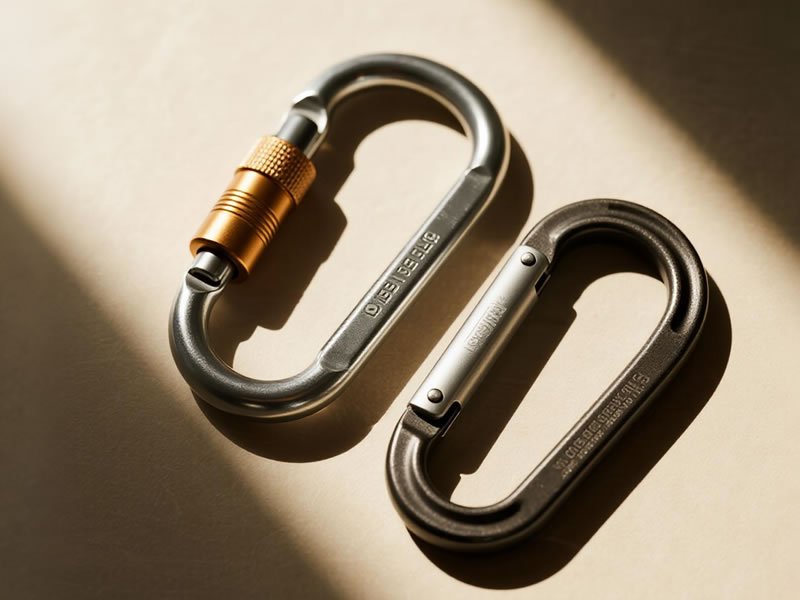
The Lightweight Champion: Wire Gate Carabiners
Wire gate carabiners are constructed from a bent piece of hardened steel wire, creating a simple, open-loop gate.
Pros:
- Lightweight: This is their biggest advantage. The minimal use of material makes them significantly lighter than their solid gate counterparts. For a rack of 20 carabiners, the weight savings can be substantial, reducing fatigue on long routes or big walls.
- Less Prone to Freezing: The reduced surface area and open design make it much harder for ice to form and bind the gate shut. This makes wire gates the undisputed choice for ice climbing and alpine mountaineering in cold conditions.
- Lower Gate Flutter: In the event of a fall, wire gates are less susceptible to "gate flutter"—the rapid opening and closing caused by vibration. Their lower mass means they are less prone to the inertia that causes this effect, potentially reducing the (already small) risk of the rope unclipping itself during a severe shock load.
- Generally More Affordable: The simpler manufacturing process often makes wire gates less expensive.
Cons:
- Reduced Durability: The thin wire is more vulnerable to being bent or damaged if dropped onto a hard surface or if the gate is pried open. While still very strong under load, they are less robust in terms of everyday wear and tear.
- Gate Flexibility: The wire can be easier to deform with your fingers, which can sometimes make one-handed clipping feel less precise compared to the solid "snap" of a stock gate.
- Potential for Rope Snagging: On rare occasions, a thin rope or a sheath that's bunched up can potentially slip through the gap in the wire gate.
The Durable Workhorse: Solid Gate Carabiners
Solid gate carabiners feature a flat, sheet-metal gate that fills the entire frame opening.
Pros:
- Superior Durability and Stiffness: The solid gate is much more resistant to bending or deformation from impact or rough handling. They can withstand the abuse of frequent use, lowering, and general cragging wear and tear far better than wire gates.
- Positive Clipping Action: Many climbers prefer the firm, solid feel and audible "snap" when a solid gate closes. This positive action can make clipping feel more secure and controlled.
- No Rope Snagging Risk: The solid plate design completely eliminates any risk of a rope snagging in the gate mechanism.
- Often Stronger in Tested Scenarios: While both types far exceed UIAA strength requirements, the solid construction can sometimes handle more off-axis loading.
Cons:
- Heavier: The additional material makes them noticeably heavier, a significant factor when weight is a primary concern.
- Prone to Freezing Shut: In wet and freezing conditions, ice can easily form on the large surface area of the gate and the corresponding notch, effectively locking the carabiner shut. This makes them a poor choice for ice climbing.
- More Gate Flutter: The higher mass of the gate means it's more susceptible to bouncing open during a hard, dynamic fall. While modern designs mitigate this, it's a inherent characteristic of the heavier gate.
Head-to-Head Comparison Table
| Feature | Wire Gate | Solid Gate |
|---|---|---|
| Weight | Winner (Lighter) | Loser (Heavier) |
| Cold Weather Performance | Winner (Resists freezing) | Loser (Prone to freezing) |
| Durability | Loser (More prone to bending) | Winner (More robust) |
| Clipping "Feel" | Softer, more flexible | Winner (Firm, positive snap) |
| Gate Flutter | Winner (Less prone) | Loser (More prone) |
| Cost | Winner (Often cheaper) | Loser (Often more expensive) |
Which Should You Choose?
The choice between wire and solid gate carabiners is not about which is universally "better," but which is better for you.
- Choose Wire Gates if:You are an alpine climber, ice climber, or mountaineer where weight and freezing are critical factors.You are a sport climber looking to build a light rack of quickdraws for redpoint attempts.Weight savings is your top priority on long multi-pitch routes.
- Choose Solid Gates if:Your primary climbing is single-pitch cragging or gym climbing, where durability and feel matter more than weight.You are a beginner and want gear that can withstand more accidental drops and rough handling.You simply prefer the solid, secure clipping action and don't mind the extra grams.
Many experienced climbers end up with a mixed rack, using solid gates for hard-wearing applications like belay devices and anchor building, and wire gates for their quickdraws and racking gear. By understanding the core trade-offs, you can make an informed decision that enhances both your safety and your enjoyment on the rock.




