




How to properly lock a climbing carabiner?
In climbing, few actions are as simple yet as critically important as properly locking a carabiner. This small, deliberate step is your primary defense against catastrophic equipment failure. An unlocked or improperly locked carabiner is not just a minor oversight—it's a life-threatening risk. Whether you're belaying, building an anchor, or rappelling, mastering this fundamental skill is non-negotiable for your safety and the safety of your partners. This guide will walk you through the different locking mechanisms, the correct procedures, and the common pitfalls to avoid.
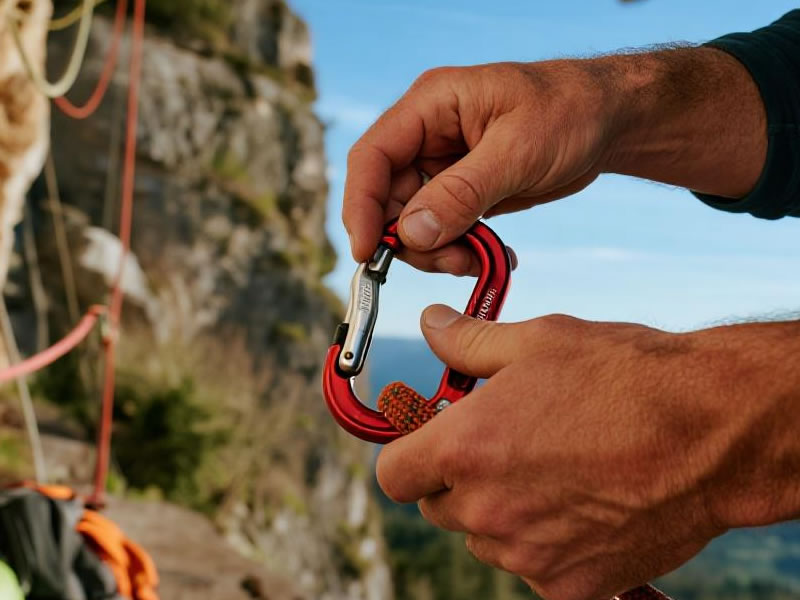
Know Your Locking Mechanisms
Before you can lock a carabiner correctly, you must identify which type you're using.
- Screw-Gate Carabiners: The most common type. They feature a threaded sleeve that you manually screw down over the gate to lock it.
- Auto-Locking Carabiners: These use a spring-loaded mechanism that locks automatically when the gate closes. They require a specific, often multi-step, action to unlock. Common subtypes include:Twist-Lock (e.g., Petzl Ball-Lock): Require a half-turn of the locking collar before the gate can be opened.Push-Lock (e.g., Black Diamond Magnetron): Require you to push the gate in a specific direction to unlock it.
The Step-by-Step Guide to Locking
For Screw-Gate Carabiners:
- Close the Gate: Ensure the gate is fully and completely shut. You should hear a definitive "snap."
- Screw Down Completely: Rotate the locking sleeve clockwise until it will not go any further. Do not just screw it until it's "finger-tight" or "snug." It must be screwed down until it physically stops.
- Perform the Double-Check: This is the most crucial habit to develop.Visual Check: Look at the carabiner. You should not be able to see the gate's threads. The sleeve should fully cover the gate's end.Physical Check: Try to open the gate with your fingers. It should not budge, flicker, or open. If it moves, the sleeve was not fully screwed down.
For Auto-Locking Carabiners:
- Close the Gate Firmly: Push the gate shut until you hear or feel it engage. Many models will make a distinct "click."
- Verify Engagement: Visually inspect the mechanism. On a twist-lock, ensure the indicator line is no longer visible or the collar is in the locked position.
- Tug Test: Perform a physical check by trying to open the gate without disengaging the locking mechanism. It should remain firmly shut.
Common Mistakes and How to Avoid Them
- The "Finger-Tight" Fallacy: The most common and dangerous error. A screw-gate that is only partially screwed can easily vibrate open during a climb or belay. Always screw until it stops.
- Cross-Loading: This occurs when a locked carabiner is loaded on its minor axis (across the gate and spine). A locked gate is useless if the carabiner is cross-loaded, as this can reduce its strength by up to 70%. Always ensure the carabiner is loaded along its spine.
- Gate Interference (Rope/Gear): Be aware of how your rope or other gear runs against the carabiner. A rope running under tension against the gate of a screw-gate carabiner can potentially unscrew it. Orient your carabiners so the gate is protected from such contact.
- Incompatible Gear: Forcing a wide belay device or multiple slings into a small carabiner can prevent the gate from closing fully, making a proper lock impossible. Use appropriately sized carabiners for the task.
- Dirty or Damaged Mechanisms: Sand, mud, or a dented sleeve can prevent a screw-gate from fully closing. Regularly clean your gear and retire any carabiner with a damaged or sticky lock.
Best Practices for Maximum Safety
- Two is a Habit: Make it a ritual to check your partner's locking carabiners and have them check yours. A second set of eyes catches what you might miss.
- Orientation Matters: When setting up anchors or belaying, position screw-gate carabiners so that the gate will not naturally unscrew against the rock or another carabiner. "Opposing and reversing" the gates of two lockers is a standard safe practice.
- Know Your Gear: Practice the locking and unlocking procedure for your specific auto-locking carabiners on the ground. You don't want to be fumbling with an unfamiliar mechanism when you're tired and high off the ground.
Conclusion
Properly locking a climbing carabiner is a deceptively simple skill that forms the bedrock of safe climbing practice. It requires more than a casual twist; it demands deliberate action and a vigilant double-check every single time. By understanding your equipment, following the correct procedure meticulously, and being aware of common failure modes, you transform this basic task from a rote motion into a powerful, life-saving habit. Remember: in a sport where mistakes can have irreversible consequences, there is no such thing as being too careful. Lock it, check it, and climb with confidence.




