




How to inspect a climbing carabiner for damage?
Your climbing carabiners are the critical links in your safety chain. Unlike a rope, which shows obvious signs of wear, a carabiner can fail catastrophically with little warning if it has been damaged, worn down, or fatigued. A systematic pre-climb inspection is not just a good habit—it's a non-negotiable part of responsible climbing. This guide will walk you through a professional-grade inspection process to ensure your gear remains trustworthy.
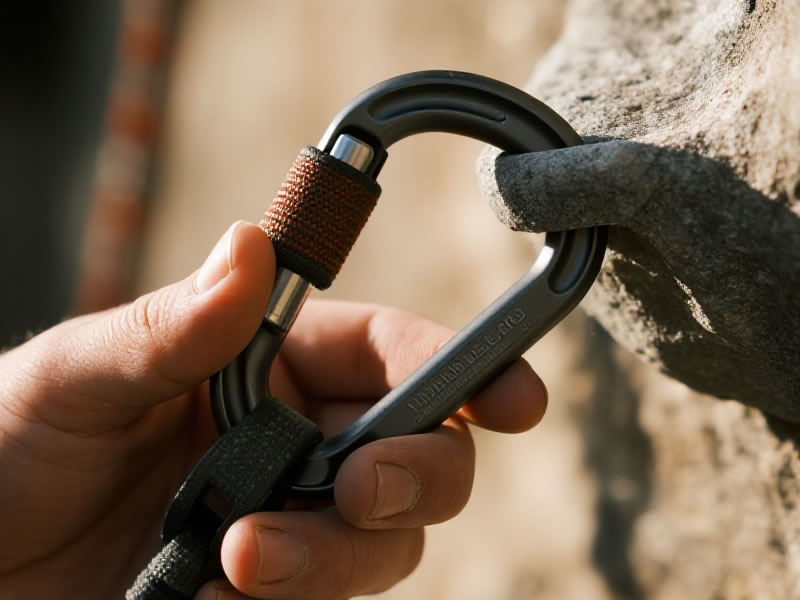
Before starting, clean the carabiner with a soft brush and water to remove dirt and grit that can hide damage.
The Three-Part Inspection Framework
Adopt a methodical approach: Look, Feel, and Function Test.
1. Visual Inspection: The "Look"
Examine every millimeter of the carabiner under good light.
- Cracks: Look for any hairline fractures, especially at the base of the nose and the ends of the spine. Any visible crack, no matter how small, means immediate retirement.
- Deep Gouges and Grooving: Superficial scratches are normal. However, deep gouges that you can feel with a fingernail act as stress concentrators and can compromise strength. Pay special attention to the rope-bearing side of the spine on quickdraw carabiners, where "rope grooves" can form over time.
- Sharp Burrs: Feel for any sharp edges or raised metal spots. A sharp burr can cut your rope's sheath or slice your skin.
- Corrosion: While aluminum doesn't rust, it can corrode into a white, powdery substance. This is more common on steel carabiners (like aiders). Corrosion weakens the metal.
2. Gate Action: The "Feel"
This tests the heart of the carabiner's functionality.
- Smooth Operation: The gate should open and close smoothly and freely without any binding or grating. It should "snap" shut with authority.
- Gritty Sensation: A gritty or grinding feeling when opening the gate indicates internal contamination (sand, dirt) or corrosion of the spring or pivot. This requires cleaning, and if it persists, retirement.
- Gate Spring Strength: The gate should have a strong, positive spring action. If it feels sluggish or weak, the spring may be fatigued.
3. Physical Play and Function Test: The "Function"
- Gate Play (Wobble): Hold the carabiner body and try to wobble the gate side-to-side and up-and-down. A small amount of lateral play is normal, but excessive wobble indicates significant wear on the pivot mechanism, which can lead to failure.
- Gate Stick: With the gate open, apply slight pressure to see if it sticks. It should always return to the open position on its own. A sticking gate is a major safety hazard.
- Locking Mechanism (if applicable): For screw-gates, ensure the sleeve rotates freely and smoothly from locked to unlocked without cross-threading. For auto-locking carabiners (e.g., Twist-Lock, Ball-Lock), verify that the mechanism engages and disengages correctly every time without forcing it.
Critical Failure Points to Identify
Here are specific defects and what they mean for your gear's lifespan.
| Defect | Location | Implication |
|---|---|---|
| Crack | Base of the nose, gate tip, spine ends | IMMEDIATE RETIREMENT. The carabiner is no longer safe. |
| Deep Gouge | Anywhere, especially on the spine | Evaluate depth. If deep and sharp, retire. |
| Significant Gate Wobble | Pivot point | Indicates wear; consider retiring soon. |
| Sticky or Gritty Gate | Internal mechanism | Clean first. If problem persists, retire. |
| Worn-Out Locking Sleeve | Screw-gate threads | Can lead to accidental opening; retire. |
Special Cases: Wire Gates and Locking Carabiners
- Wire Gates: Check that the wire is not bent or deformed. Ensure it is securely seated in its end points. A bent wire gate can fail to close properly.
- Locking Carabiners: Pay extra attention to the locking mechanism. A malfunctioning lock is as dangerous as a cracked spine.
The Golden Rule: When in Doubt, Throw It Out
Carabiners are the workhorses of your rack, but they are not indestructible. They have a finite lifespan. If your inspection reveals any of the critical flaws listed above, or even if you just have a gut feeling that something isn't right, the safest and only correct action is to retire the carabiner permanently.
A new carabiner costs a few dollars. Your safety is priceless. By making a thorough inspection a ritual before every climb, you are not just maintaining your gear—you are actively protecting your life and the lives of those who trust you on the rope.




