




Can a climbing carabiner break?
The short, direct answer is yes, a climbing carabiner can break. However, this is an exceptionally rare occurrence when the equipment is undamaged, well-maintained, and used correctly according to its design parameters. Modern climbing carabiners are engineering marvels, built to withstand forces far beyond what most falls generate. Understanding the specific circumstances that can lead to failure is crucial for every climber who relies on these small but vital pieces of protection.
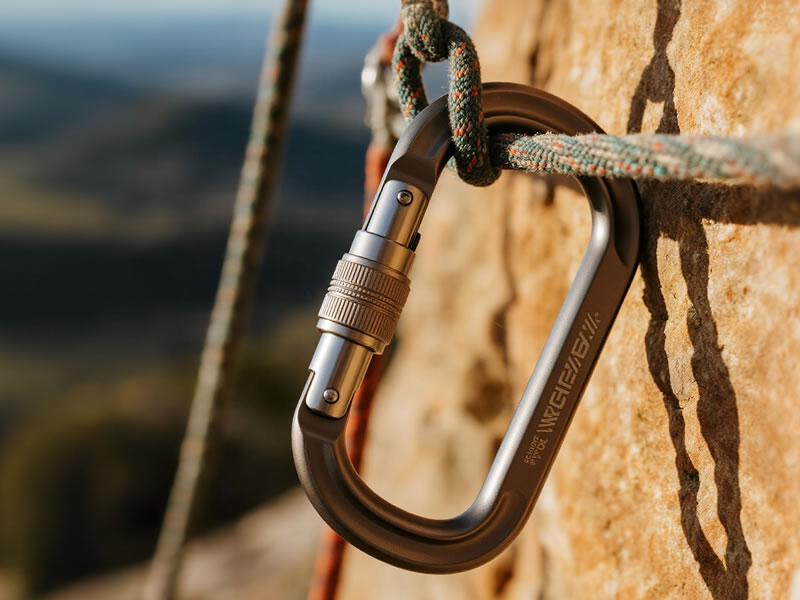
The Immense Strength of a Modern Carabiner
First, it's important to appreciate just how strong a certified climbing carabiner is. Industry standards from the UIAA (International Climbing and Mountaineering Federation) and CE require that:
- Major Axis Strength (Spine to gate): A standard carabiner must withstand a minimum of 20 kN to 25 kN of force. To put this in perspective, 20 kN is equivalent to about 4,500 pounds of force—roughly the weight of a small car.
- Minor Axis Strength (Cross-loaded): Even when loaded across its weakest dimension (sideways on the gate), it must withstand 7 kN.
A typical lead fall generates forces on the climber of around 5-8 kN, well within the safety margin of a carabiner. So, if they are so strong, how do they break?
The Primary Causes of Carabiner Failure
Failure almost never happens during a normal, in-axis load on a healthy carabiner. The real danger lies in three main areas: improper use, pre-existing damage, and material flaws.
1. Improper Loading (The Most Common Risk)
This is the leading cause of in-the-field failures and near-failures.
- Cross-Loading: This occurs when the carabiner is loaded across its minor axis (sideways), with the rope or load pressing against the gate side instead of the spine. In this position, strength can be reduced by up to 70%. This often happens in anchor setups or when a quickdraw is twisted.
- Gate Open Loaded: If the gate is open during a fall, the carabiner's strength can be reduced by 50% or more. This can be caused by "gate flutter" during a fall, the carabiner being twisted against the rock, or a rope accidentally pressing against the gate.
2. Pre-Existing Damage
A carabiner's structural integrity can be severely compromised long before it sees its next fall.
- Cracks and Deep Gouges: Any visible crack, especially at the base of the nose or on the spine, is a immediate retirement-level defect. These act as stress concentrators, causing failure at loads far below the rated strength.
- Metal Fatigue: While less common with modern aluminum alloys, repeated, high-load falls over a very long period can theoretically contribute to microscopic cracks forming. This is why inspecting old gear is critical.
3. Material and Manufacturing Defects
This is the rarest cause. Modern manufacturing quality control is excellent, but in the past, issues like:
- Brittle Alloys: Incorrectly mixed or treated aluminum can become brittle.
- Forging Defects: Microscopic imperfections introduced during the forging process can become failure points.These types of failures are typically seen in product recalls, highlighting the importance of registering your gear with the manufacturer.
Real-World Failure vs. Laboratory Strength
It's crucial to distinguish between a carabiner breaking cleanly in two and a failure of the safety system. The former is extremely rare. More often, a "failure" involves the carabiner bending, the gate breaking, or the carabiner unclipping due to being cross-loaded or having an open gate. The system fails, but the carabiner doesn't necessarily "shatter."
How to Prevent Failure: Your Safety Checklist
The risk of carabiner failure is almost entirely within your control. Mitigate it by following these practices:
- Inspect Religiously: Before every climb, check for cracks, deep gouges, and sharp burrs. Ensure the gate action is smooth and snaps shut authoritatively.
- Use Correctly: Always ensure carabiners are loaded along their major axis (spine to gate). Be mindful of orientations that could lead to cross-loading or gate interference.
- Lock It: For all critical connections (belay, rappel, anchors), use a locking carabiner and ensure the locking mechanism is fully engaged.
- Retire Damaged Gear: Embrace the mantra, "When in doubt, throw it out." A $15 carabiner is not worth your life.
Conclusion
While the question "Can a climbing carabiner break?" has a technical "yes," the more practical and reassuring answer is that it is an extreme rarity for a well-maintained carabiner used properly. The overwhelming strength built into these devices is your first line of defense. Your second, and equally important line of defense, is your own knowledge and vigilance. By understanding the mechanisms that lead to failure—primarily improper loading and using damaged gear—you can climb with the well-founded confidence that your carabiners will hold. They are incredibly strong, but they are not indestructible; their ultimate reliability is a shared responsibility between the engineer who built it and the climber who uses it.




