




Grivel Plume Carabiner Weight
The term "carabiner hook" is a common, albeit slightly redundant, name for one of the most fundamental pieces of safety equipment in the world of climbing and outdoor adventure. While most enthusiasts simply call it a "carabiner" or "'biner," the full term points to its core function: a hooked connector with a locking mechanism. At its essence, a carabiner is a specialized metal loop with a spring-loaded gate, designed to securely and reversibly connect components under load. From securing a climber's rope to their harness to fastening gear to a backpack, this simple yet brilliantly engineered device is a linchpin of safety and functionality.
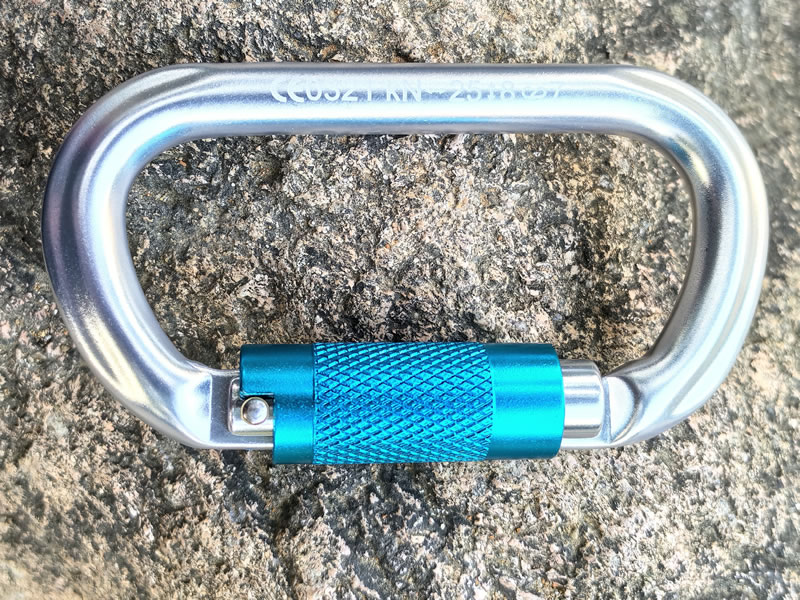
Anatomy of a Carabiner: More Than Just a Hook
To understand what a carabiner is, you must first understand its parts. Every carabiner, regardless of its specific design, shares the same basic components:
- The Spine: The solid, non-moving side of the loop. This is typically the strongest part of the carabiner.
- The Gate: The spring-loaded, movable section that opens and closes to allow for clipping and unclipping.
- The Nose: The end of the gate, which features a mechanism to lock it into the carabiner's body.
- The Locking Mechanism (on Locking Carabiners): A sleeve (screw-gate) or internal mechanism (auto-locking) that prevents the gate from opening accidentally.
- The Basket: The area inside the carabiner, which must be large enough to accommodate the intended load, such as a rope, sling, or belay device.
Beyond the Hook: A Tool of Critical Safety
Calling it a "hook" can be misleading, as it understates its critical safety role. A simple hook is passive; a carabiner is an active safety device. Its spring-loaded, often lockable gate ensures that once something is clipped in, it stays secured. This is a vital distinction. In climbing, a failure of this "hook" is not an inconvenience; it is a potentially life-ending event. Therefore, carabiners are not just metal loops; they are precision-engineered components subjected to rigorous international safety standards (UIAA and CE). They are strength-rated, with their breaking strength (measured in kilonewtons, kN) clearly marked on the spine.
Types of Carabiners: From General to Specific
The simple carabiner hook has evolved into a family of specialized tools, each optimized for a specific task:
- Non-Locking Carabiners: Characterized by a simple, spring-loaded snap-gate. They are lightweight and fast to use, making them ideal for the rope-end of quickdraws in sport climbing. However, they are not suitable for critical, life-saving connections where accidental opening is a risk.
- Locking Carabiners: These feature a mechanism that locks the gate shut. Screw-gate carabiners require you to manually screw a sleeve down, while auto-locking carabiners (e.g., twist-lock, ball-lock) engage automatically. These are essential for belaying, rappelling, and building anchors.
- Shapes Matter: The shape of a carabiner influences its strength and use.Oval: Symmetrical and versatile, but not the strongest.D-Shaped: Stronger, as the design shifts load onto the spine.Asymmetric D: Features a large, easy-to-clip basket ideal for the rope-end of quickdraws.Pear-Shaped (HMS): Has a large, rounded base perfect for accommodating a Munter hitch knot or a belay device.
Materials and Manufacturing
Modern climbing carabiners are primarily made from aluminum alloys, offering an excellent balance of high strength and low weight. Some, like those used in via ferrata sets or for specific industrial purposes, are made from steel for maximum durability and abrasion resistance, albeit with a significant weight penalty. The manufacturing process, often involving hot-forging, ensures the metal's grain structure is aligned for maximum strength.
Common Uses Beyond Rock Climbing
While born from the needs of mountaineering, the carabiner hook has found a home in numerous other fields:
- Industrial Rope Access: For workers cleaning windows or inspecting structures at height.
- Rescue Operations: Used by fire departments and search-and-rescue teams.
- Arboriculture: Essential for tree surgeons working aloft.
- Everyday Carry (EDC): A popular tool for attaching keys, knives, and other gear to bags.
Conclusion: A Simple Tool with a Profound Purpose
A "carabiner hook" is far more than a simple connector. It is a symbol of safety, a product of meticulous engineering, and a versatile tool that has enabled human exploration of vertical worlds. Its deceptively simple design belies the complex physics and rigorous testing that ensure its reliability. Whether you are a seasoned alpinist on a big wall or a hiker attaching a water bottle to your pack, understanding what a carabiner is—its types, strengths, and proper uses—is the first step in leveraging this incredible tool safely and effectively. It is a humble hook that, quite literally, holds lives in the balance.




