




What does the kN rating on a carabiner hook mean?
If you’ve ever shopped for climbing, rigging, or rescue gear, you’ve seen those small, stamped numbers like "22 kN" or "30 kN" on a carabiner. While they might seem like cryptic engineering jargon, understanding this rating is fundamental to your safety. In short, the kN rating tells you the maximum force a carabiner can withstand before it fails.
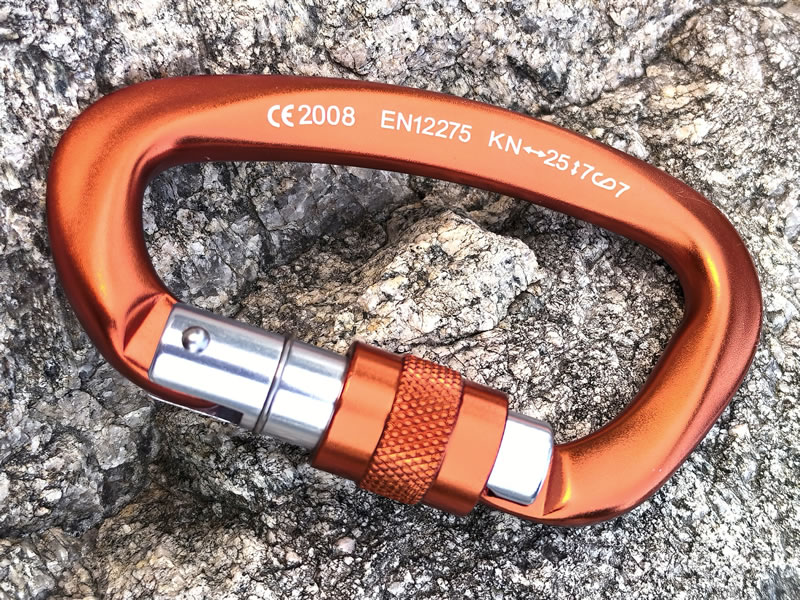
Buy Link: https://www.aliexpress.com/item/1005009247748751.html
But let's break that down. "kN" stands for kilonewton, a unit of force. One kilonewton (1 kN) is approximately equal to 225 pounds (or 102 kilograms) of force. This is a crucial distinction: it measures force, not just weight. In a fall, the forces generated on your gear can be many times greater than your static body weight due to the physics of falling.
Decoding the Numbers: More Than One Strength
A carabiner isn't equally strong in every direction. Its rating is typically given for three main configurations:
- Major Axis (Spine Loaded): This is the carabiner's strongest rating, with the load applied along its long, straight spine and the gate closed. This is how it's designed to be used. A rating of 22 kN means it can handle about 4,945 pounds of force in this ideal orientation.
- Minor Axis (Cross-Loaded): This is when force is applied across the carabiner's weaker width, often because it's been improperly positioned. The strength here is drastically lower, typically around 7-9 kN (1,575-2,025 lbs). This highlights the danger of a carabiner being twisted or loaded over an edge incorrectly.
- Open Gate: This tests the carabiner's strength with the gate open. The rating is usually the lowest of the three, often 7-10 kN. This demonstrates the critical importance of ensuring the gate is fully closed and locked during use, as an open gate can reduce the carabiner's strength by two-thirds.
Why Such High Ratings? The Safety Factor
You might be thinking, "I only weigh 70 kg, so why do I need a 22 kN (5,000 lb) carabiner?" The answer lies in the immense forces generated during a fall. In a climbing scenario, a leader fall can generate forces far exceeding static weight due to the fall factor (the ratio of fall length to rope out). Modern safety standards for climbing gear incorporate a significant safety margin to account for these dynamic loads, potential wear, and material variances.
Choosing the Right Carabiner
- Recreation & Sport Climbing: For most climbing, carabiners rated between 20-25 kN on the major axis are standard and perfectly adequate.
- Alpine & Ultralight Climbing: Specialist carabiners made from stronger or thinner materials might have ratings of 28-30 kN or higher, prioritizing strength-to-weight ratio.
- Industrial & Rigging: Applications like rope access or rigging often use carabiners with even higher kN ratings, as they may handle static loads and require a greater safety factor for professional use.
Conclusion: Strength is a System
The kN rating is your first and most critical check for a carabiner's integrity. However, it's not the whole story. The strength of your entire safety system is only as strong as its weakest link—which includes your rope, harness, anchor, and most importantly, your knowledge. Always inspect your gear for wear, use it as the manufacturer intended, and understand that the high kN number is your essential margin of safety against the unpredictable forces of a fall.




