




What is the difference between a carabiner hook and a regular carabiner?
If you've found yourself asking this question, you're not alone. The terminology can be confusing, especially when shopping for gear for climbing, hiking, or everyday use. The short and definitive answer is: there is no technical difference. "Carabiner hook" and "regular carabiner" refer to the same fundamental object. However, understanding the nuance behind these terms is key to choosing the right one for your needs and, most importantly, staying safe.
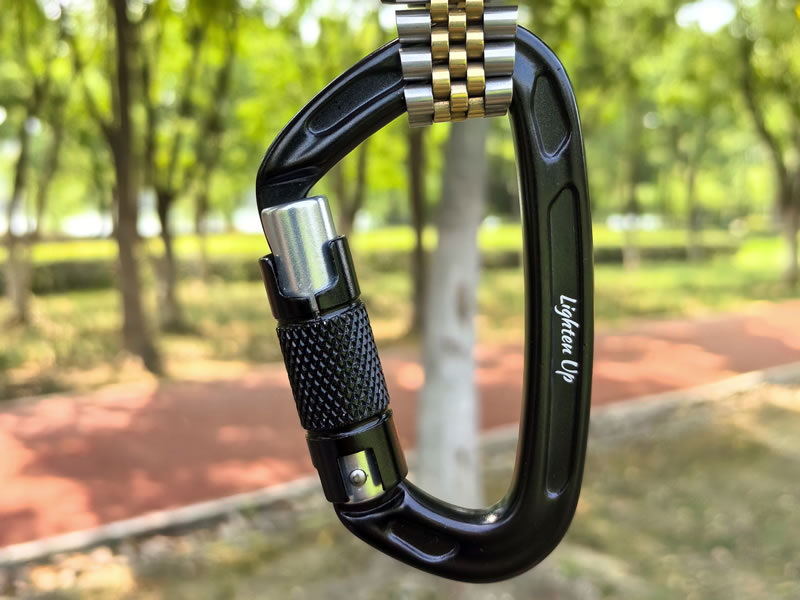
Let's untangle the language and dive into what truly matters.
Deconstructing the Name: Why "Carabiner Hook" is Redundant
The word "carabiner" itself has a specific origin. It's derived from the German word Karabinerhaken, which literally translates to "spring hook" or "carbine hook." A "carbine" was a type of rifle that cavalry soldiers would clip to their uniforms using a similar device.
Therefore, saying "carabiner hook" is essentially saying "hook hook." It's a descriptive, redundant term that has stuck in casual conversation. In the world of professional climbing, rigging, and industrial safety, the device is universally and correctly referred to simply as a carabiner.
The Real Difference Isn't in the Name, But in the Type and Purpose
While "carabiner hook" isn't a separate category, the world of carabiners is vast and varied. The critical distinction lies not in their name, but in their design, strength, and intended use.
Here’s how to tell them apart:
1. Climbing & Safety-Grade Carabiners (The "Serious" Carabiners)
These are what professionals and enthusiasts rely on for life-saving applications. They are characterized by:
- Strength Ratings (kN): They are explicitly rated with a kilonewton (kN) strength, typically stamped on the spine. You'll see three ratings: strength along the major axis (e.g., 22-30 kN), minor axis (cross-loaded, e.g., 7-10 kN), and with the gate open (e.g., 7-10 kN).
- Certifications: They carry certifications from safety organizations like the UIAA (International Climbing and Mountaineering Federation) and/or CE (European Conformity), which mandate rigorous testing standards.
- Materials: Made from high-strength aluminum alloys or, for high-wear applications, steel.
- Gate Mechanisms: Feature secure locking mechanisms like screw-lock, twist-lock, or auto-lock gates to prevent accidental opening.
2. Recreational & Non-Critical Carabiners (The "Regular" Carabiners in Everyday Context)
These are the carabiners you find at hardware stores, attached to keychains, or used for dog leashes. They are defined by:
- No Meaningful Strength Rating: They may be sold by a "weight limit," but this is a static load and does not account for the dynamic forces of a fall. They are not strength-rated in kN.
- No Safety Certifications: They lack UIAA or CE certification for climbing. They are intended for non-life-critical purposes only.
- Materials: Often made from weaker, cheaper materials like zinc, low-grade aluminum, or even plastic.
- Simple Gates: Usually feature a simple, non-locking spring gate that is prone to being accidentally opened.
A Critical Safety Warning: Never Interchange Them
This is the most important takeaway. A recreational carabiner from a hardware store must NEVER be used for climbing, roped work, or any situation where a failure could result in injury or death.
The forces generated in even a short fall can easily exceed 5 kN—a force that would instantly destroy a cheap, non-rated carabiner, with catastrophic consequences. The "regular" carabiner for a climber is a strength-rated, certified device. The "regular" carabiner for a hiker carrying a water bottle is a non-critical tool.
Conclusion: It's Not About the Name, It's About the Application
So, is there a difference between a carabiner hook and a regular carabiner? No—they are two names for the same category of object.
The true difference that matters is between a safety-critical, strength-rated carabiner and a recreational, non-critical carabiner. When choosing your gear, ignore the name and focus on the specifications. Look for the kN rating and the safety certifications. Your choice should be dictated by the consequences of its failure. For clipping your keys, any carabiner will do. For protecting your life, only a certified, climbing-grade carabiner is acceptable.




