




Cheap vs. expensive carabiner hook: is there a difference?
When browsing for carabiners, the price range can be staggering—from a few dollars for a multipack at a hardware store to over $20 for a single unit from a specialty outdoor brand. This naturally leads to the question: is there a real difference, or are you just paying for a name? The answer is unequivocally yes, the difference is profound, and it extends far beyond the price tag. It's a distinction that encompasses material science, manufacturing quality, rigorous safety testing, and ultimately, the fundamental question of what you're trusting with your life.
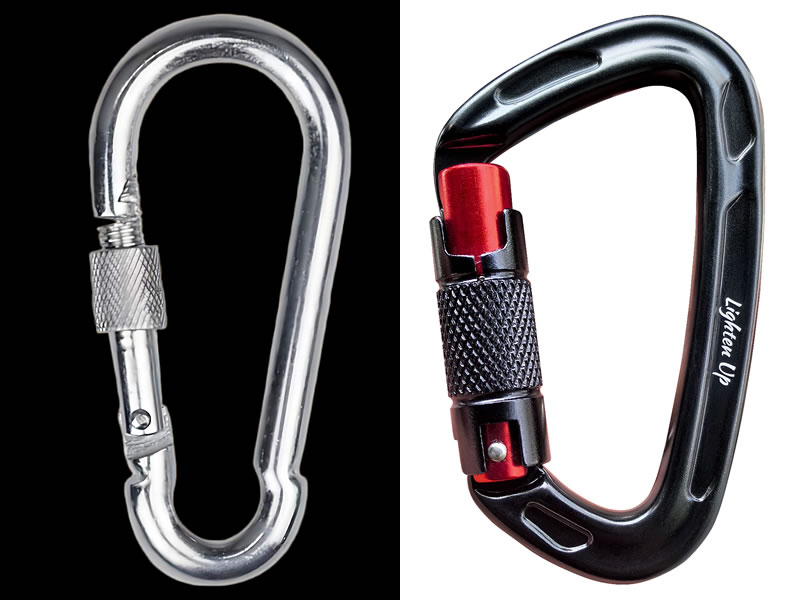
The Core Divide: Certified vs. Non-Certified
The most critical difference lies in certification. Expensive carabiners from reputable brands like Petzl, Black Diamond, or DMM are UIAA (International Climbing and Mountaineering Federation) and/or CE (European Conformity) certified. This means they have been independently tested to meet incredibly stringent standards for:
- Minimum Breaking Strength: A basic climbing carabiner must withstand at least 20-25 kN (approx. 4,500-5,600 lbf) of force along its major axis.
- Open-Gate Strength: It must still hold a minimum of 7 kN (approx. 1,570 lbf) with the gate open, simulating a worst-case scenario.
- Gate Function: The gate must operate smoothly thousands of times without failure.
Cheap, uncertified carabiners have undergone no such testing. Their strength is an unknown variable, making them a gamble for any load-bearing application.
Material and Manufacturing: Quality vs. Cost-Cutting
- Expensive Carabiners: These are typically crafted from high-grade aluminum alloys (e.g., 7075-T6) that are heat-treated for optimal strength and durability. The manufacturing process involves precision machining, I-beam shaping to save weight, and advanced techniques like hot-forging to create stronger, more resilient components.
- Cheap Carabiners: These are often made from lower-grade, softer aluminum or even zinc alloys. The manufacturing is focused on cost, leading to thicker, heavier designs with rough edges, burrs, and poorly finished surfaces that can damage ropes and slings. The gate mechanisms are often clunky, prone to sticking, and lack the refined spring action of their expensive counterparts.
Design and Engineering: Refined Performance vs. Basic Function
An expensive carabiner is the product of decades of research and refinement. Features like a keylock nose prevent snagging, a bent-gate design facilitates easier rope clipping in quickdraws, and sophisticated auto-locking mechanisms (e.g., twist-lock, ball-lock) provide fail-safe security. These design elements enhance performance, safety, and ease of use.
A cheap carabiner has a singular, basic design goal: to close. It lacks these performance-oriented features. Its standard notch-and-pin gate is prone to snagging, and its overall shape is not optimized for efficient load distribution or user interaction.
When Does the Difference Matter?
This is the crucial question that defines your choice:
- For Climbing, Mountaineering, Rescue, or Any Life-Support Application: The difference is absolute and non-negotiable. You must only use certified carabiners from reputable brands. The extra cost is a direct investment in verified engineering that can and does save lives. A cheap carabiner can fail catastrophically under the dynamic force of a fall.
- For Gear Organization (Keys, Water Bottles, Backpack Zippers): The difference is less critical. A cheap, uncertified carabiner is perfectly acceptable for these non-life-critical tasks. Its shortcomings in strength and finish are irrelevant for holding a set of keys. However, it's still wise to inspect it occasionally for signs of wear or gate failure.
The Verdict
The difference between a cheap and an expensive carabiner is the difference between a specialized, life-saving tool and a general-purpose connector. You are paying for independent safety certification, advanced materials, precision engineering, and the peace of mind that comes from knowing your gear has been proven to perform under extreme stress.
For organizing your gear, feel free to save money. But for protecting your life, the investment in a high-quality, certified carabiner is the only rational choice. Never compromise on the equipment that stands between you and a serious fall.




