




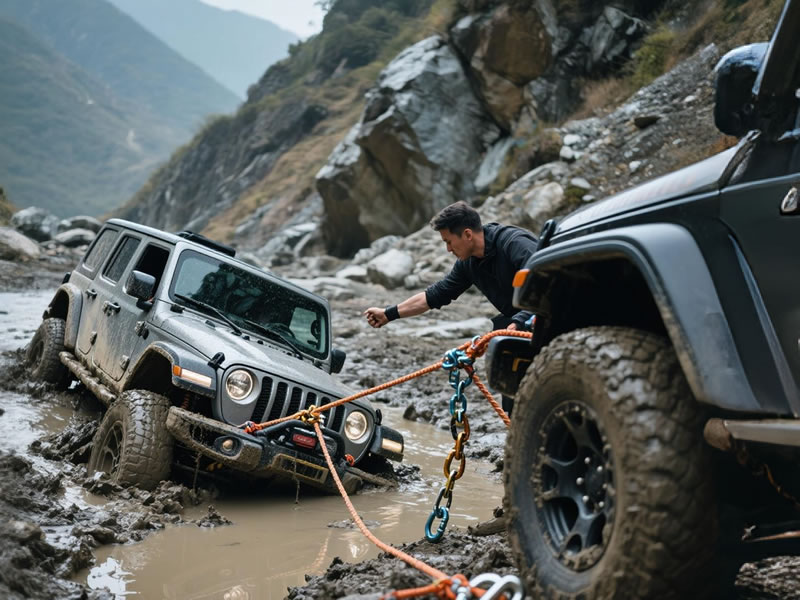
Carabiner hook for towing and vehicle recovery.
The use of a carabiner hook in towing and vehicle recovery scenarios represents one of the most dangerous and widespread misapplications of this hardware. While the intuitive desire to use a strong, readily available connector is understandable, the physics of vehicle recovery and the design limitations of standard carabiners create a perfect storm for catastrophic failure. Understanding why a carabiner is the wrong tool for this job is critical for the safety of both people and property.
The Physics of Failure: Dynamic Loads vs. Static Ratings
The core of the issue lies in the difference between a static load and a dynamic load.
- Static Load: This is a gradually applied, constant force. The weight capacity stamped on a hardware store carabiner is typically a static load rating.
- Dynamic Load (Shock Load): Vehicle recovery generates immense, unpredictable dynamic loads. When a winch cable tightens or a recovery strap stretches and then jerks a stuck vehicle free, it multiplies the force far beyond the vehicle's weight. These shock loads can create forces that are three to five times higher than the static weight of the vehicle.
A carabiner, even a heavy-duty one, is not engineered to absorb this kind of explosive energy. Its failure under such conditions is not a matter of "if" but "when."
Why Recovery Shackles are the Only Safe Choice
Professionals in off-road recovery and towing use rated bow shackles or D-shackles for a reason. These are fundamentally different from carabiners in their design and purpose.
- Material and Construction: Recovery shackles are typically forged from high-tensile carbon or alloy steel, a material far superior to the aluminum or lower-grade steel used in carabiners. Forging aligns the metal's grain structure, creating a part that is immensely strong and resistant to brittle fracture.
- Design for Load Distribution: A bow shackle's smooth, rounded shape allows recovery straps and soft shackles to move freely without creating sharp bending points or sawing actions that can weaken synthetic materials. The load is evenly distributed around the bow.
- Clear and Certified Working Load Limit (WLL): A properly rated recovery shackle will have its Working Load Limit (e.g., 4.75 tons, 6.5 tons) clearly stamped on its body. This WLL is calculated with a significant safety factor (often 4:1 or 5:1) built-in. This means a shackle with a 4.75-ton WLL has a minimum breaking strength of approximately 19-24 tons.
- Safety Pin vs. Screw Pin: The threaded pin on a recovery shackle is designed with coarse, robust threads that are less likely to cross-thread or be damaged by dirt than the fine threads on a screw-gate carabiner.
The Catastrophic Consequences of Carabiner Failure
When a carabiner fails under the extreme load of a vehicle recovery, it does not simply break; it turns into a deadly projectile. The energy stored in a stretched recovery strap is transferred into the fragments of the broken carabiner, launching them at speeds comparable to a bullet. This metal shrapnel can easily penetrate vehicle body panels, windows, and, most tragically, people standing nearby. The broken strap or cable can also whip back with lethal force.
Identifying the Right Tool for the Job
It is crucial to distinguish between different types of connectors:
- For Towing and Vehicle Recovery: Use a rated bow shackle or a modern synthetic soft shackle. These are the only tools designed and tested for the dynamic, high-load environment of recovering a stuck vehicle.
- For Climbing and Life Support: Use a UIAA/CE-certified climbing carabiner. These are designed for dynamic human falls, but in a completely different force range (typically under 10 kN for a severe fall, whereas a vehicle recovery can generate 50-100 kN or more).
- For Gear Organization: A standard hardware carabiner is acceptable. This is its intended purpose—holding static, lightweight items like keys or water bottles.
Conclusion
The convenience of using a carabiner for vehicle recovery is an illusion that carries an unacceptable risk. The potential for severe injury or death far outweighs any perceived benefit. For the safety of everyone involved, never use a carabiner for towing or vehicle recovery. Invest in a set of properly rated, stamped recovery shackles from a reputable manufacturer. Your recovery kit should also include a quality kinetic recovery rope or a static strap, and everyone involved should be educated on safe recovery practices. In the world of off-road recovery, there is no room for improvisation with critical safety components. The right tool doesn't just get the job done; it ensures everyone goes home safely.




