




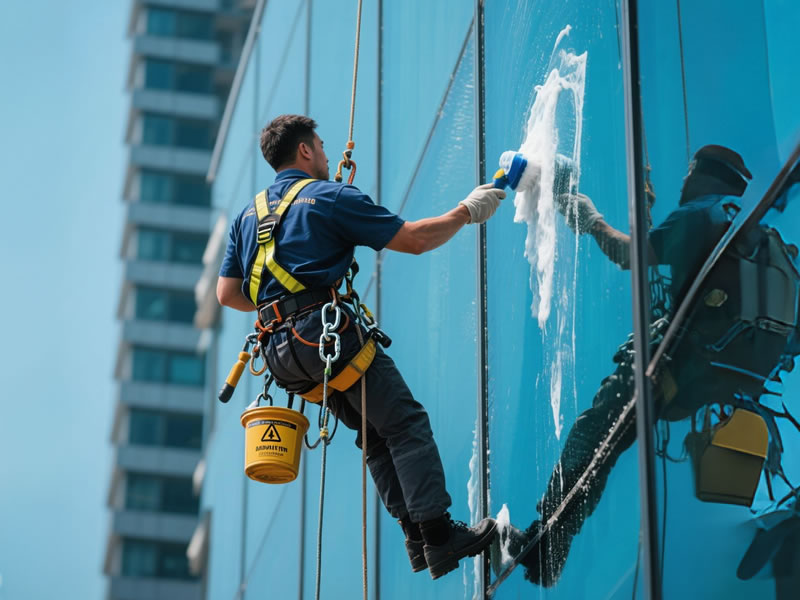
Carabiner hook for fall protection systems in construction.
In the construction industry, where falls remain the leading cause of fatalities, the carabiner hook—or more accurately, the "connector" in fall protection terminology—is not merely a piece of equipment but a critical life-saving device. Its selection and use are governed by a stringent framework of occupational safety standards that fundamentally distinguish it from carabiners used in recreational climbing or general industry. Understanding these distinctions is not just a matter of compliance, but a fundamental requirement for ensuring worker safety at height.
The Regulatory Framework: OSHA and ANSI Z359.1
In the United States, the use of connectors in fall protection systems is guided by OSHA regulations and the detailed specifications of the ANSI Z359.1 standard. This standard sets the benchmark for the performance, design, and marking of all components of a fall protection system, including connectors.
- Certification is Mandatory: Unlike climbing carabiners, where UIAA/CE certification indicates a voluntary standard, compliance with ANSI Z359.1 is an industry requirement for fall arrest equipment. A connector used for fall protection must be explicitly certified to this standard.
- Gate Strength Requirement: A key differentiator is the gate strength rating. ANSI Z359.1 requires that connectors must have a minimum gate strength of 3,600 pounds (16 kN). Many high-quality construction-grade carabiners far exceed this, with ratings of 5,000 pounds (22 kN) or more. This is a significantly higher requirement than the 7 kN (1,574 lbf) open-gate strength required for climbing carabiners, reflecting the different failure modes and risks on a construction site.
Key Design Features of a Construction Fall Protection Connector
- Automatic Locking Gates:Screw-gate carabiners are expressly prohibited for fall arrest connections. The only acceptable mechanism is an automatic, self-locking gate. The most common and safest type is the triple-action lock (also known as a triple-locker). Opening this connector requires three distinct, deliberate motions: depressing two independent locking sleeves and then pivoting the gate. This complex sequence is designed to prevent any possibility of the gate being accidentally opened by brushing against steel beams, scaffolding, or other structural elements.
- Material and Durability:Steel is the predominant material for connectors in heavy construction environments. Its superior resistance to abrasion from concrete, steel, and other rough surfaces is essential for long-term durability. Furthermore, steel is less likely to be critically damaged by impact from tools or sharp edges, a common hazard on a job site. Many models feature hot-dip galvanizing or other corrosion-resistant coatings to withstand outdoor exposure.
- Clear and Legible Markings:A compliant connector will be permanently and clearly stamped with critical information, including:The manufacturer's name or logo.A unique serial number or lot code.The model number.Its minimum breaking strength (e.g., 5,000 lbs).The gate strength rating.The mark "ANSI Z359.1" to confirm its certification.
The Critical Difference: Connector vs. Climbing Carabiner
This distinction cannot be overstated. A recreational climbing carabiner is dangerously unsuitable for a construction fall protection system.
- Locking Mechanism: A climbing screw-gate can be easily unscrewed by rotating against a surface, whereas a triple-action lock is virtually immune to this.
- Environmental Durability: An aluminum climbing carabiner can develop sharp burrs from abrasion against steel, which can sever a lanyard's energy absorber. Steel construction connectors are built to resist this wear.
- Certification and Intent: Climbing gear is certified for a different set of dynamic forces and environmental conditions. Using it in construction voids its certification and exposes the employer and worker to immense liability and risk.
Inspection, Maintenance, and Compliance
A fall protection connector is only as good as its inspection regimen. OSHA and ANSI require that all fall protection equipment, including connectors, be inspected by the user before each use and by a competent person at least annually. Inspectors must look for:
- Cracks, sharp edges, or burrs.
- Corrosion or pitting.
- Gate malfunction, including stickiness or inability to lock automatically.
- Distortion or bending of any kind.
Any connector found to be defective must be immediately removed from service and destroyed to prevent its future use.
Conclusion
In the high-stakes environment of construction, the carabiner hook used in a fall protection system is a specialized, code-compliant life link. The correct choice is a heavy-duty, steel, triple-action self-locking connector that is explicitly marked and certified for use under ANSI Z359.1. Brands like DBI-SALA, MSA, and 3M produce reputable models designed for this critical task. There is no room for substitution or improvisation; the integrity of the entire fall protection system depends on using the right connector, inspected diligently, and used precisely as intended. Protecting workers at height demands this unwavering commitment to the correct equipment and procedures.




