




Carabiner hook for slacklining.
Slacklining presents unique and demanding requirements for carabiners that distinguish it significantly from climbing applications. While both activities involve working at height, the fundamental physics differ: climbing deals with high-magnitude dynamic impacts of short duration, while slacklining subjects equipment to sustained high static loads with potential for shock loading during line tensioning and trick failures. Understanding these differences is crucial for selecting carabiners that ensure both performance and safety on the line.
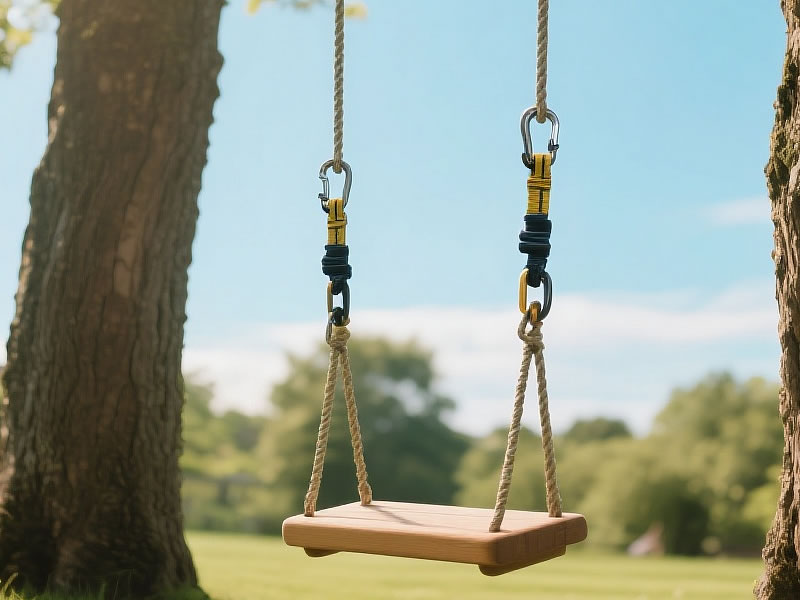
Buy Link: https://www.aliexpress.com/item/1005008983964737.html
The Physics of Slacklining: Constant Tension and Shock Loads
A properly tensioned slackline generates immense static forces that can easily exceed 8-10 kN even before anyone steps onto the line. When a rider bounces or falls, these forces can spike dramatically. This creates two primary challenges for carabiners:
- Sustained High Static Loads: Unlike climbing falls that last milliseconds, slackline tension maintains constant pressure on carabiners, which can lead to material fatigue in improperly selected equipment.
- Shock Loading During Tensioning: The process of tensioning the line, particularly with pulley systems, can generate brief but extreme force spikes that approach or exceed the system's working capacity.
Essential Carabiner Specifications for Slacklining
Not all climbing-rated carabiners are suitable for slacklining. The ideal slackline carabiner must meet several critical criteria:
- Material: Steel Over AluminumWhile aluminum carabiners work well for climbing due to their light weight, steel carabiners are strongly preferred for slacklining. Steel's superior resistance to abrasion from webbing and its higher strength capacity make it the safer choice for main line connections. The weight penalty is irrelevant in this application, as slackline carabiners remain stationary in the system.
- Locking Mechanism: Secure and ReliableScrew-gate or preferably triple-action locking mechanisms are essential. The gate must remain securely closed despite the webbing shifting and moving under load. Non-locking carabiners have no place in a slackline system, and wire gates lack the necessary robustness for repeated high-load applications.
- Strength Ratings: Beyond Minimum StandardsA carabiner used in the main line connection should have a major axis strength of at least 25-30 kN. While many climbing carabiners meet the 22-24 kN standard, the additional margin provided by higher-rated carabiners is valuable in slacklining applications. More important than major axis strength, however, is the minor axis strength, as side loading can occasionally occur in certain slackline configurations.
Proper Configuration and Use in Slackline Systems
Even the strongest carabiner becomes a liability if used incorrectly in a slackline setup:
- Avoiding the "American Death Triangle": Never configure carabiners in a way that creates inward pressure on the gates. A common dangerous practice involves connecting two carabiners with a single webbing loop in a manner that forces the gates open under load. Always ensure the system configuration maintains pressure along the spine of each carabiner.
- Webbing Interaction: Use carabiners with smooth, rounded spines to prevent damage to webbing. Sharp edges can gradually cut or abrade the line, creating a hidden danger. Regularly inspect both carabiners and webbing for signs of wear.
- Backup Systems: In highline setups, always incorporate redundant safety systems. This typically means using two independent carabiners at critical connection points, with gates opposed and reversed (so they face opposite directions and have opposite orientation).
Recommended Carabiner Types for Different Slackline Applications
- Anchors and Main Points: Large, steel screw-gate carabiners with strength ratings exceeding 30 kN, such as the Petzl William or DMM Rhino. Their robust construction provides maximum security for the most heavily loaded parts of the system.
- Leash Attachment: For connecting your leash to the harness, a standard climbing-rated locking carabiner (22+ kN) is sufficient, as it primarily sees bodyweight loads rather than full line tension.
- Pulley Systems: When using carabiners in mechanical advantage systems for tensioning, select models with wide, smooth spines that won't damage rope and with sufficient strength to handle the multiplied forces generated by pulley systems.
Maintenance and Inspection Protocol
Slacklining equipment requires diligent care:
- Inspect carabiners before each use for cracks, sharp edges, or gate malfunction
- Check for gate play or stickiness that might indicate internal damage
- Retire any carabiner that has been dropped onto a hard surface from height or shows visible deformation
- Keep threads clean and lightly lubricated for smooth operation
Conclusion
Selecting the right carabiner for slacklining requires understanding the unique demands of this sport. The ideal choice is a large, steel, locking carabiner with strength ratings significantly exceeding minimum climbing standards. More important than the specific model, however, is proper usage within a well-designed system that avoids dangerous configurations like the American Death Triangle. By choosing equipment specifically suited to the sustained high loads of slacklining and maintaining it properly, participants can focus on the joy of the sport while minimizing unnecessary risk. Remember that in slacklining, as in all aerial sports, your safety system is only as strong as its weakest component—and the carabiner is too critical a link to compromise on.




