




Carabiner Hook for Attaching Tools to a Harness
In the demanding environments of construction, arboriculture, and industrial work, efficiently managing tools while maintaining mobility and safety is a constant challenge. The practice of attaching tools directly to a harness using carabiners has become standard, but this seemingly simple task requires careful consideration. Selecting the wrong carabiner can lead to lost tools, damaged equipment, or, in worst-case scenarios, create unexpected safety hazards. Understanding the specific requirements for tool-management carabiners ensures both efficiency and safety on the job.
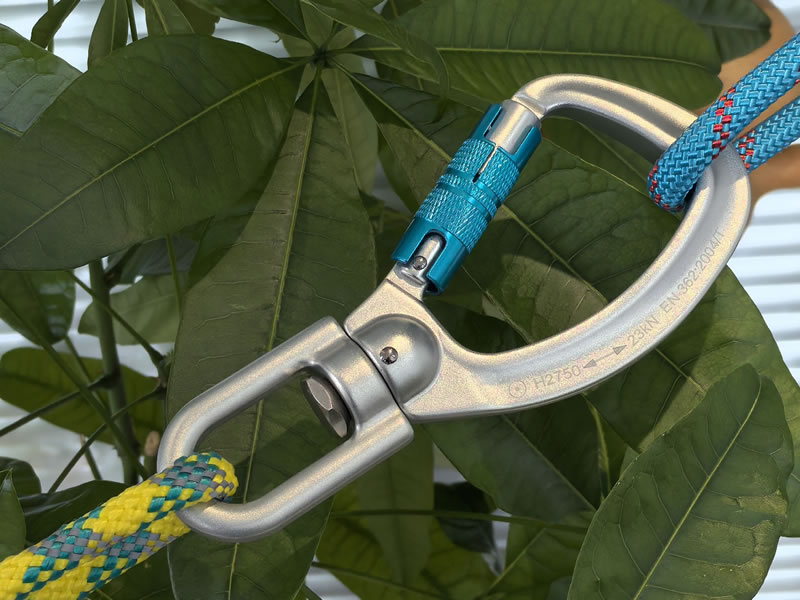
Defining the Purpose: Tool Management vs. Life Support
The most critical distinction to make is between a carabiner used for tool management and one used for life support or fall arrest. This distinction is absolute and non-negotiable.
- Tool Management Carabiners: These are solely for securing equipment like wrenches, pulleys, tape measures, or water bottles. They are subject to minimal, static loads—essentially the weight of the tool.
- Life Support Carabiners: These are used to connect a person to an anchor point or fall protection system and are subject to extreme dynamic forces.
Mixing these two applications is profoundly dangerous. A carabiner used for tools should never be considered part of a personal safety system. It must be visually distinct from life-support carabiners to prevent accidental misuse.
Key Selection Criteria for Tool Carabiners
- Gate Type: Wire-Gate for EfficiencyFor tool management, wire-gate carabiners are generally superior to solid-gate models.Lightweight: They add minimal weight to the harness, which is crucial when carrying multiple tools.Easy One-Handed Operation: The simple spring mechanism allows for quick clipping and unclipping with a single hand, a significant advantage when working at height.Less Prone to Freezing: The open design is less likely to become clogged with ice or mud in adverse conditions.
- Material: Aluminum for Weight SavingsAluminum alloy is the ideal material for tool carabiners. Its excellent strength-to-weight ratio means it can easily handle the static load of any hand tool without contributing significant weight to the user's loadout. The trade-off is that aluminum is softer than steel and will show wear more quickly, but for this application, that is an acceptable compromise.
- Size and Shape: Compact and FunctionalCompact Size: A smaller- to medium-sized carabiner is preferable. It should be large enough to clip onto a harness gear loop and secure the tool's lanyard, but not so large that it becomes unwieldy or snags on surroundings.Keylock Nose: A keylock or notchless nose design is highly recommended. It prevents the carabiner from snagging on harness webbing, tool lanyards, or clothing, facilitating smoother and faster operation.
- Locking Mechanism: Simple and SecureWhile a non-locking carabiner might seem sufficient, a simple screw-gate or twist-lock mechanism is advised for valuable or critical tools. This prevents the gate from being accidentally bumped open, which could lead to a dropped tool—a significant safety hazard for anyone working below. For less critical items, a basic snap-gate may be acceptable.
Safety Protocols and Best Practices
Adhering to these protocols is essential for maintaining a safe worksite:
- Color Coding: Implement a color-coding system. Use one specific color (e.g., black or blue) exclusively for tool carabiners, and reserve another color (e.g., green or red) for life-support carabiners. This visual check prevents dangerous confusion.
- Regular Inspection: Even tool carabiners require inspection. Check for:Excessive wear or grooving from contact with other metal objects.Gate malfunction, such as sticking or a weak spring.Any signs of cracking or deformation.
- Load Direction Awareness: Ensure tools are attached in a way that loads the carabiner along its major axis (spine to gate). Avoid configurations that could cause side-loading.
- Weight Consideration: Be mindful of the collective weight of tools attached to your harness. Excessive weight can lead to fatigue and affect balance.
Conclusion
Choosing the right carabiner for attaching tools to a harness is a decision that balances operational efficiency with fundamental safety principles. The optimal choice is a lightweight, aluminum, wire-gate carabiner with a keylock nose and a simple locking mechanism. By strictly segregating tool-management carabiners from life-support equipment and adhering to a disciplined inspection routine, workers can enhance their productivity while upholding the highest standards of jobsite safety. Remember, in the world of professional work at height, every piece of equipment, even the most humble tool carabiner, plays a role in the overall system of safety and efficiency.




