




Carabiner Hook for Survival Kits and Emergency Preparedness
In the realm of survival and emergency preparedness, every item in your kit must justify its space and weight by serving multiple critical functions. A well-chosen carabiner hook does exactly that, transitioning from a simple connector to a versatile survival tool that can dramatically enhance your capability to secure shelter, manage resources, and even effect self-rescue. However, not all carabiners are created equal for this demanding role, and selecting the right one requires careful consideration of materials, design, and intended applications in unpredictable scenarios.
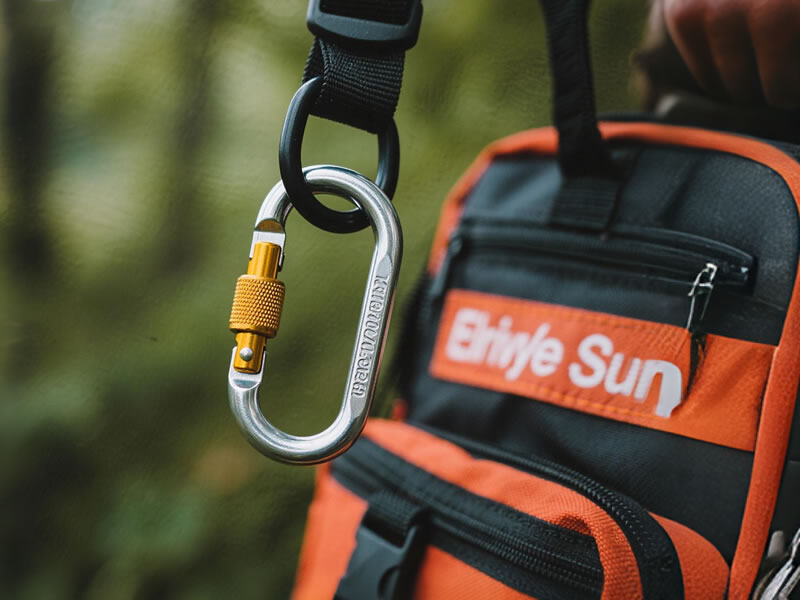
Selection Criteria for a Survival Carabiner
When choosing a carabiner for emergency preparedness, several factors transcend the considerations for recreational use:
- Material and Corrosion Resistance: In survival situations, your gear will likely be exposed to moisture, salt, and harsh elements. A stainless steel carabiner (preferably 316 grade) offers superior corrosion resistance compared to aluminum. While slightly heavier, its durability and resistance to degradation in wet environments make it the superior choice for a "always-ready" kit. Aluminum can oxidize and weaken over time if stored in damp conditions.
- Locking Mechanism Reliability: A positive locking mechanism is non-negotiable. An auto-locking gate (twist-lock or ball-lock) is preferable to a screw-gate for one crucial reason: it eliminates human error. In a high-stress emergency, you might forget to screw the gate closed, or your fine motor skills may be compromised by cold or injury. An auto-locker ensures the gate stays secured once closed, providing critical reliability when you need it most.
- Strength and Certification: While you may never load it to its breaking point, a high strength rating (look for a major axis strength of at least 22-25 kN) is a proxy for overall build quality and durability. UIAA or CE certification provides independent verification that the carabiner has passed rigorous tests for strength and gate function. This certification means the tool won't be the weak link in an improvised rescue or shelter system.
Critical Applications in Survival Scenarios
The true value of a survival carabiner lies in its adaptability:
- Shelter Construction: It can quickly tension guylines for a tarp or emergency shelter, function as a ridge-line connector, or secure shelter material to trees or other anchor points. Its strength allows for creating a taut, weather-resistant shelter far more efficiently than knots alone.
- Gear Management and Organization: A carabiner is perfect for securing essential gear to your pack or person. Use it to hang a water filtration system, keep a flashlight accessible, or prevent critical items like a firestarter or knife from being lost. In a bug-out situation, it helps keep your gear consolidated and secure.
- Improvised Rescue and Hauling: In a wilderness emergency, a strong, locked carabiner can be the central component of an improvised haul system for raising or lowering gear (and in extreme cases, a person) over a ledge. It can connect ropes for a longer line or create a simple pulley advantage system.
- Water Collection and Food Procurement: Attach it to a cord to retrieve water from a deep or difficult-to-access source. It can also serve as a weight for a throwing line or have a role in constructing certain types of fishing rigs or simple traps.
- Medical and Safety Applications: In a first-aid context, a carabiner can be used to create traction in a splinting system for a broken limb or to secure an injured person to a stable object during a move-to-safety operation.
What to Avoid in a Survival Context
It is equally important to understand the limitations. Avoid:
- Non-locking Carabiners: The risk of accidental unclipping is too great for critical applications.
- Decorative or Cheap Hardware Store Carabiners: These are not load-rated and are likely to fail under stress.
- Over-reliance: A carabiner is a tool, not a substitute for knowledge. Practice its various applications, particularly friction-based rope management techniques, before you need them in an emergency.
Conclusion
A high-quality, stainless steel, auto-locking carabiner is more than just an accessory for your survival kit; it is a force multiplier that enhances your ability to solve a wide array of problems. Its compact size belies its tremendous utility in securing shelter, managing resources, and executing emergency maneuvers. By selecting a certified, robust model and understanding its potential applications, you integrate a reliable and versatile hard point into your preparedness strategy—a tool that embodies the core survival principle of adaptability when conventional resources are unavailable. In a genuine crisis, such a simple yet profoundly capable tool can make the critical difference.




