




What Are the Best Trekking Poles for Hiking?
Trekking poles are no longer a niche accessory for hardcore mountaineers; they have become an essential piece of gear for hikers of all levels. The right pair can improve stability, reduce joint impact, and boost endurance on virtually any trail. But with a dizzying array of materials, mechanisms, and brands available, determining the "best" trekking pole is a highly personal decision. The ideal choice depends on your primary hiking style, the terrain you frequent, and your individual needs for weight, durability, and convenience.
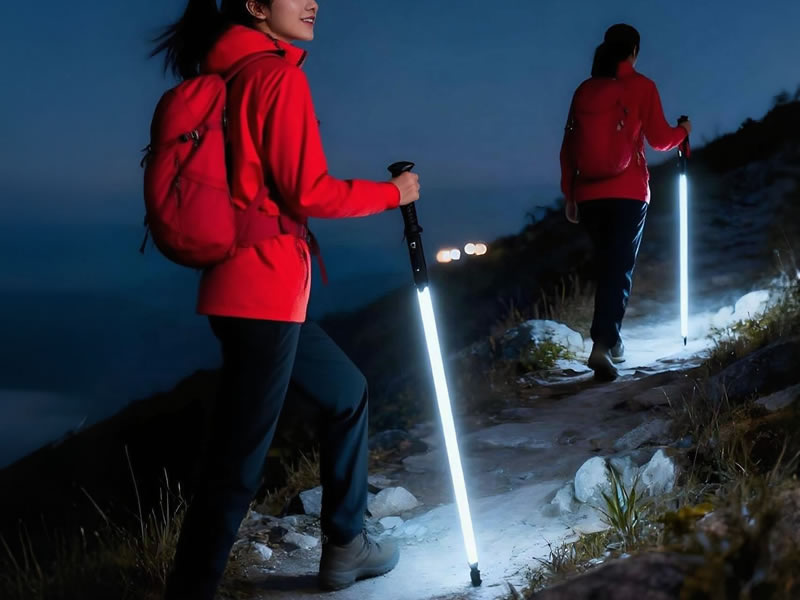
Recommended trekking pole purchase link: https://s.click.aliexpress.com/e/_c4M7OWaN
Key Considerations When Choosing Trekking Poles
Before diving into specific models, it's crucial to understand the core features that differentiate trekking poles.
- Material: Carbon Fiber vs. AluminumCarbon Fiber: The premier choice for weight-conscious hikers. Carbon fiber poles are significantly lighter than aluminum, reducing arm fatigue over long distances. They also excel at damping trail vibration. The trade-off is that high-performance carbon can be more expensive and, under certain sideways impacts, is more prone to snapping than bending.Aluminum: The workhorse of the trekking pole world. Aluminum alloys (like 7075) are incredibly durable, cost-effective, and tend to bend rather than break catastrophically. While heavier, they are often the better choice for rugged, off-trail travel, backpacking with heavy loads, or for hikers who are rough on their gear.
- Shaft Construction: Foldable vs. TelescopingTelescoping Poles (Adjustable): These are the most common and versatile. They feature two or three adjustable sections with a locking mechanism (see below). Their main advantage is customizable length, which is perfect for varying terrain, adjusting for different users, or fitting into checked luggage.Foldable / Z-Poles: Designed for speed and ultra-light packing, these poles collapse down into three or four segments connected by an internal cord. They are incredibly quick to deploy and pack down shorter than most telescoping poles, making them ideal for fastpacking, trail running, and hikers who frequently stow their poles. The downside is a lack of length adjustability on the fly.
- Locking Mechanism: Lever vs. TwistFlickLock / Lever Lock: This external lever mechanism clamps the shaft sections together. It is widely regarded as the most reliable and easy-to-use system, especially with gloved hands. It provides a very secure lock and is easy to adjust, even when muddy or frozen.Twist Lock: An internal expanding mechanism is activated by twisting the shaft. While often lighter and creating a sleeker profile, twist locks can be prone to slipping over time and are more difficult to operate when your hands are cold or wet. Higher-end models have improved this design significantly.
- Grips and AccessoriesGrip Material: Look for ergonomic grips made from soft, moisture-wicking foam for long, sweaty ascents, or durable cork that molds to your hand shape. Rubber grips are durable and warm in cold weather but can feel slippery when wet with sweat.Baskets: Small, removable baskets are standard for most trail hiking. Larger, wide-area baskets are essential for travel on snow to prevent the poles from sinking in deeply.
Top Recommendations for Different Hiking Styles
- Best All-Around: Black Diamond Trail ProThese telescoping poles strike a perfect balance. They feature a durable aluminum construction, the reliable FlickLock Pro locking system, and supremely comfortable contoured foam grips. They are robust enough for heavy backpacking yet light enough for day hikes, making them an excellent choice for the hiker who does it all.
- Best for Ultralight & Fastpacking: Black Diamond Distance ZA benchmark in the foldable pole category, the Distance Z is incredibly lightweight and packs down tiny. Its simple, effective folding mechanism and comfortable grips make it the go-to for athletes and gram-counters who prioritize speed and minimal pack weight over adjustability.
- Best for Technical Terrain & Heavy Loads: LEKI Micro Vario CarbonLEKI is renowned for its precision engineering. The Micro Vario Carbon combines a carbon fiber shaft for light weight with an external SpeedLock (lever lock) for absolute reliability. Many models also feature an integrated strap system (like LEKI's Trigger S) that attaches to a glove, allowing for a more natural and secure grip without constantly clutching the handle.
- Best Value: REI Co-op Traverse Power LockFor hikers on a budget, the REI Co-op Traverse poles offer exceptional quality for the price. Available in both aluminum and carbon, they feature a dependable lever-lock mechanism and comfortable grips, providing performance that rivals more expensive brands without breaking the bank.
Conclusion
The "best" trekking pole ultimately fits your hand, your pack, and your hiking ambitions. For the versatile hiker seeking one pair to handle most situations, a lever-lock, telescoping aluminum pole like the Black Diamond Trail Pro is a fantastic and durable foundation. If your priority is shaving every gram for speed and distance, a carbon fiber foldable pole like the Black Diamond Distance Z is unmatched. Whichever you choose, investing in a quality pair of trekking poles is an investment in your comfort, stability, and longevity on the trail, allowing you to hike farther and feel better at the end of the day. Before you buy, if possible, visit a local outfitter to feel the different grips and mechanisms in your hand—the best pole is the one you'll be happy to carry.




