




Best trekking poles for uphill and downhill hiking
Hiking in mountainous terrain presents constantly changing biomechanical demands that make adjustable trekking poles not just helpful, but essential. The right poles can transform your efficiency and safety, turning grueling ascents and punishing descents into manageable, rhythmic activities. Understanding how pole length, weight, and construction affect your performance on varied grades is key to selecting equipment that truly enhances your mountain experience rather than just adding weight to your pack.
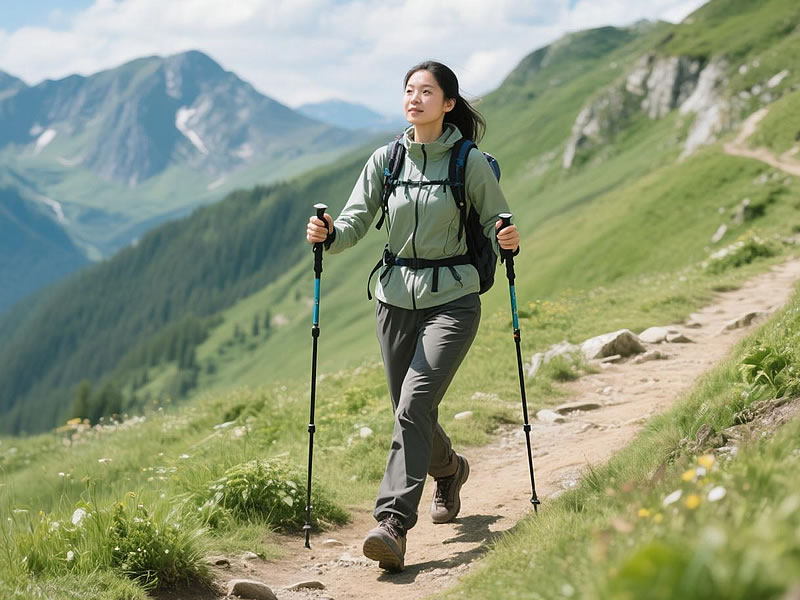
Recommended trekking pole purchase link: https://s.click.aliexpress.com/e/_c4M7OWaN
The Science of Pole Length on Inclines
The fundamental principle behind using trekking poles on changing terrain is maintaining optimal elbow angle. Your elbow should form approximately a 90-degree angle when the pole tip is planted firmly beside you on level ground. This position maximizes leverage and power transfer while minimizing shoulder strain.
- Uphill Technique: On ascents, you should shorten your poles by 5-15 cm (2-6 inches). This adjustment allows you to maintain an upright posture while planting the poles behind you, effectively pushing your body upward. Longer poles on climbs force you to lean forward excessively, reducing breathing efficiency and engaging your core muscles less effectively. The shortened position creates better leverage for "poling" yourself up the mountain.
- Downhill Technique: When descending, lengthen your poles by 5-15 cm beyond your flat-terrain length. The extended reach allows you to plant poles securely on the trail below you before committing your weight to the next step. This technique significantly reduces impact forces on your knees and quadriceps—studies suggest proper pole use can reduce lower body impact by up to 25%. The forward placement also improves stability and helps control your descent speed.
Essential Features for Variable Terrain
Not all adjustable poles perform equally well on steep grades. Several features become particularly important:
- Quick, Reliable Adjustment Systems: The ability to rapidly change length between ascent and descent sections is crucial. External lever locks (like Black Diamond's FlickLock or LEKI's SpeedLock) outperform twist locks for this application. They provide visible confirmation of engagement, are easier to operate with cold or tired hands, and maintain consistent tension under the varied loads of uphill pushing and downhill braking.
- Optimal Weight Distribution: While lightweight poles reduce overall energy expenditure, the weight distribution along the pole shaft affects swing weight and control. Poles that feel balanced in your hand require less effort to plant precisely, which becomes increasingly important as fatigue sets in during long climbs or technical descents.
- Shock Absorption Capabilities: Some premium poles feature integrated suspension systems (like LEKI's Super Lock System) that absorb impact during descents. While adding minimal weight, this technology can significantly reduce fatigue in wrists, elbows, and shoulders, particularly when carrying a heavy backpack downhill.
- Grip Design for Varied Hand Positions: On extended ascents, you'll often "pal" the tops of your poles rather than using the grips. Models with extended grip profiles or lower shaft grips (like the Black Diamond Trail Pro) accommodate this technique naturally, allowing for more varied hand positions that reduce fatigue during long climbs.
Top Recommendations for Mountain Terrain
After extensive testing on actual mountain trails, several models stand out for their performance on both ascents and descents:
- Black Diamond Trail Pro: These aluminum poles feature a durable 7075 aluminum construction that withstands the rigors of rocky trails. The FlickLock Pro adjustment system provides secure, one-handed length changes, while the contoured foam grips remain comfortable during extended use in both pushing and braking positions.
- LEKI Micro Vario Carbon: For hikers prioritizing weight savings without sacrificing adjustability, these carbon fiber poles offer an excellent solution. The external SpeedLock adjustment provides reliable performance comparable to aluminum models, while the carbon construction significantly reduces vibration transmission during descents.
- Komperdell C3 Powerlock Traveller: These Austrian-made poles feature a unique triple-section design that provides more length adjustment options than standard two-section poles. The Powerlock system maintains secure positioning even under heavy braking loads during descents, and the included interchangeable tips adapt to various surface conditions.
- REI Co-op Traverse Power Lock: Offering exceptional value, these poles come in both aluminum and carbon options with reliable lever locks that facilitate quick length adjustments. The cork grips mold to your hands over time, providing excellent comfort during the varied grip requirements of ascending and descending.
Technique Refinement for Maximum Benefit
Even the best poles won't help without proper technique:
- Rhythmic Planting: Establish a natural rhythm where opposite arms and legs work together (right pole plants with left foot). This contralateral movement improves balance and efficiency.
- Uphill Pole Angle: On steep ascents, plant poles at a slightly rearward angle to maximize forward propulsion rather than simply vertical support.
- Downhill Braking: Use your poles to control descent speed by applying pressure through the straps rather than gripping tightly, which can quickly fatigue forearm muscles.
- Stream Crossings: Lengthen poles significantly for secure placement when crossing streams or navigating tricky sections where extra reach enhances safety.
Conclusion
The best trekking poles for uphill and downhill hiking are those that seamlessly adapt to the constantly changing demands of mountain terrain. While carbon fiber options offer weight advantages, aluminum poles often provide better durability for the inevitable rock strikes that occur on technical trails. The crucial factor remains easy, reliable adjustability—the ability to quickly optimize pole length for each section of trail transforms good poles into indispensable mountain partners. Investing in quality adjustable poles and mastering their use represents one of the most significant upgrades you can make to your hiking system, potentially adding years of comfortable mountain travel to your outdoor career by reducing cumulative impact on your lower body. When selected wisely and used skillfully, the right trekking poles don't just make mountain hiking easier—they make it more enjoyable, sustainable, and accessible throughout your lifetime of adventure.




