




Best Trekking Poles for Backpacking with a Heavy Load
Backpacking with a heavy load fundamentally changes your relationship with trekking poles. No longer just stability aids, they become crucial structural components that transfer significant weight from your legs to your arms and shoulders, reducing fatigue and protecting your knees during demanding descents. When selecting poles for heavy backpacking, the priorities shift dramatically from ultralight minimalism to uncompromising strength, reliability, and features that perform under sustained pressure. The wrong poles can mean the difference between a confident stride and a dangerous equipment failure miles from civilization.
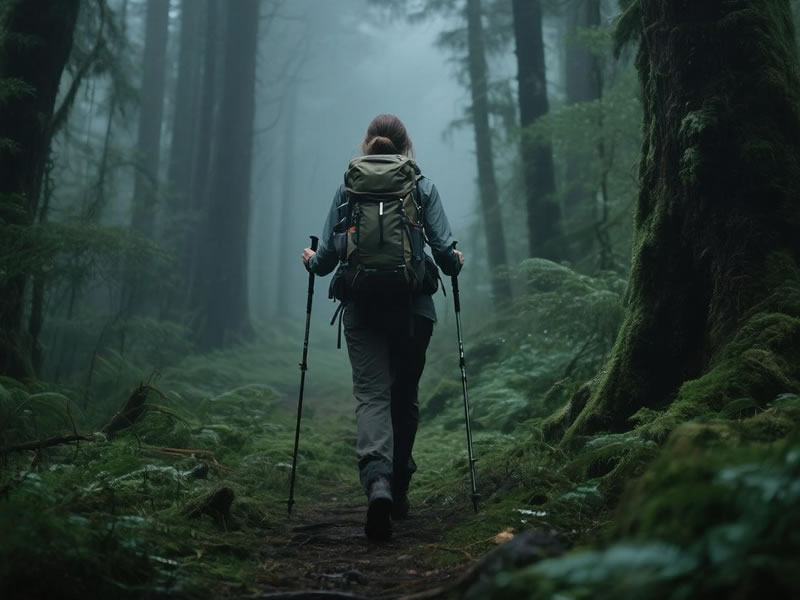
Recommended trekking pole purchase link: https://s.click.aliexpress.com/e/_c4M7OWaN
The Critical Role of Strength and Durability
With a 30-50 pound pack on your back, the forces acting on your trekking poles multiply exponentially. This makes specific design features non-negotiable:
- Material Choice: Aluminum's Superiority: While carbon fiber poles are popular for their light weight, high-quality aluminum poles (specifically those made from 7075-series aluminum) are the unequivocal choice for heavy loads. The reason is simple: physics. Aluminum has a higher impact resistance and, crucially, tends to bend under extreme stress rather than snapping catastrophically like carbon fiber. When you're leaning your full body weight plus your pack onto a pole during a steep descent, this predictable failure mode is a critical safety feature. Models like the Black Diamond Trail Pro are benchmark setters in this category.
- Locking Mechanism Reliability: This is arguably the most important feature. The locking mechanism must maintain pole length under repeated, heavy loading and unloading. External lever locks (such as Black Diamond's FlickLock Pro or LEKI's SpeedLock) are vastly superior to twist locks for this application. They provide a larger clamping surface, are less prone to slipping when dirty or wet, and offer visual and tactile confirmation that they are securely engaged. A slipping twist lock under a heavy load on a steep trail is more than an inconvenience—it's a genuine hazard.
Essential Features for Load-Bearing Performance
Beyond the core construction, several features dramatically enhance performance and comfort when carrying substantial weight:
- Effective Shock Absorption: Many premium poles now feature internal spring mechanisms (like those in certain LEKI and Komperdell models) that absorb a percentage of the impact with each step. While this adds minimal weight, the benefit for a heavy-load backpacker is profound. By dampening the shock that travels up your arms and into your shoulders and back, these systems significantly reduce overall fatigue on long descents, preserving energy and reducing joint strain.
- Ergonomic Grip and Strap Design: Your hands will be in constant contact with the poles, making grip design critical. Cork grips are excellent as they naturally wick moisture and mold to your hand shape over time. Contoured foam grips (like those on the Trail Pro) also provide exceptional comfort and sweat absorption. The strap is equally important; a wide, padded, ergonomically shaped strap (such as LEKI's Trigger S) distributes pressure across your hand, allowing you to transfer weight through the strap without needing to grip tightly, which prevents hand cramping.
- Tungsten Carbide Tips: Standard steel tips will wear down quickly when used to brake and stabilize heavy loads on rocky terrain. Tungsten carbide tips, found on many high-end models, are exponentially harder and provide superior grip on rock and ice, maintaining their sharpness over hundreds of miles.
Top Recommendations for Heavy-Duty Backpacking
- Black Diamond Trail Pro: The industry standard for load-bearing reliability. Its 7075 aluminum construction, bomber FlickLock Pro levers, and comfortable contoured grips make it a trusted choice for guides and serious backpackers worldwide.
- LEKI Micro Vario Carbon: For those who prioritize weight savings but refuse to sacrifice strength, this model is a compelling option. It pairs a high-modulus carbon shaft with LEKI's reliable external SpeedLock system. While carbon, its construction is robust enough for substantial loads, and its vibration damping is exceptional.
- Komperdell C3 Powerlock: Austrian-made Komperdell poles are renowned for their durability. The Powerlock system is exceptionally robust, and many of their models feature shock absorption tailored for downhill travel with a pack.
- REI Co-op Traverse Power Lock: An outstanding value proposition, these poles offer reliable lever locks and comfortable cork grips in either aluminum or carbon construction, making professional-grade features accessible at a more moderate price point.
Technique and Maintenance for Longevity
Using poles effectively under heavy loads requires slight technique adjustments. On descents, plant the pole forward and allow your weight to press down through the strap, using your skeletal structure to support the load rather than your arm muscles. Regularly inspect your poles for stress, particularly at the locking mechanisms and just below the grips. Clean dirt and grit from the locks after each trip, and check that the lever mechanisms maintain their clamping force. A periodic application of a dry lubricant to the internal shaft walls can prevent seizing.
Conclusion
When your backpack is heavy and the trail is long, your trekking poles transform from accessories into essential load-bearing equipment. The investment in robust, aluminum poles with reliable external lever locks, comfortable grip systems, and durable tips is an investment in your safety, endurance, and long-term joint health. While they may weigh a few ounces more than their ultralight counterparts, the confidence that comes from knowing your poles will not fail when you need them most is priceless. For the serious backpacker, choosing poles designed for heavy loads isn't just a matter of preference—it's a fundamental part of a safe and sustainable backcountry travel system.




