




Best trekking poles for mountain climbing
Reaching a mountain summit is a test of endurance, skill, and preparation. While your footwear and backpack get much of the attention, a reliable pair of trekking poles can be the unsung hero of your ascent and, just as importantly, your descent. However, not all poles are created equal for the extreme demands of mountain terrain. This guide will break down the critical features to look for, helping you choose a pair that enhances stability, saves energy, and improves safety when it matters most.
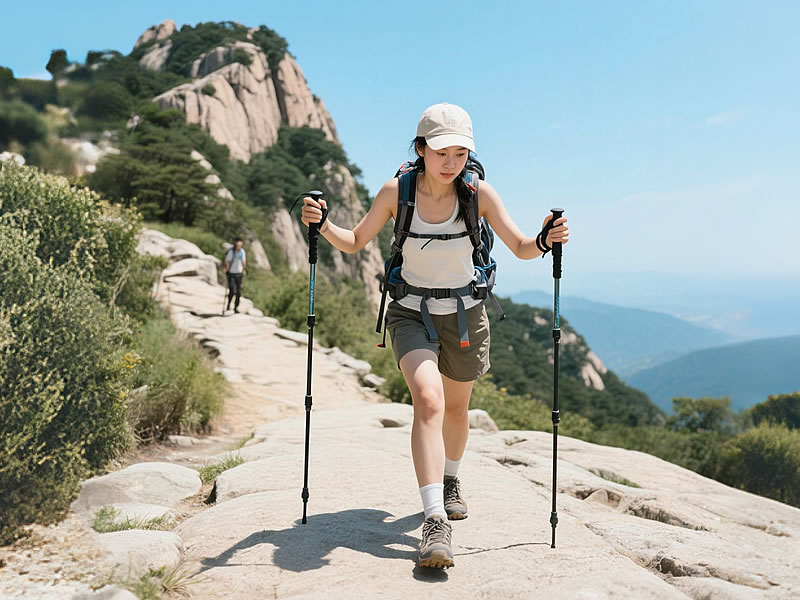
Recommended trekking pole purchase link: https://s.click.aliexpress.com/e/_c4M7OWaN
Why Poles are Non-Negotiable for Mountaineering
On mountain trails, trekking poles transition from a helpful accessory to an essential piece of gear. Their benefits are multifaceted:
- Power and Efficiency on Ascents: Poles engage your upper body, propelling you forward and upward. This distributes the workload across more muscle groups, reducing fatigue in your legs and conserving vital energy for the summit push.
- Knee and Joint Preservation on Descents: This is arguably their most crucial function. On steep, rocky descents, poles transfer significant impact away from your knees and quads, reducing muscle soreness and long-term joint wear.
- Enhanced Stability and Safety: They provide two additional points of contact when crossing scree fields, navigating boulder scrambles, or fording streams. This dramatically improves balance and helps prevent twisted ankles or falls on unstable ground.
Critical Features for Mountain-Specific Poles
When your safety depends on your gear, these features are paramount:
1. Shaft Material: The Strength-to-Weight Ratio
- Carbon Fiber: The top choice for most serious mountaineers seeking to minimize weight without sacrificing performance. High-quality carbon fiber (often labeled as "100% Carbon" or using grades like "3K") offers an excellent blend of stiffness and shock absorption. The key consideration is impact resistance; while modern composites are robust, a sharp, direct hit on a rock could potentially cause a splinter or break.
- 7075 Aluminum: The workhorse of the mountain world. This aerospace-grade aluminum is incredibly durable and impact-resistant. It will typically bend under extreme stress rather than snap, which can be a safety feature in itself. It's slightly heavier than carbon but often more affordable and trusted for its bombproof reliability in the most rugged conditions.
2. The Locking Mechanism: FlickLocks are King
Precision and reliability are non-negotiable. FlickLocks (or lever locks) are universally preferred over twist locks for mountain climbing. They allow for quick, one-handed adjustments with frozen or gloved hands. More importantly, they are far less prone to slipping under heavy load or freezing shut, a critical failure point that twist mechanisms can experience in cold, wet conditions.
3. Grips and Straps: Control and Comfort
- Grip Material: Cork is a fantastic all-around choice as it conforms to your hand, wicks moisture, and remains comfortable in varying temperatures. Foam (EVA) excels at absorbing sweat and is warm to the touch, making it great for cold starts. Look for contoured shapes designed for a secure, ergonomic hold.
- Straps: A well-designed, wide strap distributes pressure and allows you to transfer power through the pole without a death grip, saving hand fatigue. Look for quick-release features for safety in technical terrain.
4. Weight and Packability
Every ounce counts when you're gaining thousands of feet of elevation. Ultralight carbon fiber poles shine here. Furthermore, consider Z-poles (folding poles) for their incredible packability, allowing you to stow them easily on your pack during technical scrambling sections where poles are a hindrance.
5. Baskets and Tips
- Baskets: Standard trekking baskets are usually sufficient for most mountain trails. However, if your route involves sections of snow or soft ground, ensure your poles are compatible with larger snow baskets to prevent post-holing.
- Tips: Sharp, durable carbide tips are essential for biting into ice, rock, and hard-packed earth. Rubber tip protectors are useful for road walks but should be removed on the trail for maximum grip.
Conclusion: Your Third and Fourth Legs on the Mountain
Choosing the best trekking pole for mountain climbing is an investment in your performance, safety, and long-term joint health. Prioritize a model with a bombproof locking mechanism (FlickLock), a material that suits your balance of weight and durability (Carbon or 7075 Aluminum), and comfortable, moisture-wicking grips. Brands like Black Diamond, Leki, and Komperdell offer excellent models that meet these rigorous standards. By selecting the right poles, you equip yourself with a tool that not only helps you reach the summit but ensures you can return safely, strong and ready for the next adventure.




