




What are hiking poles used for? Beyond Stability: 7 Key Benefits
When you see a hiker with poles, it's easy to assume they're just for extra balance. However, the uses of hiking poles are vast and transformative, making them one of the most valuable pieces of gear for any trail enthusiast. They are multi-functional tools that enhance safety, efficiency, and comfort on virtually any terrain.
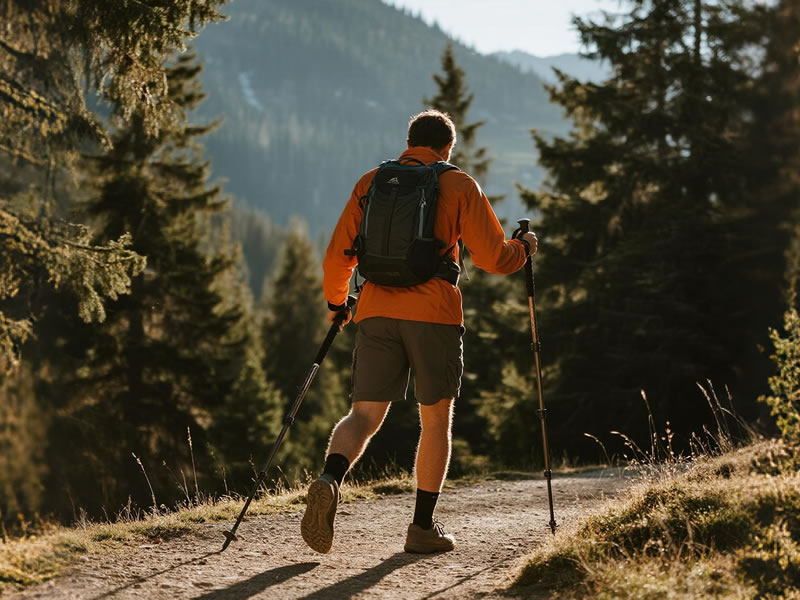
Recommended trekking pole purchase link: https://s.click.aliexpress.com/e/_c4M7OWaN
Here’s a detailed look at what hiking poles are truly used for:
1. Enhanced Stability and Safety
The primary use of hiking poles is to provide a stable, four-point contact with the ground. This is crucial on challenging terrain:
- Uneven Trails: Navigate roots, rocks, and ruts with confidence.
- Loose Surfaces: Prevent slips on gravel, scree, or sandy paths.
- Water Crossings: Test the depth and stability of riverbeds and streams before taking a step.
- Slippery Conditions: Gain crucial points of contact on mud, ice, or wet wooden boardwalks.
This increased stability significantly reduces the risk of twists, slips, and falls.
2. Joint Preservation and Impact Reduction
This is a game-changer for long-term hiker health. On steep descents, your knees and ankles absorb a force several times your body weight. Hiking poles act as shock absorbers:
- They transfer a significant portion of this impact from your lower body to your arms and shoulders.
- This reduces cumulative wear and tear on knee joints, cartilage, and ligaments, making hiking more sustainable and less painful, especially for those with existing joint issues.
3. Improved Power and Endurance
Hiking poles aren't just for downhill; they are powerful uphill aids. By engaging your upper body muscles—arms, shoulders, and back—you effectively propel yourself forward. This "power push" distributes the workload across more muscle groups, which:
- Reduces fatigue in your legs and cardiovascular strain.
- Helps you maintain a steady pace on inclines.
- Increases overall endurance, allowing you to hike longer distances.
4. Full-Body Workout
By incorporating your upper body, trekking poles turn a lower-body hike into a full-body exercise. This increases your heart rate moderately and engages core muscles for balance, leading to a more efficient and calorie-burning workout.
5. Versatile Trail Tool
The utility of a hiking pole extends beyond walking:
- Probe and Test: Tap ahead to check the depth of mud or a puddle. Gauge the stability of a rock before stepping on it.
- Clear the Path: Push aside thorny branches, spider webs, or overgrown foliage.
- Aid in Navigation: Part tall grass or ferns to better see the trail.
- Wildlife Precautions: Make noise in snake country or gently encourage a curious critter to move along.
6. Support for Load-Bearing
If you carry a backpack, especially on multi-day trips, hiking poles provide essential support. The added stability helps you manage the shifted center of gravity from a heavy pack, reducing the strain on your back and legs and improving overall balance under load.
7. Emergency and Practical Uses
In a pinch, a hiking pole can be a critical survival tool:
- Makeshift Shelter: They can serve as the structural frame for an emergency tarp shelter or bivvy.
- Medical Aid: A pole can be used as a splint for a leg or arm injury.
- Self-Defense: While rare, it can provide a deterrent against off-leash dogs or other wildlife threats.
In conclusion, hiking poles are used for far more than just stability. They are a proactive tool for preserving your body, enhancing your performance, and increasing your safety. From reducing knee pain to giving you the boost needed for that final summit push, they are an investment that pays dividends in comfort, capability, and confidence on every trail.




