




Why Use Hiking Poles? 6 Compelling Reasons to Make the Switch
If you're on the fence about investing in a pair of trekking poles, you're not alone. Many hikers see them as an optional accessory for the elderly or injured. However, the reality is that hiking poles are a performance-enhancing tool that can benefit every hiker, from a weekend warrior to a seasoned thru-hiker. The question isn't "Who needs them?" but rather, "Why wouldn't you use them?"
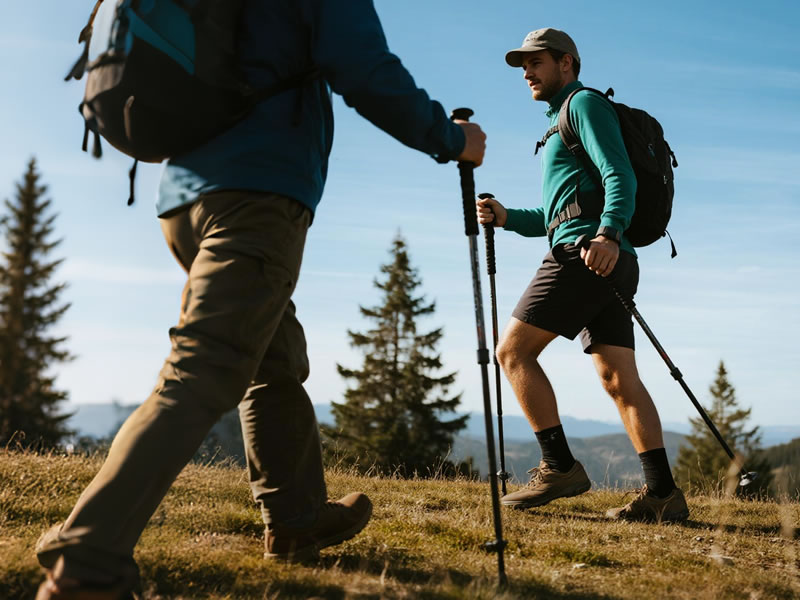
Recommended trekking pole purchase link: https://s.click.aliexpress.com/e/_c4M7OWaN
Here are six compelling reasons why you should consider using hiking poles on your next adventure.
1. To Protect Your Joints and Reduce Impact
This is arguably the most significant benefit, especially for long-distance hikers or those with existing knee or hip issues. When you descend a trail, your lower body absorbs a force equal to several times your body weight. This repetitive impact can lead to pain and long-term joint wear.
Hiking poles act as external shock absorbers. By planting a pole ahead of you on a descent, you transfer a substantial portion of that impact from your knees and ankles to your arms and shoulders. This dramatically reduces the cumulative stress on your lower body, allowing you to finish your hike feeling fresher and protecting your joints for a lifetime of adventure.
2. To Enhance Stability and Prevent Falls
Two legs are good, but four points of contact are undeniably better. Hiking poles provide critical stability on challenging terrain. Whether you're navigating a rocky path, crossing a slippery stream, or traversing a loose gravel slope, poles give you extra balance points to prevent slips and twists. This increased stability is not just about comfort—it's a crucial safety feature that can prevent serious injuries in remote locations.
3. To Increase Power and Endurance
Hiking poles aren't just for going down; they are a powerful asset for going up. By engaging your upper body muscles—your arms, shoulders, and back—you effectively propel yourself forward on uphill sections. This "power push" distributes the workload across more muscle groups, which reduces fatigue in your legs and lowers your overall heart rate. The result? You conserve energy, maintain a better pace, and can hike longer distances with less perceived effort.
4. To Improve Balance Under a Heavy Load
If you carry a backpack, especially on multi-day trips, your center of gravity shifts, making you more prone to losing your balance. Hiking poles provide essential lateral stability, acting as outriggers to help you manage the weight of your pack. This makes you more sure-footed on uneven terrain and reduces the strain on your core and legs as they work to keep you upright.
5. For a Full-Body Workout
Forget the gym; take your hike to the next level. By consistently using your arms and core to plant and push off the poles, you transform a lower-body cardio workout into a comprehensive full-body exercise. This leads to better muscle engagement, a higher calorie burn, and improved overall fitness.
6. For Versatility and Practical Trail Uses
Beyond walking aids, hiking poles are incredibly versatile tools. They can be used to:
- Clear the path of spider webs and overgrown vegetation.
- Probe uncertain ground to test the depth of mud or the stability of a rock.
- Part tall grass to check for hidden obstacles or wildlife.
- Create a makeshift shelter by serving as the frame for an emergency tarp.
Conclusion: An Investment in Your Hiking Future
So, why use hiking poles? The answer is clear: they make hiking safer, more efficient, and more sustainable. They are not a sign of weakness but a tool of the savvy outdoorsperson. By reducing joint impact, boosting endurance, and providing critical stability, they empower you to tackle more challenging trails, recover faster, and continue enjoying the mountains for years to come. It's a small investment that pays massive dividends on every single trail.




