




Hiking Poles vs Trekking Poles: What's the Difference?
For outdoor enthusiasts, the choice between hiking poles and trekking poles can be confusing. While these terms are often used interchangeably, subtle distinctions in their design, function, and ideal usage scenarios can influence which is best for your adventure. Understanding these differences ensures you have the right gear for your journey, whether it's a gentle day hike or a multi-day mountain expedition.
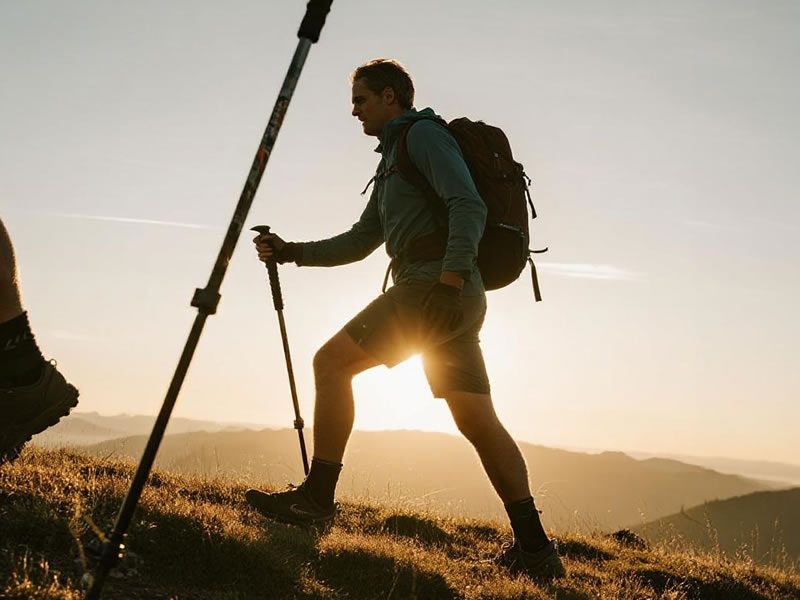
Recommended trekking pole purchase link: https://s.click.aliexpress.com/e/_c4M7OWaN
At a Glance: Key Differences
While hiking poles and trekking poles share a common purpose—to assist and stabilize walkers—the devil is in the details. The table below summarizes the core distinctions to help you quickly understand their unique characteristics.
| Feature | Hiking Poles | Trekking Poles |
|---|---|---|
| Primary Use | Generally used for less demanding, shorter hikes on relatively even terrain -1. | Designed for challenging, multi-day expeditions with heavy packs and complex landscapes -1. |
| Typical Terrain | Well-maintained trails, day hikes, and flat or rolling landscapes -1. | Rugged, uneven mountain paths, long-distance trails, snow, and off-road conditions -1. |
| Design & Construction | Often simpler, sometimes available as a single pole ("hiking staff") -1. | Typically used in pairs -1, with more heavy-duty materials and advanced features like anti-shock springs. |
| Weight & Durability | Can be lightweight but may not be as reinforced for heavy, sustained use. | Built for endurance, often using robust materials like high-grade aluminum to withstand harsh conditions -1. |
A Deeper Look into Terminology and Use Cases
The language around walking aids offers clues to their intended use. The term "hiking staff" traditionally refers to a single pole used for relatively flat terrain -1. In contrast, "trekking poles" are inherently designed for "trekking," which implies a long, challenging journey, often with a heavy backpack, and are almost always used in pairs for maximum stability -1.
This linguistic nuance points to their core difference: hiking poles are generally for support on gentler paths, while trekking poles are built for performance and safety in demanding environments.
Choosing the Right Pole for Your Needs
Selecting between hiking and trekking poles ultimately depends on the adventures you have planned.
- For the Day Hiker: If your activities consist of day trips on well-established trails without a heavy pack, a sturdy pair of hiking poles will likely suffice. They provide excellent balance for stream crossings and help reduce fatigue on downhill sections.
- For the Trekker and Backpacker: If you venture into rugged, remote terrain, face significant elevation changes, or carry a multi-day backpack, investing in a reliable pair of trekking poles is wise. Their robust construction, superior locking mechanisms, and pair-based design are crucial for safety and efficiency over long distances -1.
Key Features to Consider When Buying
No matter what you call them, paying attention to these key features will ensure you get a pole that meets your needs:
- Material: Aluminum poles (especially 7075 or 7001 grades) are durable, affordable, and ideal for tough conditions. Carbon fiber poles are significantly lighter and offer better vibration dampening but can be more vulnerable to sharp impacts -1.
- Locking Mechanism: External lever locks are strong, easy to operate with cold or gloved hands, and have become the mainstream choice for their reliability. Internal twist locks can be more streamlined but may slip or be difficult to tighten if they get dirty -1.
- Grip Material: EVA foam offers a soft, sweat-absorbent grip. Cork molds to your hand over time and performs well in varied weather. Rubber provides a durable, secure grip but can feel sticky in hot weather -1.
Final Verdict
While the line between hiking and trekking poles is often blurry, the key is to match the gear to your activity. Hiking poles are excellent companions for casual day hikes and lighter loads. Trekking poles are the go-to choice for serious adventurers tackling challenging, multi-day trips where reliability and performance are paramount. By considering the terrain, your pack weight, and the pole's features, you can make an informed decision that will help you walk farther, more comfortably, and more safely.
Have a favorite trail where your poles made all the difference? Share your experience in the comments below




