




Best Hiking Poles for Heavy Person: A 2025 Guide to Durability and Support
For heavier hikers (typically 250+ lbs), standard trekking poles may not provide sufficient stability or durability. The right pair must balance robust construction with smart features to ensure safety, reduce joint strain, and enhance comfort on the trail. This guide covers critical selection criteria and top-rated poles designed to support larger frames.
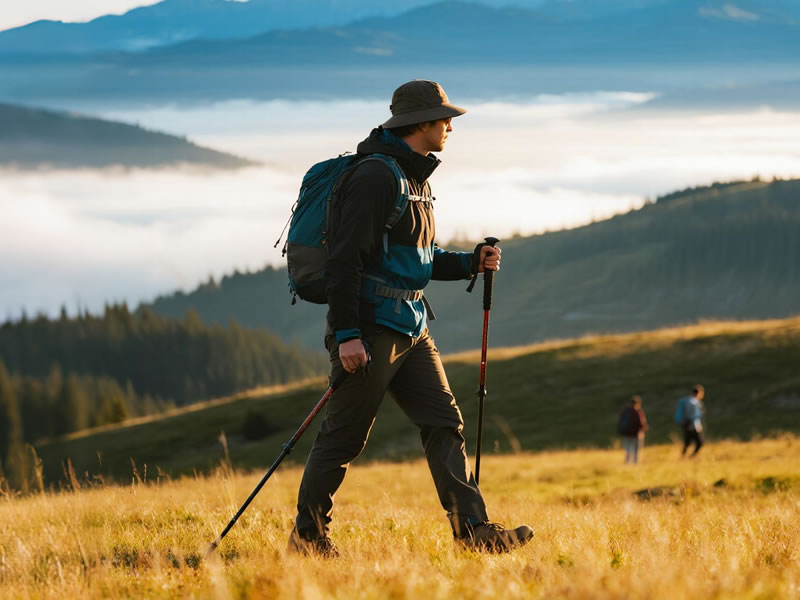
Recommended trekking pole purchase link: https://s.click.aliexpress.com/e/_c4M7OWaN
⚖️ Why Hiking Poles Matter for Heavy Persons
- Weight Distribution: Hiking poles transfer up to 30% of impact forces from your lower body to your arms and shoulders, reducing strain on knees, hips, and ankles-5.
- Enhanced Stability: Additional points of contact improve balance on uneven terrain, loose gravel, or stream crossings.
- Durability Demands: Standard poles risk bending or failing under higher loads. Reinforced materials and locking mechanisms are essential.
🔍 Key Features to Prioritize
- Shaft Material:Aluminum (7075 or HTS 6.5): Offers superior durability and impact resistance. Models like the LEKI Sherpa use HTS 6.5 aluminum, which withstands rough terrain and heavier weights-1-4.Avoid basic carbon fiber: While lighter, carbon fiber may lack the rigidity needed for sustained heavy loads unless specifically reinforced (e.g., with Kevlar, as in the MSR Dynalock Ascent Carbon)-9.
- Locking Mechanisms:Lever Locks (e.g., Speed Lock 2 Plus): Provide secure, tool-free adjustments and are less prone to slipping under pressure-1-4.Avoid twist locks: These can loosen over time and may not maintain tension under heavy use.
- Weight Capacity & Build:Check manufacturer specifications for weight limits. While many brands don’t explicitly state limits, poles with thicker shaft diameters (e.g., 16–18 mm) and minimal segments (3-section) tend to be stronger.Example: The LEKI Sherpa features a three-section design with 18|16|14 mm diameters, ideal for load-bearing-1.
- Ergonomic Comfort:Wide, Padded Straps: Distribute pressure evenly (e.g., LEKI’s Lock Security Strap Skin 4.0)-1.Cork or Foam Grips: Absorb sweat and reduce vibration. The LEKI Wanderfreund includes a cork Multimed grip for comfort during long hikes-2.
🥾 Top Recommended Poles for Heavy Hikers
| Model | Material | Key Features | Best For |
|---|---|---|---|
| LEKI Sherpa | HTS 6.5 Aluminum | Speed Lock 2 Plus, Aergon Air grip, 286g/pole | Demanding mountain terrain and heavy loads-1-4. |
| LEKI Wanderfreund | HTS 6.5 Aluminum | Cork Multimed grip, Speed Lock Plus, adjustable 60–120 cm | Everyday hiking and joint support-2. |
| MSR Dynalock Ascent Carbon | Kevlar-reinforced carbon fiber | Lever locks, EVA foam grips, 100–120 cm range | Lightweight strength without sacrificing durability-9. |
| National Geographic Carbon Trekking Set | Aluminum | Tungsten tips, quick-lock system, 24–52" adjustability | Budget-friendly stability on varied terrain-7. |
⚠️ Common Pitfalls to Avoid
- Cheap, Unbranded Poles: Products like generic telescopic poles often use low-grade aluminum or plastic locks, increasing failure risk-10.
- Inadequate Maintenance: Regularly check locks and shafts for wear. Clean mechanisms after muddy outings to prevent slippage.
- Incorrect Length: Adjust poles so elbows form a 90° angle on level ground. Lengthen slightly for descents, shorten for ascents.
👣 Practical Tips for Heavy Hikers
- Test Before Buying: If possible, try poles in-store to assess grip comfort and lock security.
- Use Rubber Tips: On paved surfaces, rubber pads reduce noise and improve traction.
- Start Gradually: Build upper-body strength with shorter hikes to avoid overfatigue.
💎 Final Recommendation
For heavy persons, the LEKI Sherpa stands out for its proven aluminum construction, reliable locking system, and ergonomic design. If prioritizing lightweight performance, the MSR Dynalock Ascent Carbon offers reinforced durability without excess bulk. Always pair poles with proper technique—plant them within your natural stride and use wrist straps to transfer weight efficiently.
By investing in poles engineered for heavier loads, you’ll enjoy greater confidence, reduced joint stress, and the ability to tackle longer, more challenging trails safely.




