




Cork vs foam grip trekking poles
When selecting trekking poles, the grip material is a crucial factor influencing comfort and control. The debate between cork and foam is a classic in the hiking community. Each material offers distinct advantages and drawbacks, making the "best" choice highly personal and dependent on your hiking style, priorities, and physiology.
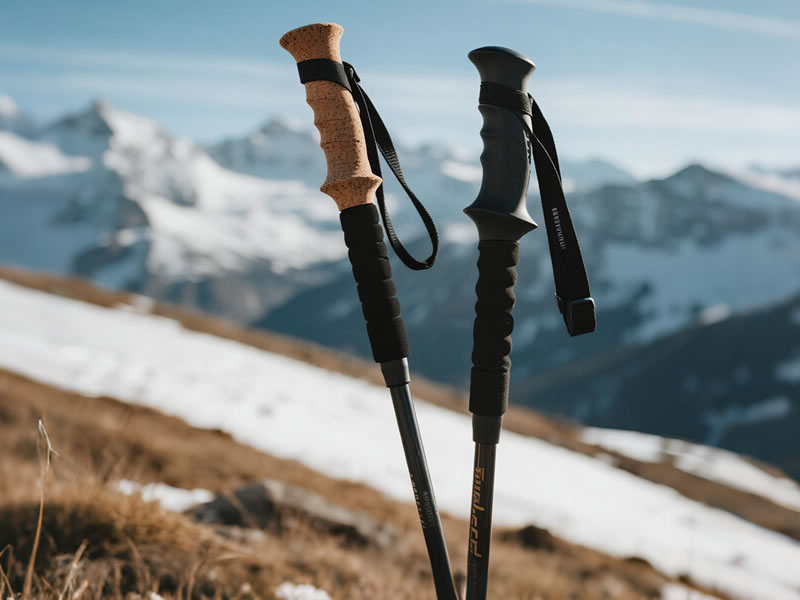
Recommended trekking pole purchase link: https://s.click.aliexpress.com/e/_c4M7OWaN
This guide breaks down the key differences to help you make an informed decision.
✨ Material Composition and Feel
The fundamental difference lies in what the grips are made of and how they feel in your hand.
- Cork Grips: These are made from the bark of the cork oak tree, a natural and sustainable material -2. Over time, the cork responds to the heat from your hands, gradually molding to the unique shape of your palm and fingers. This creates a custom, ergonomic fit that many long-distance hikers cherish. The initial feel is firm but not hard.
- Foam Grips: Typically made from EVA (Ethylene-Vinyl Acetate) foam, these grips are engineered for immediate comfort. They are soft and cushiony from the very first use, feeling like you're gripping a plush, padded handle. Unlike cork, foam does not mold to your hand shape.
🫳 Sweat and Moisture Management
How a grip handles sweat is a major differentiator on strenuous climbs or in hot weather.
- Cork Grips: Cork has natural moisture-wicking properties. It effectively pulls sweat away from your skin, maintaining a relatively secure and non-slip hold even when your palms are sweaty. This makes cork a superior choice for hikers who sweat heavily or frequently trek in humid conditions.
- Foam Grips: Foam excels at absorption. It soaks up sweat, which prevents your hand from slipping on a wet surface. However, a potential downside is that foam grips can feel soggy or saturated when extremely wet and may take longer to dry out compared to cork.
🏋️ Durability and Long-Term Performance
Your investment in trekking poles should last, and the grip material plays a big role in longevity.
- Cork Grips: Cork is highly durable and tends to last the lifetime of the pole without significant degradation. The molding process improves the fit over time, and the material doesn't pack down or lose its properties. It's a "set-it-and-forget-it" option that ages gracefully with use.
- Foam Grips: The main durability concern with foam is that it can pack out and deteriorate over many miles and years of use. The constant pressure from your hands can compress the foam, reducing its cushioning and potentially making the grip feel less secure.
❄️ Comfort and Temperature Regulation
- Cork Grips: A key advantage of cork is its temperature neutrality. It doesn't feel excessively hot or cold to the touch, making it comfortable to use in a wide range of climates without the need for gloves.
- Foam Grips: Like cork, foam also offers good temperature regulation, though it may feel warmer in direct, hot sun. Its primary comfort benefit is the instant, plush cushioning it provides, which can be easier on the hands during shorter trips or for those with joint sensitivities.
🎯 Which Grip Should You Choose?
This decision ultimately comes down to your personal hiking habits and needs. The table below summarizes the key differences to guide your choice.
| Feature | Cork Grips | Foam Grips |
|---|---|---|
| Best For | Long-distance hiking, thru-hiking, hot/humid climates | Day hikes, casual use, hikers who value immediate comfort |
| Sweat Management | Wicks moisture; remains secure when wet | Absorbs moisture; can feel soggy when wet |
| Durability | Molds to your hand and lasts for years | Can pack out and deteriorate over time |
| Environmental Impact | Made from a natural, renewable, and biodegradable material -2 | Typically a synthetic polymer |
Choose CORK if:
- You are a serious long-distance or thru-hiker.
- You value a custom, ergonomic fit that improves over time.
- You sweat heavily or frequently hike in humid environments.
- You want a durable grip that will last for thousands of miles.
- You prioritize using natural and sustainable materials -2.
Choose FOAM if:
- Your primary use is for day hikes or casual walking.
- You prioritize immediate, plush cushioning above all else.
- You want a generally lower-cost option.
- You prefer a grip that provides a soft feel right out of the box.
✅ The Final Verdict
There is no universally "best" grip material—only the best one for you. Cork grips are the performance-oriented choice for the dedicated trekker, offering superior long-term value through their durability and adaptive fit. Foam grips are the comfort-first choice for the recreational hiker, providing exceptional softness without the break-in period.
Before you buy, if possible, visit an outdoor retailer and hold both types. The right grip will feel like a natural extension of your arm, empowering you to hike farther and with more confidence.




