




How to use hiking poles
Using hiking poles effectively involves more than just holding them in your hands. Proper technique can dramatically improve your stability, reduce fatigue, and protect your joints. Whether you're a beginner or looking to refine your skills, this comprehensive guide will help you master the fundamentals of hiking pole use.
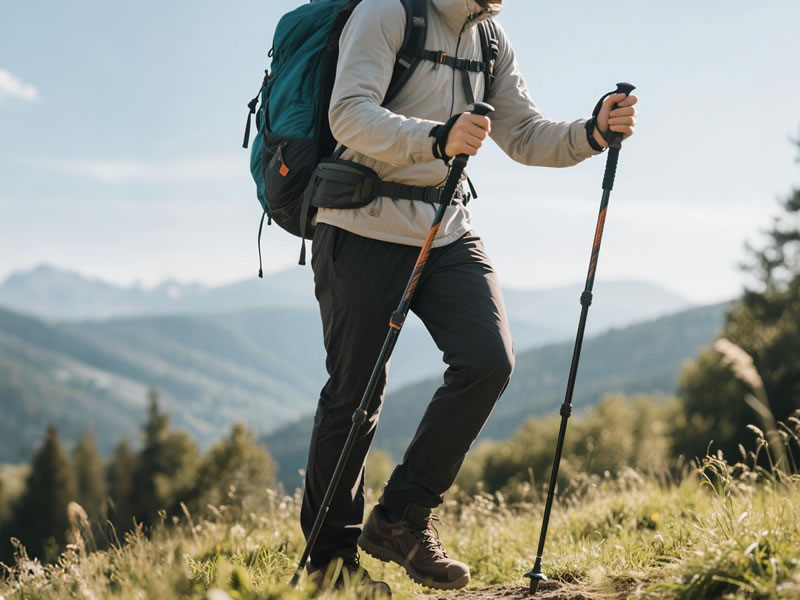
Recommended trekking pole purchase link: https://s.click.aliexpress.com/e/_c4M7OWaN
Getting Started: Basic Setup and Adjustment
Before you hit the trail, proper setup is crucial for comfort and effectiveness.
Adjusting Pole Length:
- Flat Ground Technique: On level terrain, adjust your poles so your elbows form approximately a 90-degree angle when the tips are on the ground. This positioning allows for efficient arm movement and optimal power transfer.
- Uphill Adjustment: Shorten your poles by 5-10 cm (2-4 inches) when climbing. Shorter poles prevent you from overreaching and help maintain an efficient, upright posture.
- Downhill Adjustment: Lengthen your poles by 5-10 cm (2-4 inches) for descents. Longer poles provide better support and help control your speed while reducing impact on your knees.
Proper Grip and Strap Usage:
Many hikers make the mistake of gripping their poles too tightly. The correct approach involves using the wrist straps effectively:
- Slide your hand up through the strap from below.
- Bring it across the palm, then grip the handle with the strap positioned between your thumb and index finger.
- This technique allows you to transfer weight through the strap rather than squeezing the grip, reducing hand fatigue.
Mastering the Basic Technique
The Natural Rhythm:
The fundamental movement pattern is opposite arm to leg coordination - left pole forward with right foot, right pole forward with left foot. This natural rhythm creates a smooth, efficient walking pattern that engages your core and distributes workload across your body.
Pole Placement:
- Plant your pole tips within your natural field of vision, not far out to the sides or too far ahead.
- Aim for a position where the tip lands level with your opposite foot.
- Apply downward pressure as you step forward to propel yourself and reduce weight on your legs.
Advanced Techniques for Different Terrain
Uphill Techniques:
- On moderate slopes, use a shorter, more powerful planting motion to help "push" yourself up the trail.
- For steep ascents, use the "pole planting" technique: plant both poles ahead of you, then step up between them. This creates a stable triangle of support.
Downhill Techniques:
- Plant your poles slightly ahead and to the sides for stability before committing your weight to each step.
- Use them to control your descent speed and absorb impact.
- Keep your weight slightly back and use the poles as anchors to prevent slipping.
Obstacle Navigation:
- For stream crossings, plant your poles securely on the stream bed before each step, using them to test depth and stability.
- On loose rock or scree, use a wider stance with your poles for increased stability.
- When traversing slopes, shorten the uphill pole and lengthen the downhill pole for better balance.
Common Mistakes to Avoid
- The "Death Grip": Holding the poles too tightly causes rapid hand and forearm fatigue. Trust the wrist straps to support your weight.
- Planting Too Far Forward: This disrupts your natural rhythm and can pull you off balance.
- Improper Strap Use: Don't let the straps dangle loosely or wrap them incorrectly - this reduces effectiveness and can cause chafing.
- Swinging Too Wide: Keep your poles relatively close to your body for efficient movement and to avoid snagging vegetation.
Maintenance and Care
Regular maintenance ensures your poles remain reliable and safe:
- Clean the locking mechanisms after muddy hikes to prevent slippage.
- Check tips regularly for wear and replace when necessary.
- Periodically inspect the shafts for cracks or damage, especially with carbon fiber poles.
- Ensure locking mechanisms are functioning properly before each hike.
Putting It All Together
Like any skill, effective pole use requires practice. Start on easier trails to build muscle memory before tackling more challenging terrain. Pay attention to how different adjustments affect your comfort and efficiency.
Proper hiking pole technique can transform your hiking experience, reducing fatigue, improving safety, and allowing you to hike longer distances with greater comfort. With these techniques, you'll maximize the benefits of your poles and enjoy more confident adventures on the trail.
Remember: The goal isn't to lean heavily on your poles, but to integrate them seamlessly into your natural movement pattern. When used correctly, they become an extension of your body, enhancing your connection with the trail rather than interfering with it.




