




Proper Hiking Pole Length Calculator & Correct Wrist Strap Technique for Uphill Hiking
Mastering your hiking poles involves two critical, yet often overlooked, skills: calculating the perfect length and employing a proper wrist strap technique. When combined, especially for uphill hiking, they transform your poles from simple balance aids into powerful engines for propulsion, drastically reducing fatigue in your legs, arms, and cardiovascular system. This guide will break down both elements to help you conquer ascents with greater efficiency and comfort.
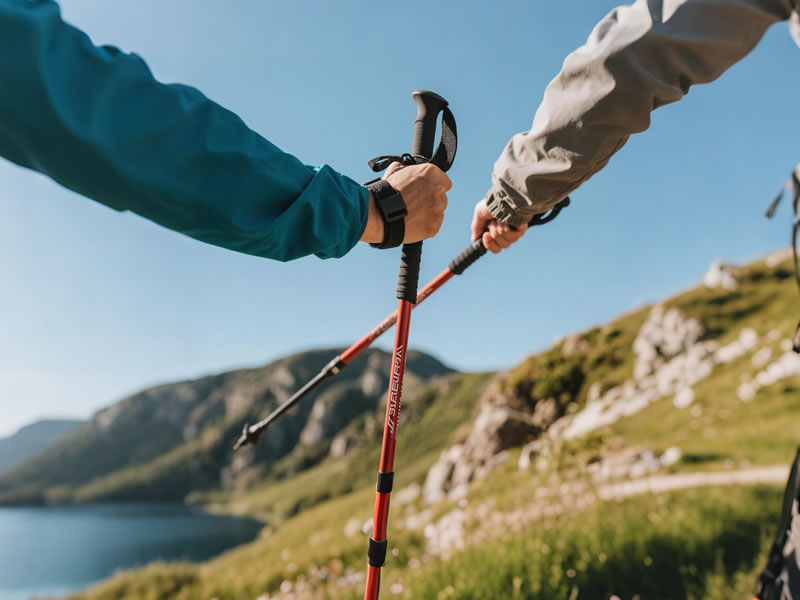
Recommended trekking pole purchase link: https://s.click.aliexpress.com/e/_c4M7OWaN
Part 1: Your Dynamic Hiking Pole Length Calculator
A static pole length is insufficient for dynamic terrain. The goal is to adjust your length to maintain an efficient, powerful posture.
The Foundation: The 90-Degree Rule for Flat Ground
Begin by establishing your baseline length for level terrain.
- Stand upright in your hiking boots on a flat surface.
- Hold the pole grip and place the tip on the ground beside your foot.
- Your elbow should form a perfect 90-degree angle.
This position allows for a natural arm swing and optimal power transfer. A quick mathematical estimate is your height (in inches) multiplied by 0.68, which will give you a length in inches that closely matches this rule.
Recalculating for Uphill Hiking: The Shortening Rule
As you point your body uphill, the ground comes closer to your hands. If your poles remain at their flat-ground length, you are forced to push down and backwards behind you, which is inefficient and strains your shoulders.
The correct technique is to shorten your poles for an ascent.
- General Guideline: Shorten your poles by 2-5 inches (5-13 cm) from your flat-ground length.
- The Steeper the Climb, the Shorter the Pole: On a very steep incline, a significantly shorter pole allows you to plant the tip in front of you while maintaining an upright torso, using your powerful back and shoulder muscles to actively pull yourself upward.
Adjust your poles at the base of the climb. You should be able to plant the tip on the ground in front of you without having to lean backwards or break your natural climbing posture.
Part 2: The Game-Changing Uphill Wrist Strap Technique
Using the strap correctly is what separates novice pole users from experts. The strap is not a loose loop; it is a load-bearing component designed to transfer energy.
The Correct Grip and Strap Placement for Power
- Insert, Don't Grab: At the bottom of the strap, slide your hand upwards through the loop.
- Position the Strap: Let the strap rest across the back of your hand and palm, sitting securely in the space between your thumb and index finger. It should not be tight around your wrist.
- Grip the Handle: Now, close your hand around the grip. The strap is now sandwiched between your palm and the handle.
How to Use the Strap for Uphill Propulsion
This technique allows you to push with your bone structure, not just your arm muscles.
- As you plant the pole in front of you, instead of squeezing the grip tightly, focus on transferring your weight forward and down through the palm of your hand.
- The strap, anchored by your grip, will take the majority of the load. This allows you to use the rigid bones of your arm and shoulder to propel yourself upward.
- At the end of the push, you can actually relax your grip slightly and let the strap support you as you complete the stride. To release, you simply open your hand and the pole will naturally swing forward for the next plant.
Synergy on the Slope: Putting It All Together
The true magic happens when you combine the shortened pole length with the correct strap technique on an uphill climb.
- Shorten your poles at the base of the ascent.
- Secure your hands in the straps using the "insert and grip" method.
- As you step forward, plant the pole tip firmly in front of you.
- Push down through your palm, engaging the strap to lever your body upward without a death grip on the handle.
This combination allows for a more upright, open-chested posture that improves breathing, engages your larger back muscles, and turns each pole plant into an efficient burst of forward momentum.
By treating your pole length as a dynamic variable and mastering the biomechanics of the wrist strap, you unlock the full potential of your hiking poles. This isn't just about hiking; it's about hiking smarter, going farther, and preserving your energy for the breathtaking views at the summit.




