




Using Poles for Strength Training and Upper Body Workout on Trails
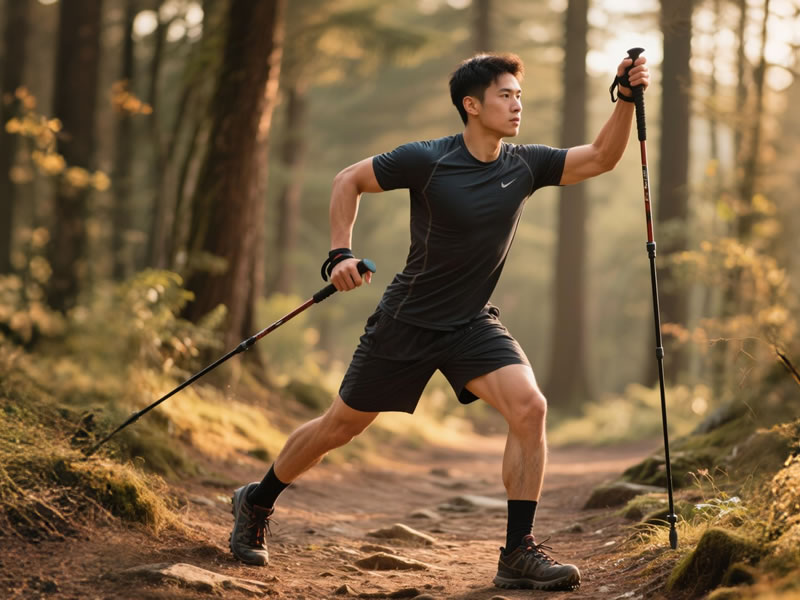
Most hikers view trekking poles as tools for stability and joint preservation. While this is true, this perspective vastly underestimates their potential. Your trekking poles are, in fact, portable gym equipment that can transform a lower-body dominant hike into a powerful, full-body strength and endurance workout. By shifting your technique from passive planting to active engagement, you can target your upper body and core, turning every trail into a dynamic fitness circuit.
Recommended trekking pole purchase link: https://s.click.aliexpress.com/e/_c4M7OWaN
The "Why": Unlocking a Full-Body Workout
Hiking is excellent cardio and leg training, but it often neglects the upper body. Consciously using poles for strength rectifies this imbalance. The benefits are profound:
- Increased Caloric Burn: Engaging large muscle groups in your back, shoulders, and arms significantly boosts energy expenditure.
- Improved Hiking Performance: A stronger upper body and core enhance your power on steep ascents and your control on technical descents.
- Balanced Muscle Development: Prevents the common "hiker's physique" of strong legs and a weaker upper body, promoting better posture and reducing injury risk.
- Enhanced Endurance: By distributing the workload across more muscle groups, you delay fatigue in your legs, allowing you to hike longer and farther.
The "How": Techniques for Targeted Muscle Engagement
Moving from simple balance to strength training requires a deliberate focus on the "push" phase of the pole motion.
1. The Power Push-Back (Targeting Triceps, Shoulders, and Lats)
This is the cornerstone of the upper body workout. Don't just let the pole tip touch the ground; drive it.
- Technique: As you plant the pole, focus on pushing the ground behind you with authority. Fully extend your arm until it is straight behind your body, engaging your triceps and latissimus dorsi (the large back muscles).
- Cue: Imagine you are pushing off the ground with your palm, using the pole as a lever. The power should come from your back and arm, not just a flick of the wrist.
2. The Uphill Drive (Targeting Chest and Core)
Steep inclines are your opportunity for a climbing-specific strength session.
- Technique: Shorten your poles slightly. As you plant the pole ahead and above you on a steep slope, drive down forcefully. This motion engages your pectoral (chest) muscles, anterior deltoids (front shoulders), and deep core stabilizers as you pull your body upward.
- Cue: Think of it as performing a series of controlled, standing push-ups on your poles with each step.
3. The Core Engagement (Targeting Obliques and Abdominals)
Your core is the vital link between your powerful upper and lower body.
- Technique: With each opposite arm/leg motion, focus on engaging your core. As you push down and back with your right pole and step with your left foot, feel a slight rotation and stabilization in your obliques. This isn't an exaggerated twist, but a firm bracing of the torso.
- Cue: Keep your core tight as if preparing to receive a gentle punch in the stomach. This transfers power efficiently and protects your lower back.
On-Trail Strength "Exercises"
Integrate these focused drills into your hike for set periods to amplify the strength stimulus:
- The Power Interval: On a flat or rolling section, spend 5 minutes focusing exclusively on maximum power during every push-back. Exaggerate the range of motion and force.
- The Uphill Sprint: Find a sustained, steep hill. For the duration of the climb, concentrate on the powerful downward drive, using your poles to actively "climb" past your hands. You will feel this intensely in your chest and shoulders.
- The Balanced Descent: On a descent, use the poles for controlled, eccentric loading. As you lower yourself down, let your arms and shoulders bear more weight, similar to a negative repetition in weightlifting.
Maximizing the Effect: Pro Tips
- Use the Wrist Straps Correctly: As covered in previous guides, slide your hand up through the strap and grip the handle. This allows you to transfer force through your skeleton, enabling you to push harder with less grip fatigue.
- Focus on Form, Not Speed: Especially when starting, prioritize the quality and power of each pole plant over your hiking speed. Good form is everything.
- Stay Hydrated and Fueled: A full-body workout demands more from your body. Ensure you are drinking enough water and consuming adequate electrolytes and calories to support the increased muscle engagement.
Conclusion: Redefine Your Gear
Your trekking poles are more than just sticks for balance. They are versatile fitness tools waiting to be unleashed. By adopting these strength-focused techniques, you elevate your hike from a scenic walk to a comprehensive, functional training session. You'll finish your trail day not only with the satisfaction of miles covered but with the pleasant fatigue of a balanced, full-body workout, building a stronger, more resilient body with every step you take.




