




Telescoping Poles vs Z-Poles (Foldable) for Backpacking
Choosing between telescoping poles and Z-poles (foldable) is one of the most fundamental gear decisions a backpacker faces. This isn't just a matter of preference; it's about selecting the right tool for your specific style of hiking, terrain, and priorities. Both designs have passionate advocates, and understanding their core differences is key to making an informed choice that will enhance your miles on the trail.
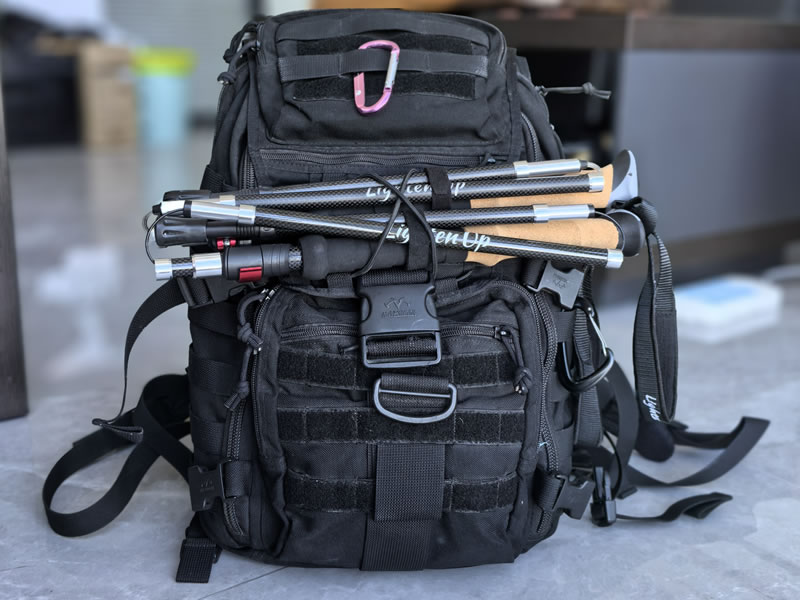
Telescoping Poles: The Adjustable Workhorses
Telescoping poles, characterized by their two or three adjustable sections secured by locking mechanisms (typically lever locks or twist locks), are the traditional and most versatile option.
Key Advantages:
- Ultimate Adjustability: This is their superpower. You can fine-tune the length for precise 90-degree elbow positioning on flat ground, shorten them for uphill climbs, and lengthen them for descents. This adaptability reduces fatigue and joint strain over varied terrain.
- Perfect Fit for Any User: Their adjustability makes them easy to share between partners of different heights and ideal for hikers who haven't dialed in their perfect fixed length.
- Superior for Shelter Systems: Many ultralight tents and tarps rely on trekking poles for setup. Telescoping poles allow you to achieve the exact height required for a taut pitch.
- Generally More Durable and Serviceable: Lever locks, in particular, are robust, easy to operate with cold or muddy hands, and often field-serviceable. A bent section might still be usable, whereas a bent Z-pole hinge can render the pole useless.
Potential Drawbacks:
- Heavier: More components (locks, adjustable sections) mean more weight.
- Slower to Deploy: Adjusting the length takes a few extra seconds compared to simply snapping a Z-pole open.
- Slight Rattle: Over time, some telescoping poles may develop a minimal amount of play in the sections, leading to a faint rattle.
Z-Poles (Foldable): The Speed and Weight Savers
Z-poles, named for their Z-shaped folding pattern, use internal tensioned cords to hold connected, fixed-length segments together. They deploy and collapse in a matter of seconds.
Key Advantages:
- Lightweight: By eliminating locking mechanisms and using thinner materials, Z-poles are often the lightest option available.
- Ultra-Packable: They fold down into a compact, predictable size that easily straps to or fits inside a backpack, making them ideal for travel or sections where poles aren't needed.
- Rapid Deployment: They can be flicked open and snapped shut faster than any telescoping pole, a boon for trail runners and fastpackers who frequently transition between using and storing their poles.
- No Slipping or Rattle: With no adjustable locks, there's zero risk of slippage and no potential for section rattle.
Potential Drawbacks:
- Lack of Adjustability: This is their biggest limitation. You cannot fine-tune the length for different terrain. While some models offer limited length adjustment (usually by 5-10 cm), it's not as seamless as with telescoping poles.
- Compromised Shelter Pitching: It can be challenging to achieve the perfect tent height, often requiring creative staking or finding perfectly level ground.
- Durability Concerns: The internal cord is a potential failure point (though rare in quality models), and a bent hinge from a hard impact can be difficult or impossible to repair on the trail.
The Verdict: Which is Right for Your Backpacking Style?
Choose Telescoping Poles if:
- You hike in terrain with significant elevation change and want to optimize pole length for ascents and descents.
- You use your poles to pitch your shelter.
- You prioritize long-term durability and field-repairability over saving a few ounces.
- You are a traditional backpacker who values versatility above all.
Choose Z-Poles if:
- You are an ultralight hiker or fastpacker where every gram counts.
- You frequently need to stow your poles quickly (e.g., for scrambling, on runnable terrain).
- Your primary use is on relatively consistent terrain where a single, fixed pole length is sufficient.
- Packability for air travel or compact storage is a high priority.
Ultimately, the "best" pole is the one that best aligns with your backpacking philosophy. Telescoping poles offer unmatched versatility for the adaptive hiker, while Z-poles deliver supreme efficiency for the weight- and speed-conscious adventurer. Your choice will define your relationship with one of your most vital pieces of gear.




