




Hiking Pole Weight Capacity and Limits: What Every Hiker Needs to Know
When selecting hiking poles, most outdoor enthusiasts focus on features like weight, locking mechanisms, and grip material, while overlooking one of the most critical specifications: weight capacity. Understanding the load limits of your trekking poles is essential not just for gear longevity, but for safety on the trail. This comprehensive guide explores why weight capacity matters, how to interpret manufacturer specifications, and what factors determine how much load your poles can truly handle.
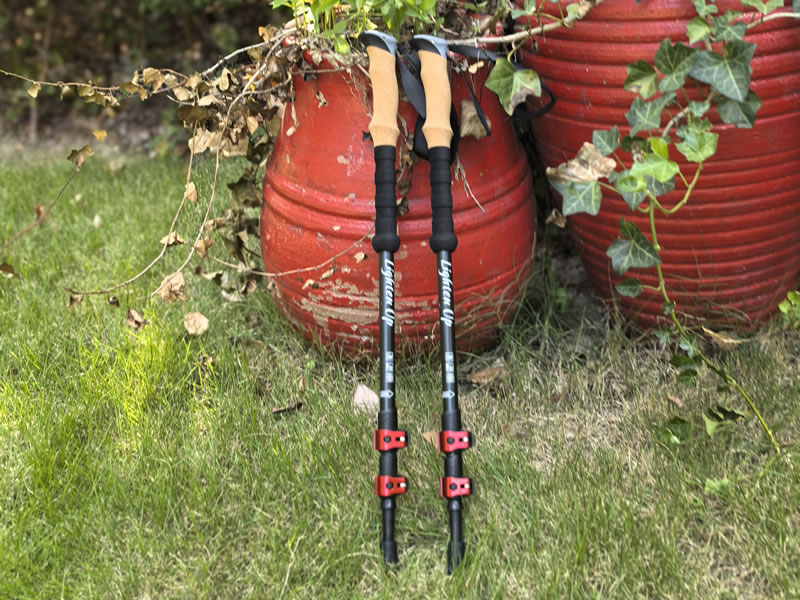
Recommended trekking pole purchase link: https://s.click.aliexpress.com/e/_c4M7OWaN
Why Weight Capacity Matters
Trekking poles are engineering marvels that must balance lightweight construction with structural integrity. Every time you plant a pole, it absorbs a combination of:
- Your static body weight
- The weight of your backpack
- Dynamic forces generated by your movement
- Impact forces from descents and uneven terrain
Exceeding a pole's weight capacity risks catastrophic failure, which can occur as:
- Sudden shaft collapse or breakage
- Locking mechanism failure
- Bent or broken segments
- Compromised structural integrity leading to gradual failure
Understanding Manufacturer Specifications
Most quality trekking poles carry weight ratings between 250-350 pounds (113-159 kg). However, interpreting these numbers requires context:
- Testing Conditions: Manufacturer ratings typically represent ideal laboratory conditions—static weight applied gradually to new, perfectly aligned poles. Real-world conditions are far more demanding.
- Safety Margins: Reputable brands build in safety margins, but these vary significantly between manufacturers. A pole rated for 300 pounds might handle 350 pounds briefly but fail under repeated stress at lower weights.
- Material Limitations:Carbon Fiber: Offers excellent strength-to-weight ratio but typically has lower weight limits than aluminum (usually 250-300 lbs). When carbon fails, it tends to be sudden and catastrophic.Aluminum: Generally has higher weight capacities (often 300-350+ lbs) and will typically bend before breaking, providing warning before complete failure.
Factors That Affect Real-World Performance
Several elements influence how much load your poles can safely handle:
- Angle of Use: Poles experience significantly more stress when used at an angle rather than vertically. A 200-pound hiker can generate 300+ pounds of force when planting poles aggressively on descents.
- Leverage and Torque: The further your hand is from the centerline, the more torque is applied to the pole. Improper technique dramatically increases stress on materials and locking mechanisms.
- Terrain Considerations: Rocky, uneven terrain creates unpredictable impact forces that can exceed rated capacities even for lighter hikers.
- Pole Condition: Dents, scratches, and wear significantly reduce load capacity. Carbon fiber poles lose substantial strength when compromised by impacts.
Calculating Your True Needs
To determine if a pole's capacity suits your needs, consider this formula:
Body Weight + Pack Weight + Dynamic Force Multiplier = Total Load
The dynamic force multiplier accounts for impact and movement forces, which can easily add 30-50% to your static weight during normal use, and up to 100% or more during falls or aggressive descents.
Recommendations for Heavier Hikers
If you're close to or exceed standard weight limits:
- Choose 7075 Aluminum: This aerospace-grade aluminum offers the best strength characteristics for heavier loads.
- Prioritize External Lever Locks: These provide more secure clamping force than twist locks and are less prone to slippage under heavy loads.
- Consider Pole Diameter: Larger diameter shafts (16mm+) generally handle heavier loads better.
- Inspect Regularly: Check for hairline cracks, bending, or deformation before each use.
- Practice Proper Technique: Avoid planting poles at extreme angles and don't "jump" onto your poles.
Industry Standards and Testing
Currently, no universal standard governs trekking pole weight ratings. Some manufacturers use conservative estimates while others push limits. Look for brands that provide detailed testing information and consider reaching out to customer service if specifications aren't clear.
The Bottom Line
Weight capacity isn't just a number—it's a crucial safety consideration that should inform your purchasing decision and trail technique. When in doubt, choose poles rated well above your body weight, prioritize durable materials and construction, and always use proper technique to distribute forces effectively. Remember that your poles are part of your safety system, and their failure at a critical moment could have serious consequences. By understanding and respecting weight limits, you'll ensure your poles provide reliable support through countless miles of adventure.




