




How to Fix a Bent Hiking Pole Section
Discovering a bent section in your trekking pole can be disheartening, but it doesn't necessarily mean the end of your pole's life. The approach to repair depends heavily on the pole material—aluminum or carbon fiber—and the severity of the bend. This comprehensive guide will walk you through assessment techniques, safe repair methods, and when to acknowledge that a section is beyond repair.
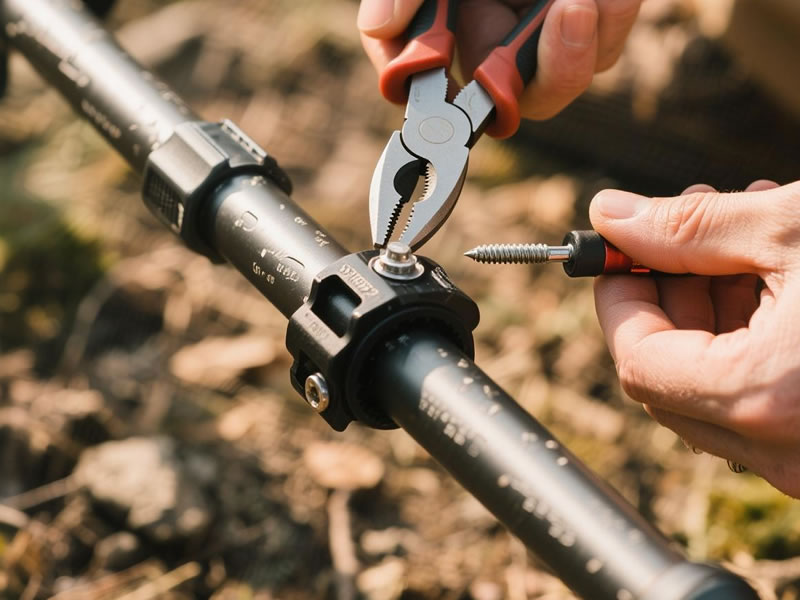
Recommended trekking pole purchase link: https://s.click.aliexpress.com/e/_c4M7OWaN
Initial Assessment: To Repair or Replace?
Before attempting any repairs, carefully evaluate the damage:
- Identify the Material:Aluminum: More forgiving and can often be carefully straightened. It will typically bend before breaking.Carbon Fiber: Much more brittle. It can shatter or develop hidden cracks that compromise its strength. Straightening a bent carbon fiber section is generally not recommended and is often unsafe.
- Locate and Gauge the Bend:Where is the bend located? Is it on a straight section of the shaft, or is it near a weld, lock, or ferrule (the joint between sections)?How severe is the bend? A slight curve is more repairable than a sharp kink.
- Check Functionality:Does the bent section still slide smoothly within the adjacent sections?Do the locking mechanisms still engage properly?
If the bend is severe, located near a critical component like a lock, or is in a carbon fiber pole, replacement is almost always the safer option.
Method 1: The Wood Block and Mallet Technique (For Minor Aluminum Bends)
This method is best for shallow bends in aluminum shafts where the pole still partially collapses.
Tools Needed:
- A sturdy, flat wooden block
- A rubber mallet or a regular hammer used with extreme care
- A hard, flat surface like a garage floor or workbench
Step-by-Step Process:
- Disassemble the Pole: Collapse the pole completely and separate the bent section from the others.
- Position the Section: Place the bent section on the flat surface with the apex (the highest point) of the bend facing upwards.
- Apply Gentle Pressure: Place the wooden block over the apex of the bend. This distributes the force and prevents marring the aluminum.
- Tap, Don't Pound: Using the mallet, gently tap the wood block. Start with very light taps and gradually increase force if needed. The goal is to coax the metal back into shape, not to smash it flat.
- Check Progress Frequently: Roll the section on the flat surface to see if it still wobbles. Repeat the process until the bend is minimized and the section rolls relatively smoothly.
Method 2: The Roll-and-Press Technique (For Mid-Shaft Aluminum Bends)
This technique uses a flat surface and your body weight for a more controlled straightening.
Process:
- Place the bent section on a very hard, flat surface (a concrete floor is ideal).
- Position the bend facing up.
- Place a wooden block over the bend.
- Apply steady, gradual pressure with your hands or knees onto the block, focusing on the bent area.
- Roll the pole slightly and repeat, working the bend out gradually from both ends towards the center.
Important Safety Note for Carbon Fiber Poles
DO NOT attempt to straighten a bent carbon fiber pole. The structural integrity of carbon fiber relies on its resin matrix. Once compromised by a bend, it is significantly weakened and prone to catastrophic failure without warning. A sudden break on a steep descent could lead to a serious fall. For carbon fiber poles with a bent section, your only safe course of action is to replace the damaged section.
When Replacement is the Only Safe Option
Know when to stop and seek a replacement section. It's time to give up on a repair if:
- The bend is severe or has a sharp kink.
- The bend is in a carbon fiber section.
- The damage is near a locking mechanism or ferrule.
- The section no longer telescopes smoothly.
- The bend causes the lock to slip or fail.
- You see any cracks, splintering (in carbon fiber), or stress marks in the anodized coating of an aluminum pole.
How to Source a Replacement Section
- Contact the Manufacturer: This is your best first step. Many brands, like Black Diamond, Leki, and Komperdell, sell individual pole sections.
- Check with Retailers: Some outdoor retailers carry common replacement parts.
- Cannibalize an Old Pole: If you have an old, broken pole of the same model, you might be able to swap sections.
- Online Marketplaces: Sites like eBay can be a source for used parts or "for parts" poles.
Prevention is the Best Medicine
To avoid future bends:
- Avoid using your poles to vault or jump.
- Be cautious when planting poles in rocky terrain where they can get jammed in cracks.
- Don't use excessive force on the poles.
- Store them properly to avoid accidental impacts.
Conclusion: Safety First
While a bent aluminum pole section can sometimes be salvaged with careful, patient effort, it is crucial to prioritize safety. A compromised pole is a safety risk. If you have any doubt about the integrity of a repaired section, or if the pole is carbon fiber, err on the side of caution and replace it. Your trekking poles are a critical piece of safety equipment, and their reliability is paramount when you're relying on them for balance on a steep, exposed trail. Knowing how to assess and attempt a fix is a valuable skill, but knowing when to stop is even more important.




