




Do Trekking Poles Build Muscle in Arms and Shoulders? The Surprising Truth
For many, hiking is a quintessential lower-body workout. But if you’ve ever finished a long, challenging trek with surprisingly sore arms and shoulders, you’ve likely asked the question: Do trekking poles actually build muscle?
The short answer is a resounding yes. While they won't replace a dedicated weightlifting regimen, trekking poles are a highly effective form of resistance training that can strengthen, tone, and build endurance in your upper body. The key lies in understanding the mechanics and how to leverage them for maximum benefit.
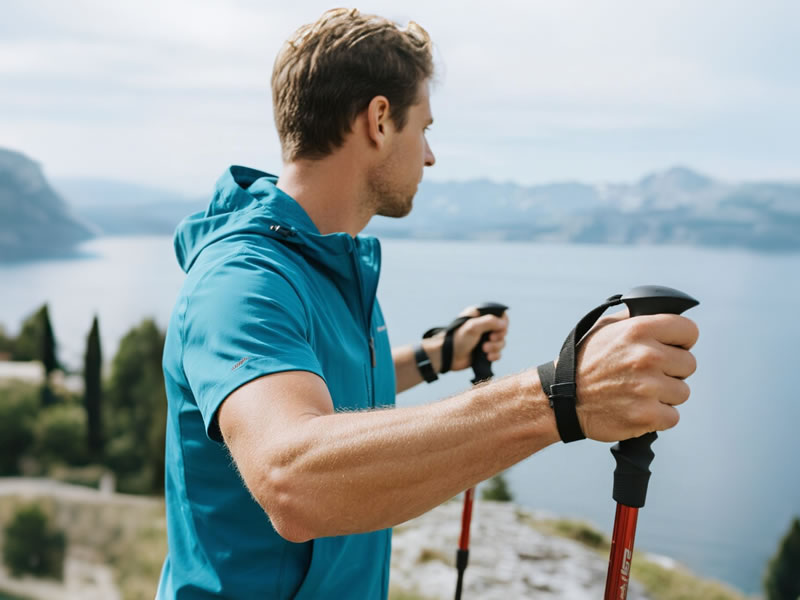
Recommended trekking pole purchase link: https://s.click.aliexpress.com/e/_c4M7OWaN
The Biomechanics: How Trekking Poles Engage Your Upper Body
When you walk without poles, your arms typically swing passively. Introducing trekking poles transforms this passive motion into an active, propulsive movement. With every "plant and push," you are essentially performing thousands of low-weight, high-repetition resistance exercises.
Here’s a breakdown of the primary muscles targeted:
- Shoulders (Deltoids): Your deltoids are the primary drivers for lifting and planting the pole in front of you. They work constantly throughout your hike, especially on ascents where you pull yourself upward.
- Triceps: The triceps are engaged powerfully during the "push" phase of the pole plant. As you drive the pole backward to propel yourself forward, you are actively extending your elbow, which is the core function of the triceps muscle.
- Biceps and Forearms: While to a lesser extent, your biceps and forearm flexors are engaged to control the pole's swing and to maintain a firm yet relaxed grip. This is particularly true on uneven terrain where constant micro-adjustments are needed.
- Upper Back (Latissimus Dorsi and Rhomboids): The pushing motion involves retracting your shoulder blades, which activates the muscles in your upper back. This can improve posture and provide a balanced upper-body workout.
Trekking Poles vs. Weightlifting: Understanding the Difference
It's important to manage expectations. The muscle growth (hypertrophy) from trekking poles is different from what you'd achieve with heavy dumbbells or barbells.
- Endurance over Bulk: Trekking poles provide sustained, low-intensity resistance. This is excellent for building muscular endurance and creating lean, toned muscle definition. You're conditioning your muscles to perform efficiently over long periods.
- Functional Strength: The strength you gain is highly functional. It translates directly to real-world activities like lifting, pushing, and carrying, improving your overall stability and coordination.
How to Maximize Muscle Engagement with Trekking Poles
If your goal is to build more strength, you can adjust your technique and choice of terrain:
- Focus on the Push: Consciously drive down and back with each pole plant. Imagine you're pushing the ground behind you to propel yourself forward. This intentional engagement increases the workload on your triceps and shoulders.
- Tackle Inclines: Hiking uphill dramatically increases the intensity for your upper body. You'll rely more on your poles to pull yourself up, deeply engaging your deltoids, lats, and biceps.
- Use Adjustable Poles on Descents: Lengthen your poles slightly on downhill sections. This forces a greater range of motion and a more pronounced push, further challenging your muscles.
- Choose Challenging Terrain: Soft ground like sand or mud requires more force to plant the pole. Similarly, navigating rocky, uneven trails demands constant stabilization from your arms and core, increasing the overall workout intensity.
The Verdict
So, do trekking poles build muscle in your arms and shoulders? Absolutely. They are a fantastic tool for developing functional, lean muscle endurance across key upper-body muscle groups. While they won't give you the bulk of a bodybuilder, they will create stronger, more toned, and more resilient arms, shoulders, and a back that can power you through miles of trail. They transform hiking from a leg-dominant activity into a truly superb full-body workout.




