




Hiking Poles for Scrambling and Alpine Climbing: A Versatile Tool for the Mountains
For scramblers and alpine climbers, every piece of gear must justify its weight and bulk. While a standard hiking pole is excellent for the trail, its true value in technical mountain environments is often underestimated. Far from being a simple walking aid, the modern trekking pole is a versatile piece of mountain kit that can significantly boost your safety, conserve critical energy, and even serve as a backup tool when the terrain gets serious.
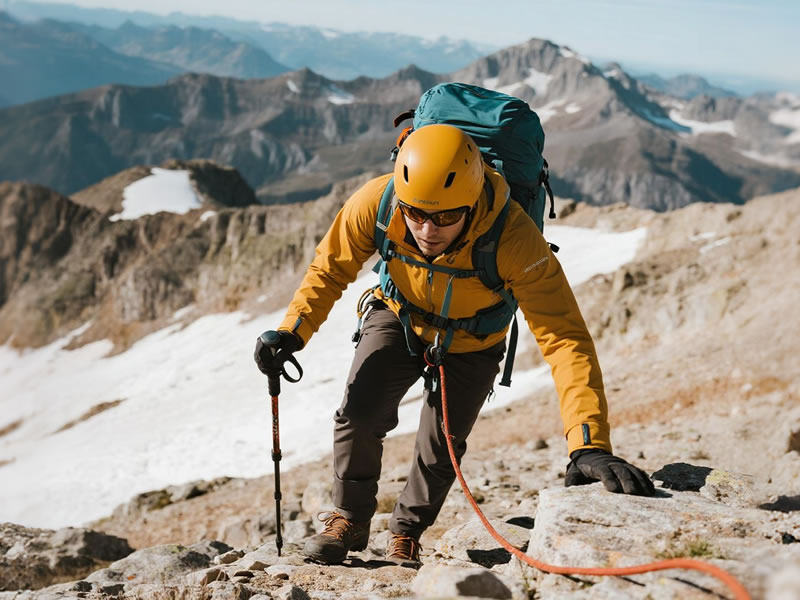
Recommended trekking pole purchase link: https://s.click.aliexpress.com/e/_c4M7OWaN
Understanding how to leverage poles effectively can be the difference between a fluid, successful day in the mountains and a grueling, energy-sapping grind.
The Multifaceted Benefits: More Than Just Balance
The advantages of using poles in scrambling and alpine terrain extend far beyond basic stability.
- Energy Conservation on Approaches and Descents: The long, often tedious approaches to a climb or scramble are where poles shine. By engaging your upper body, they distribute the workload away from your legs, preserving precious quad and calf strength for the technical moves ahead. On the descent—often the most punishing part of a day—they drastically reduce the impact on your knees and help control fatigue on loose, treacherous scree and talus slopes.
- Enhanced Stability and Safety: On off-camber terrain, loose rock, and narrow ledges, four points of contact are inherently more stable than two. Poles provide crucial proprioceptive feedback, allowing you to "feel" the stability of a rock before committing your full weight. This can prevent a twisted ankle or a slip in situations where a fall could have serious consequences.
- Aid in Stream Crossings and Snow Travel: In the alpine zone, snowfields and glacier approaches are common. Poles are indispensable for probing snow depth, testing the stability of snow bridges over crevasses (though they are no substitute for a proper probe in crevasse territory), and maintaining balance on hard, slick snow. They also provide critical stability when fording icy-cold mountain streams.
Techniques for Technical Terrain
Using poles in complex terrain requires a shift from a simple walking rhythm to a more adaptive technique.
- The Short-Grip Technique: On steeper scrambles, you may not have room for a full pole plant. Shorten your grip by placing your hand on top of the pole's basket or directly on the shaft. This gives you a shorter, more manageable lever for precise placement and balance checks without over-extending.
- The "Third Leg" on Exposed Moves: In certain low-fifth class or highly exposed scrambling situations, a firmly planted pole can act as a "third leg," providing a pivot point around which you can maneuver, offering a crucial psychological and physical point of contact.
- Collapsing for Storage: When the terrain transitions to pure rock climbing, you need your poles out of the way. Practice quickly collapsing and securing them to your pack with a dedicated system (like ski loops or compression straps) to ensure they don't snag on rocks or unbalance you.
Choosing the Right Pole for the Alpine Environment
Not all poles are created equal for this demanding use. Key features to prioritize include:
- Foldable (Z-Pole) vs. Adjustable (Flick-Lock): Foldable Z-poles are incredibly lightweight and compact, ideal for fast-and-light missions where they'll be stowed for long periods. However, adjustable poles with a robust flick-lock mechanism offer superior versatility, allowing you to quickly shorten a pole for uphill travel or lengthen it for a descent. This adjustability is critical for varied terrain.
- Durability and Weight: Carbon fiber poles are light but can be brittle in a rock pinch. Aluminum poles are slightly heavier but more resilient to side impacts and bending—a valuable trait when they're being jammed into rocky cracks.
- Interchangeable Baskets: Look for poles that allow you to swap the standard trekking basket for a larger powder basket. This is essential for travel on soft spring snow, preventing the pole from plunging in too deep.
The Ultimate Versatility: The Whippet and Ice Axe Integration
For true alpine objectives, consider specialized models. Some brands offer poles with a removable grip that reveals a short, ice-claw-like attachment (e.g., Black Diamond Whippet). This transforms one pole into a self-arrest tool for steep snow slopes, bridging the gap between a trekking pole and a full ice axe. For many alpine climbs, a single trekking pole paired with a traditional ice axe in the other hand is the perfect, weight-efficient combination.
In conclusion, dismissing hiking poles as merely for casual hiking is a missed opportunity. For the scrambler and alpinist, they are a force multiplier—a tool that conserves energy, enhances stability, and adapts to the mountain's ever-changing demands. By integrating the right poles with smart techniques, you equip yourself not just with gear, but with a significant advantage for tackling the high, wild places.




