




Walking Poles vs Hiking Staff: Choosing Your Trail Companion
When venturing into the world of hiking support gear, one of the most fundamental choices you'll face is between modern trekking poles and a traditional hiking staff. While they may seem similar at first glance, these tools offer distinctly different experiences on the trail. Understanding their unique advantages and limitations will ensure you select the right companion for your adventures.
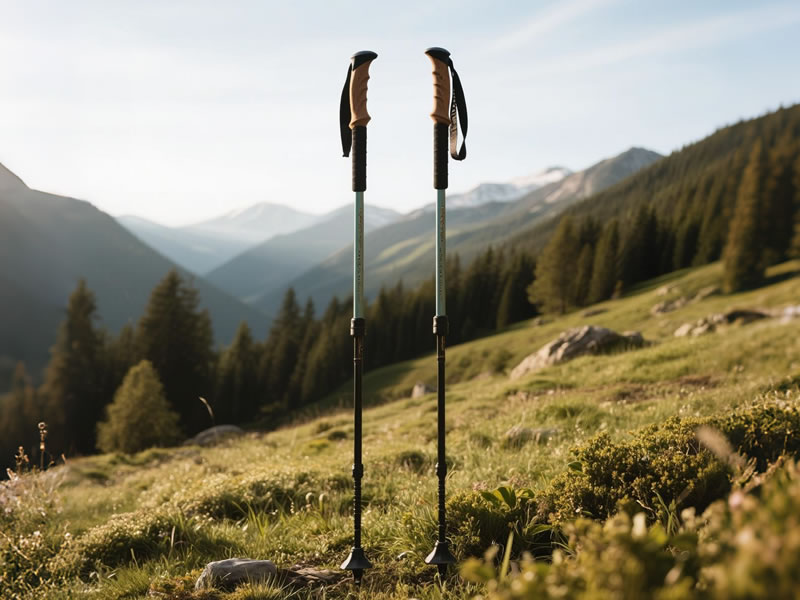
Recommended trekking pole purchase link: https://s.click.aliexpress.com/e/_c4M7OWaN
The Modern Approach: Trekking Poles (Used in Pairs)
Trekking poles represent the evolution of hiking support, incorporating advanced materials and ergonomic design. Typically used as a pair, they function as an integrated system that engages your entire upper body.
Key Advantages:
- Superior Stability and Balance: Two poles create four points of contact with the ground, offering unparalleled stability on challenging terrain like stream crossings, scree slopes, and uneven trails. This balanced support significantly reduces fall risk.
- Reduced Joint Impact: By distributing weight and impact across both arms and legs, poles can reduce the force on your knees and ankles by up to 25% during descents. This is crucial for long-term joint health, especially with a heavy backpack.
- Increased Propulsion and Efficiency: Engaging your arms and shoulders helps propel you forward, particularly on ascents. This turns hiking into a full-body workout, improving cardiovascular efficiency and reducing leg fatigue over long distances.
- Versatility in Adjustment: Most trekking poles are adjustable, allowing you to shorten them for uphill sections and lengthen them for descents, optimizing your posture and power delivery throughout varying terrain.
The Traditional Choice: Hiking Staff (Single Pole)
The hiking staff, often a single, sometimes non-adjustable pole, is the classic walking aid that has been used for centuries. It evokes a minimalist, traditional approach to hiking.
Key Advantages:
- Simplicity and Ease of Use: With just one pole to manage, there's less complexity and coordination required. It's easy to deploy quickly and doesn't involve the learning curve of a synchronized rhythm.
- A Sense of Tradition: Many hikers appreciate the timeless, simple connection to the hiking traditions of the past. It can feel less like a piece of technical gear and more like a natural extension of oneself.
- Tactile Exploration: A single staff is excellent for probing trail conditions, testing the depth of water or mud, and moving aside branches or spider webs without breaking your stride.
- Minimalist and Lightweight: One pole is, by definition, lighter and less bulky than two, appealing to ultralight purists who want only the most basic support.
Head-to-Head Comparison: Making the Right Choice
| Feature | Trekking Poles (Pair) | Hiking Staff (Single) |
|---|---|---|
| Stability & Safety | Excellent. Ideal for uneven terrain, river crossings, and hikers with balance concerns. | Good. Provides basic support but lacks the balanced stability of two poles. |
| Joint Protection | Superior. Significantly reduces impact on knees and hips during descents. | Moderate. Offers some relief but is asymmetrical, potentially causing imbalance. |
| Energy Efficiency | High. Full-body engagement improves endurance and speed. | Low to Moderate. Provides minimal propulsion benefit. |
| Weight & Packability | Heavier and bulkier than a single staff, but many are foldable/collapsible. | Lighter and simpler to manage, but may not be as compact. |
| Best Use Case | Long-distance hiking, backpacking with heavy loads, steep/technical terrain, recovery from injury. | Light day hiking on established trails, minimalist approaches, casual walks. |
| Learning Curve | Requires practice to develop a natural rhythm. | Virtually none; intuitive to use. |
The Verdict: Which is Right for You?
Your choice ultimately depends on your primary hiking style, physical needs, and personal preference.
Choose Trekking Poles if:
- You frequently hike with a heavy backpack.
- You traverse steep, rocky, or otherwise technical terrain.
- You have existing knee, hip, or ankle issues.
- Your goal is to hike faster, farther, and with less fatigue.
- You value maximum stability and safety.
Choose a Hiking Staff if:
- Your hikes are mostly on well-maintained, moderate trails.
- You prefer a minimalist, traditional approach to hiking.
- You want a simple tool for occasional balance and tactile trail exploration.
- You find managing two poles cumbersome or unnecessary for your needs.
For most serious hikers, especially those carrying weight or navigating variable terrain, the biomechanical benefits and enhanced safety of trekking poles make them the clear winner. However, the best tool is the one you will use and enjoy. Some hikers even opt for a hybrid approach, using a single trekking pole in staff-like fashion for its adjustability and modern features.




