




How to Choose the Right Walking Poles? Your Complete Guide to Confident Hiking
Walking poles are no longer just for serious mountaineers. They've become essential gear for hikers of all levels, offering stability, reducing joint impact, and increasing endurance. But with a dizzying array of options, how do you choose the right pair? This comprehensive guide will walk you through the key considerations—from type and material to fit and features—ensuring your investment enhances every step you take on the trail.
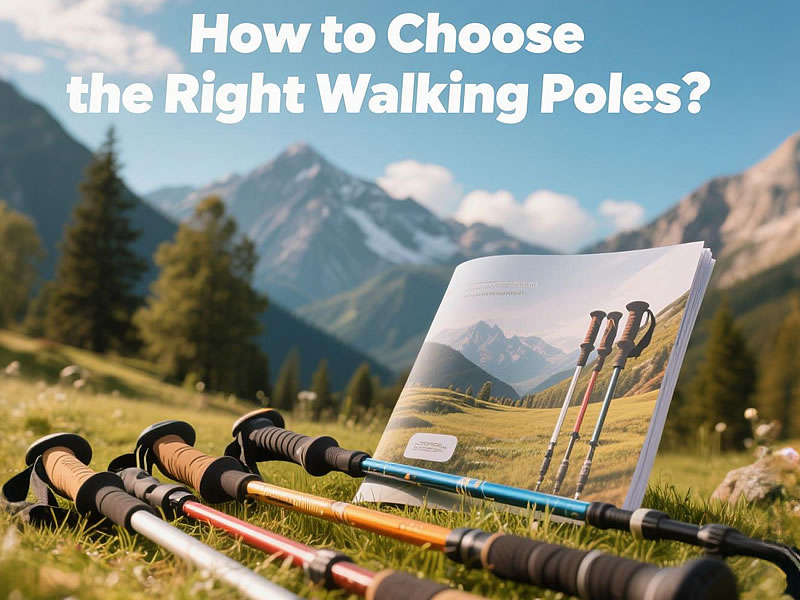
Recommended trekking pole purchase link: https://s.click.aliexpress.com/e/_c4M7OWaN
Step 1: Determine Your Primary Use
Your hiking style should dictate your choice. Ask yourself: Where will I use these most?
- Casual & Urban Walking: Look for simple, comfortable poles with rubber tips for pavement. Shock absorption is a nice-to-have feature for hard surfaces.
- Day Hiking on Trails: You'll want versatile, adjustable poles with durable carbide tips for dirt and rock. A reliable locking mechanism is crucial for varying terrain.
- Trekking & Backpacking: With a heavier pack, prioritize durability and weight distribution. Sturdy aluminum or composite poles with ergonomic grips will help manage fatigue.
- Trail Running & Fastpacking: Speed and weight are everything. Ultra-lightweight, often foldable (Z-pole) models that are easy to stow and deploy quickly are ideal.
Step 2: Understand the Key Features
Once you know your use case, dive into the specifics that define performance and comfort.
A. Locking Mechanism: The Heart of Safety
This is the most critical component. A failing lock can lead to a fall.
- Flick-Lock/Lever-Lock: The gold standard. Uses a lever to tighten a clasp around the pole. It's reliable, easy to adjust with cold or wet hands, and allows for precise micro-adjustments.
- Twist-Lock: Involves twisting two sections to tighten an internal mechanism. It has a sleeker profile but is more prone to slipping and can be difficult to adjust when wet, dirty, or cold. Not recommended for demanding use.
B. Material: The Balance of Weight and Strength
- Aluminum (6061 or 7075): The workhorse. Durable, cost-effective, and capable of bending under extreme stress rather than snapping. Slightly heavier than carbon fiber. Perfect for most hikers, especially beginners and those on rough terrain.
- Carbon Fiber: The performance choice. Significantly lighter and excels at damping trail vibration, reducing hand fatigue. The trade-off is that it can be more brittle and may snap under sharp, lateral impact. Best for weight-conscious hikers who primarily stick to trails.
C. Grip Material: Your Point of Contact
Comfort here is non-negotiable.
- Cork: Conforms to the shape of your hand over time and wicks away moisture. Excellent for warm weather and long distances.
- Foam: Soft, comfortable, and highly absorbent. Provides a cushioned feel that many find ideal for reducing blister risk.
- Rubber: Offers a solid, non-slip grip in wet and cold conditions. Can feel sweaty in warm weather.
Step 3: Get the Perfect Fit
A poorly fitted pole is ineffective and can cause strain.
- The 90-Degree Rule: Stand upright in your hiking shoes. With the tip on the ground, your elbow should be bent at a 90-degree angle when holding the grip. This is your standard hiking length.
- Adjust for Terrain: Shorten poles for uphill sections and lengthen them for descents. Adjustable poles are essential for this.
- Use the Wrist Straps Correctly: Don't just grab the strap. Slide your hand up through the bottom of the strap and then grip the handle. This allows you to transfer weight to the pole through your wrist, not your grip, saving hand energy.
Step 4: Consider Additional Features
- Shock Absorption: Built-in springs help cushion downhill impact. Great for those with sensitive joints, but adds weight and a potential failure point.
- Poles or a Single Staff? Using two poles provides balanced support and rhythm. A single staff is better for minimalist use or occasional balance checks on gentle trails.
- Foldable vs. Telescopic: Telescopic poles are highly adjustable. Foldable (Z-poles) are ultra-compact and fast to deploy but offer less adjustability.
Final Recommendation
For most hikers, the ideal starting point is a pair of adjustable aluminum poles with a flick-lock mechanism and cork or foam grips. This combination offers the best balance of durability, reliability, comfort, and value.
Trying poles in person at a reputable outdoor store is invaluable. Feel the grip, test the lock, and get a sense of the weight. By methodically considering these factors, you can confidently choose the right walking poles to become a trusted partner on all your adventures, helping you hike stronger, safer, and longer.




