




Proper Height for Walking Poles: Your Guide to Optimal Comfort and Performance
Finding the correct height for your walking poles is one of the most critical steps in using them effectively. A properly adjusted pole enhances stability, reduces joint stress, and improves your overall hiking efficiency, while an incorrectly sized pole can lead to poor posture, muscle fatigue, and even injury. This comprehensive guide will walk you through the proven methods for determining your ideal pole length for any terrain.
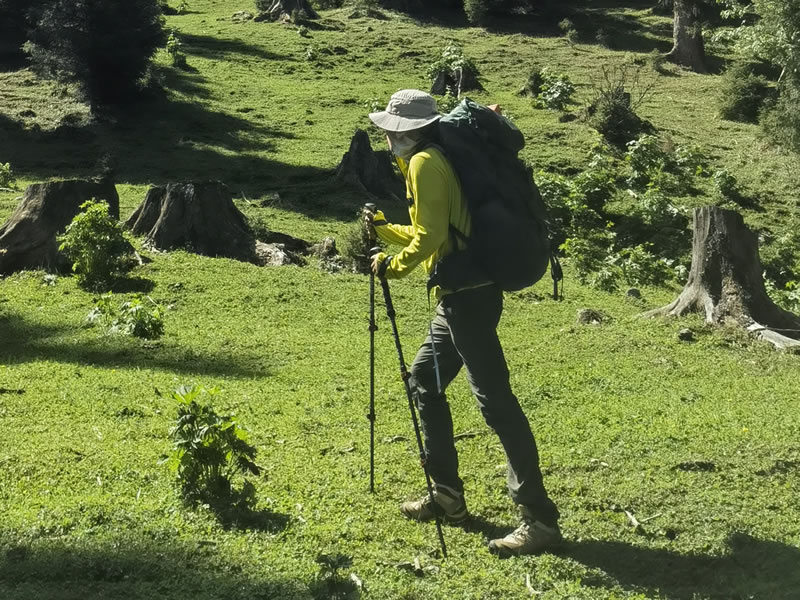
Recommended trekking pole purchase link: https://s.click.aliexpress.com/e/_c4M7OWaN
The Gold Standard: The 90-Degree Elbow Rule
The most reliable and widely recommended method for establishing your baseline pole height is the 90-degree elbow rule. Here's how to execute it perfectly:
- Wear Your Hiking Shoes: Begin by wearing the footwear you'll use on the trail. The sole thickness can affect your height and posture.
- Stand on Level Ground: Find a flat, even surface to simulate standard hiking terrain.
- Position the Pole: Turn the pole upside down and place your hand on the grip, or simply grip the handle normally with the tip on the ground.
- Check the Angle: With your shoulders relaxed and the pole tip directly vertical beneath your hand, your elbow should be bent at a perfect 90-degree angle. Your forearm should be parallel to the ground.
This position creates an optimal lever for efficient power transfer and natural arm swing during normal walking on flat terrain.
The Simple Formula: A Quick Calculation
For a quick estimation, you can use a simple mathematical formula:
- Your Height (in centimeters) x 0.68 = Suggested Pole Length
For example, a person who is 175 cm tall would calculate: 175 x 0.68 = 119 cm. This result will closely align with the measurement you get from the 90-degree rule and serves as an excellent starting point, especially when shopping for poles online.
Advanced Adjustment: Adapting to the Terrain
The true power of adjustable poles is revealed when you dynamically change their length to match the slope of the land. This is a non-negotiable technique for serious hikers.
- Uphill Adjustment:Why: Shortening your poles on ascents prevents you from overreaching and straining your shoulders. It helps you maintain an efficient, forward-leaning posture and allows for a more powerful push-off.




