




Do Walking Poles Help with Knee Pain? A Scientific and Practical Guide
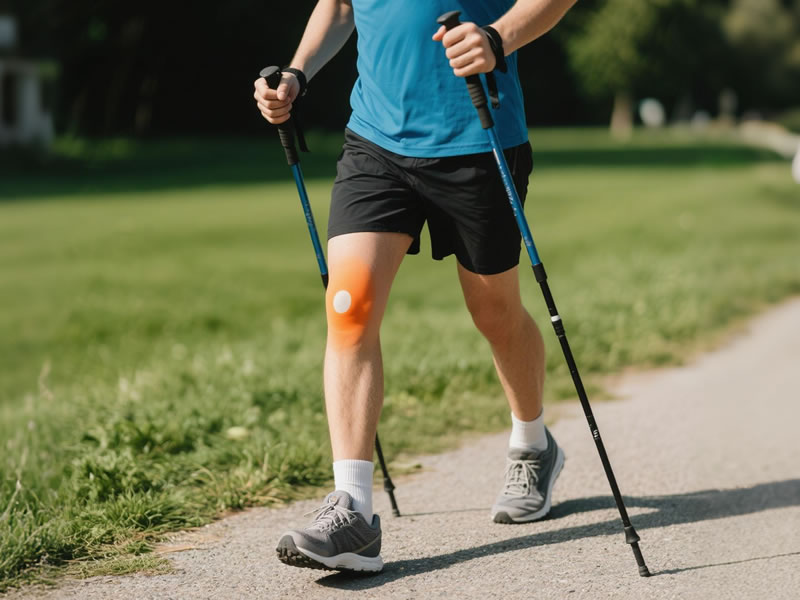
For millions of people who experience knee pain, whether from arthritis, previous injury, or general wear and tear, the simple act of walking can be a source of apprehension and discomfort. The good news is that a straightforward tool—walking poles—can be a transformative solution. The short answer is a resounding yes, walking poles can significantly help with knee pain, and the reasons are backed by biomechanics and clinical research. This article explores how they work, the proper technique for maximum benefit, and how to choose the right poles for knee pain relief.
Recommended trekking pole purchase link: https://s.click.aliexpress.com/e/_c4M7OWaN
The Biomechanics: How Poles Alleviate Knee Stress
Walking poles help your knees through several interconnected mechanisms:
- Weight Redistribution and Load Sharing: This is the most significant benefit. When you plant a pole and lean on it, you transfer a portion of your body weight from your lower body to your upper body and the pole itself. Studies using force plates have shown that using poles correctly can reduce the load on the knees by up to 25-30%. This is particularly crucial during descents, where the force on the knee joints can be several times your body weight.
- Improved Stability and Balance: Knee pain often leads to instability and a fear of falling. Poles provide two additional points of contact with the ground, creating a wider, more stable base of support. This enhanced stability reduces the micro-instabilities and sudden, jarring movements that can exacerbate pain in vulnerable knees.
- Reduced Impact Forces: The muscles surrounding your knees act as natural shock absorbers. With each pole plant, your arms and the poles themselves absorb a portion of the impact that would otherwise travel up your legs and be dissipated by your knee joints. This is especially beneficial on hard surfaces like pavement or on rocky, uneven trails.
- Engaging the Propulsion Muscles: Proper pole use encourages you to push off with your arms and upper back muscles. This propulsion assistance means your quadriceps and calf muscles don't have to work as hard to move you forward, reducing the muscular fatigue and strain that can affect knee biomechanics.
The Critical Importance of Proper Technique
Simply carrying poles won't help; in fact, poor technique can cause other issues. To target knee pain effectively, focus on this:
- On Descents (The #1 Benefit for Knees): Lengthen your poles by 5-10 cm (2-4 inches). Plant the pole tips ahead of and below you as you step down. This allows you to use your arms to control your descent and "catch" your body weight, dramatically reducing the braking force that your knees have to endure.
- On Ascents: Shorten your poles slightly. The push from the poles assists your climb, reducing the strain on your quadriceps, which directly pull on the knee cap.
- The Rhythm: Maintain the natural opposite arm/leg swing (right pole with left foot). This coordinated movement ensures continuous weight transfer and smooth propulsion.
What the Research Says
Clinical studies have consistently demonstrated the benefits. Research published in journals like The Journal of Strength and Conditioning Research and Arthritis Care & Research has found that pole users report significantly lower levels of perceived pain and exertion. One study focusing on individuals with osteoarthritis found that using trekking poles reduced knee joint loading compared to walking without poles.
Choosing the Right Poles for Knee Pain
Not all poles are created equal when your primary goal is pain relief:
- Shock Absorption: While not essential, poles with built-in shock-absorbing springs can provide an extra layer of cushioning, which some users with significant pain find beneficial.
- Adjustability: This is non-negotiable. You must be able to adjust the pole length for different terrains to maximize the load-sharing benefits.
- Reliable Locks: Look for sturdy flick-lock mechanisms. A pole that slips mid-descent is not just inconvenient; it can cause a jarring motion that hurts your knees.
A Word on Downhill Hiking
For those with knee pain, downhill sections are often the most challenging. Poles turn a painful, cautious descent into a controlled, stable one. By leaning forward slightly and letting your arms and poles bear a significant portion of the load, you effectively "walk down on your arms," sparing your knees the worst of the impact.
Conclusion: A Simple, Effective Tool
Walking poles are a low-cost, non-invasive, and highly effective strategy for managing knee pain. They are not a cure for underlying conditions like arthritis, but they are a powerful management tool that can reduce pain, increase stability, and restore the joy and confidence of walking. By offloading weight, improving balance, and reducing impact, they empower you to stay active, strengthen the supporting muscles around the knee, and break the cycle of pain and inactivity. If knee pain is holding you back, a pair of properly fitted poles used with correct technique might be one of the best investments you can make in your mobility.




