




Are Walking Poles Allowed in Carry-On Luggage? The Ultimate Travel Guide
For hiking enthusiasts planning their next adventure, the question of whether walking poles can be brought in carry-on luggage is crucial. The short answer is: generally, no, but with important exceptions and strategies. Understanding airline security regulations and proper packing techniques can mean the difference between a smooth journey and having your essential gear confiscated at security.
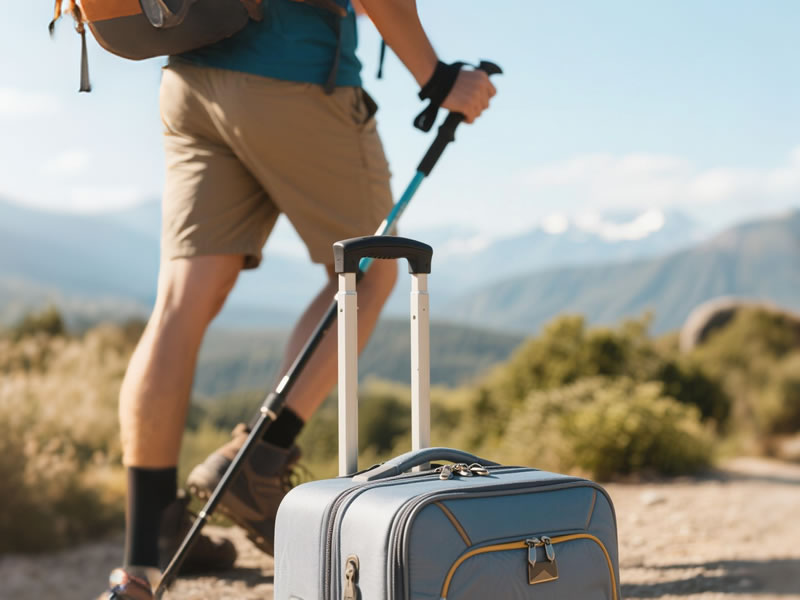
Recommended trekking pole purchase link: https://s.click.aliexpress.com/e/_c4M7OWaN
The Universal Security Concern
The primary reason walking poles face restrictions in cabin luggage stems from their fundamental design. Security agencies worldwide, including the TSA in the United States and equivalent bodies in Europe and Asia, classify trekking poles as potential blunt-force weapons. Their rigid, pointed nature means they are almost universally prohibited in the aircraft cabin. This rule applies to both telescopic and folding models, regardless of material or price.
The Checked Luggage Solution
The safest and most reliable method for traveling with walking poles is to pack them in your checked luggage. To ensure they arrive undamaged:
- Collapse and Secure: Fully collapse telescopic poles and fold Z-poles to their most compact size.
- Protect the Tips: Use rubber tip protectors or tape over the carbide tips to prevent them from piercing your bag or other items.
- Padding and Placement: Place the poles along the length of your suitcase, ideally surrounded by soft items like clothing for padding. Some travelers use a dedicated pole case or a PVC tube for maximum protection.
The Carry-On Exception: A Grey Area
While the rule is strict, there is a narrow exception. Some airlines may allow ultra-compact folding poles (Z-poles) if they are securely stored inside a backpack and meet the overall carry-on size requirements. However, this is not a guaranteed right and is highly dependent on three factors:
- The Specific Airline's Policy: Always check your airline's website for their "prohibited items" list. Budget airlines are often stricter than full-service carriers.
- The Security Agent's Discretion: Even if an airline's policy is ambiguous, the final decision rests with the security officer at the checkpoint. If they deem it a security risk, it will be confiscated.
- Packing Presentation: Poles stored neatly inside a backpack are less conspicuous and might be overlooked compared to poles carried separately.
Airline-Specific Guidelines (A Snapshot)
- TSA (USA): Explicitly states "Hiking Poles are not allowed in carry-on bags;" they must be checked.
- European Union: Follows EU security regulations which generally prohibit "clubs and blunt instruments," a category that includes trekking poles.
- Ryanair: Specifically lists "walking poles/trekking poles" as prohibited in cabin baggage.
- Emirates: Requires all sporting walking poles to be checked in.
Pro Travel Tips for Hikers
- Research is Non-Negotiable: Before you book your flight, check your airline's sporting equipment policy.
- When in Doubt, Check It In: The risk of losing a valuable pair of poles is not worth the convenience of carry-on.
- Consider Renting or Shipping: For international trips, research the availability of pole rentals at your destination. For long trips, shipping your poles ahead via a courier service is a secure, though often expensive, alternative.
- Carry-On Your Other Essentials: Always keep hiking boots, navigation devices, and critical medications in your carry-on bag, even if your poles are checked.
The Verdict
While the dream of slipping a pair of compact Z-poles into your overhead bin is appealing, the reality of aviation security makes it a high-risk strategy. The consistent and reliable approach is to treat walking poles as mandatory checked baggage. By packing them carefully and knowing the rules, you can ensure your trusted trail partners are waiting for you at your destination, ready to hit the trail without a hitch. A few minutes of pre-travel preparation will save you from the disappointment and inconvenience of a last-minute security dispute.




