




Do I Need Walking Poles? A Comprehensive Guide to Making the Right Choice
The sight of hikers effortlessly gliding up trails with walking poles has become increasingly common, leaving many outdoor enthusiasts wondering if they too should adopt this piece of gear. The question "Do I need walking poles?" doesn't have a one-size-fits-all answer, but understanding their benefits and limitations can help you determine if they're right for your hiking style, physical needs, and adventure goals.
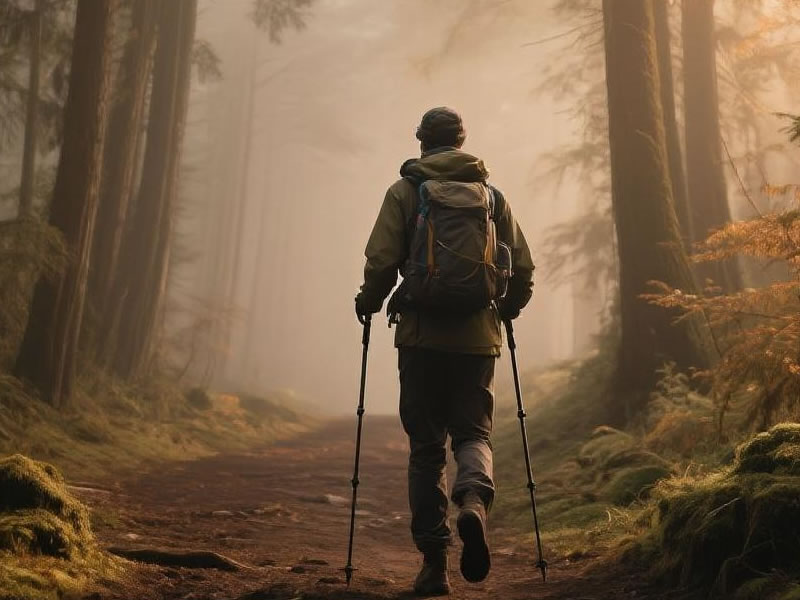
Recommended trekking pole purchase link: https://s.click.aliexpress.com/e/_c4M7OWaN
The Compelling Case for Walking Poles
Walking poles offer significant advantages that extend far beyond simple balance assistance:
- Joint Preservation and Impact Reduction:Scientific studies have demonstrated that using walking poles can reduce compressive forces on knees by up to 25-30%, particularly during descents. This isn't just about comfort—it's about long-term joint health. If you experience knee discomfort during or after hikes, poles can be transformative.
- Enhanced Stability and Safety:Four points of contact are inherently more stable than two. Poles provide crucial balance assistance on:Uneven or rocky terrainStream crossings and slippery surfacesLoose gravel or scree slopesThis added stability significantly reduces fall risk, which is particularly valuable for older hikers or those carrying heavy loads.
- Improved Endurance and Efficiency:By engaging your upper body, poles turn hiking into a full-body workout, distributing effort more evenly across muscle groups. This can lead to:Reduced leg fatigue over long distancesIncreased hiking speed and rhythmBetter uphill propulsionThe ability to cover more ground with less perceived exertion
- Versatility Beyond Walking:Poles serve multiple secondary functions:Testing water depth during stream crossingsClearing spider webs from trailsProviding support for emergency sheltersActing as a monopod for photography
When Walking Poles Are Particularly Beneficial
You're likely to benefit significantly from walking poles if you:
- Regularly hike with a backpack exceeding 20-25% of your body weight
- Have existing knee, hip, or ankle issues
- Frequently tackle steep or technical terrain
- Are recovering from lower-body injuries
- Plan long-distance thru-hikes
- Value the security of additional stability points
Potential Drawbacks and Considerations
Despite their benefits, walking poles aren't for everyone in every situation:
- Learning Curve and Coordination:Using poles effectively requires developing a rhythm and technique. Initially, they can feel awkward and may even increase mental fatigue as you concentrate on proper form.
- Reduced Hand Freedom:Your hands are constantly occupied, making it challenging to:Quickly access water bottles or snacksUse cameras or navigation devicesCheck maps on the fly
- Additional Weight and Gear Management:Even lightweight poles add to your gear burden and require storage when not in use. Collapsing and adjusting poles can become tedious on trails with frequently changing conditions.
- Terrain Limitations:On flat, well-maintained trails, the benefits of poles diminish considerably. Some hikers find them unnecessary on such terrain.
Making Your Decision: Key Questions to Ask Yourself
To determine if walking poles are right for you, consider:
- What type of hiking do I typically do?Technical, steep, or uneven terrain = Strong yesFlat, well-maintained trails = Possibly unnecessary
- Do I have any physical limitations?Joint issues, balance concerns, or recent injuries = Strong yesExcellent physical condition with no joint pain = Your choice
- How important is hand freedom during my hikes?Frequent photography or navigation needs = Maybe notFocused hiking with few distractions = Likely yes
- Am I willing to learn proper technique?Yes = You'll maximize benefitsNo = You might not experience significant advantages
The Middle Ground: Strategic Pole Use
You don't necessarily need to use poles for every hike. Many experienced hikers employ them strategically:
- Using only one pole for light support while maintaining one free hand
- Deploying poles only for difficult sections like steep descents
- Renting poles for a trial period before purchasing
The Verdict
While not absolutely essential for every hiker, walking poles offer such significant benefits for most hiking scenarios that they're worth serious consideration. Think of them not as a sign of weakness or aging, but as tools that can enhance your performance, protect your body, and increase your confidence on the trail.
If you're still uncertain, consider borrowing a pair for a challenging hike. The difference in how your joints feel at the end of the day might be all the convincing you need. For the vast majority of hikers—from weekend warriors to seasoned backpackers—the answer to "Do I need walking poles?" is a resounding "They will significantly improve your hiking experience."




