




How to Write Promotional Copy for Trekking Poles: A Guide to Connecting with Adventurers
In the competitive outdoor gear market, effective promotional copy doesn't just describe trekking poles—it speaks directly to the aspirations, challenges, and desires of your potential customers. The difference between generic product descriptions and compelling copy can determine whether a hiker chooses your poles or a competitor's. This guide will help you craft messaging that resonates, converts, and builds loyalty.
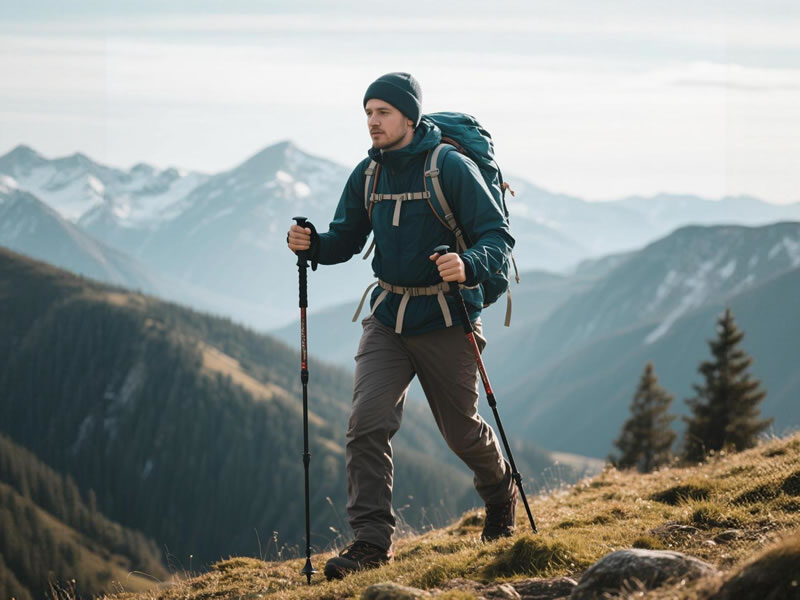
Recommended trekking pole purchase link: https://s.click.aliexpress.com/e/_c4M7OWaN
Step 1: Understand Your Audience's Journey
Before writing a single word, identify who you're speaking to:
- The Beginner: Needs reassurance, education, and confidence-building. They ask: "Are these easy to use? Will I look foolish?"
- The Seasoned Hiker: Values performance, specifications, and durability. They ask: "How do these perform on a 15-mile hike with a 30lb pack?"
- The Weight-Conscious Ultralighter: Obsesses over grams and ounces. They ask: "What's the exact weight? Is this worth the weight penalty?"
- The Value Shopper: Balances quality with budget. They ask: "Why are these worth the price? How long will they last?"
Step 2: Translate Features into Tangible Benefits
This is the heart of compelling copy. Don't just list specifications—explain what they mean for the user.
- Instead of: "Made from 7075 aluminum"
- Try: "Built with expedition-grade 7075 aluminum that withstands rocky impacts that would bend lesser poles, giving you confidence when you need it most."
- Instead of: "Includes carbide tips"
- Try: "Bite into treacherous terrain with aggressive carbide tips that grip ice, rock, and roots, transforming slippery descents into controlled, confident steps."
- Instead of: "Cork grips"
- Try: "Natural cork grips that mold to your hand over time and wick moisture away, preventing blisters on those long, sweaty ascents."
Step 3: Structure Your Copy for Maximum Impact
Follow this proven framework to guide customers from interest to action:
- The Headline (The Hook): Capture attention with a key benefit or solution to a common pain point.Example: "End Knee Pain on Descents. Hike Stronger, Longer, and Safer."Example: "The Last Trekking Poles You'll Ever Buy. Guaranteed."
- The Introduction (The Problem & Promise): Acknowledge the reader's challenge and present your poles as the solution."Tired of ending every hike with sore knees and exhausted legs? Our [Product Name] poles are engineered to transfer up to 30% of the impact from your joints to your arms, letting you explore farther with the comfort you deserve."
- The Body (The Proof): Use a mix of emotional and logical appeals.Benefit-Driven Bullet Points: Focus on the experience, not just the specs."Conquer Any Terrain: From slick rock gardens to unpredictable river crossings...""Pack Light, Go Far: At just 16oz per pair, you'll forget they're in your pack until you need them..."Technical Specifications Table: Provide the hard data for your detail-oriented customers in a scannable format.Visual Storytelling: Use high-quality images and videos showing the poles in action on beautiful, challenging trails.
- Social Proof (The Trust Builder): Incorporate user testimonials and professional endorsements."‘These poles saved my knees on the John Muir Trail. I'll never hike without them again.' - Sarah K., Thru-Hiker""Featured in [Outdoor Magazine]'s 2024 Gear Guide"
- The Close (The Call to Action): Make it clear, compelling, and risk-free."Ready to Transform Your Hiking Experience? Add to Cart Now.""Join 50,000+ Confident Hikers. Free Shipping & 30-Day Trial."
Step 4: Optimize for Search Engines and Human Readers
Weave relevant keywords naturally into your headings and body text:
- "best trekking poles for backpacking"
- "lightweight walking poles"
- "trekking poles for knee pain"
- "carbon fiber vs aluminum trekking poles"
Step 5: Tell a Brand Story
Why does your company make these poles? Are you driven by a passion for conservation? Founded by a legendary mountaineer? This emotional connection can be the deciding factor. Share your "why."
Final Pro-Tips:
- Use Active, Powerful Language: Verbs like "conquer," "master," "protect," and "elevate" create a sense of empowerment.
- Focus on the Feeling: Sell the freedom of the summit, the peace of a sunrise hike, the confidence in tricky terrain—not just the pole.
- Be Authentic: The outdoor community values honesty. Don't overpromise. Highlight genuine strengths and be transparent about any limitations.
By following this framework, your promotional copy will do more than just sell a product—it will inspire adventures and build a community of loyal customers who trust your gear to support their passion for exploration.




