




How to Cross Rivers with Trekking Poles: A Safety Guide for Hikers
A rushing river can be the most daunting obstacle on a trail. While intimidating, many water crossings are manageable with the right technique and preparation. Your trekking poles shift from a hiking aid to an essential piece of safety equipment in these moments. This guide will walk you through how to use them effectively to cross rivers safely.
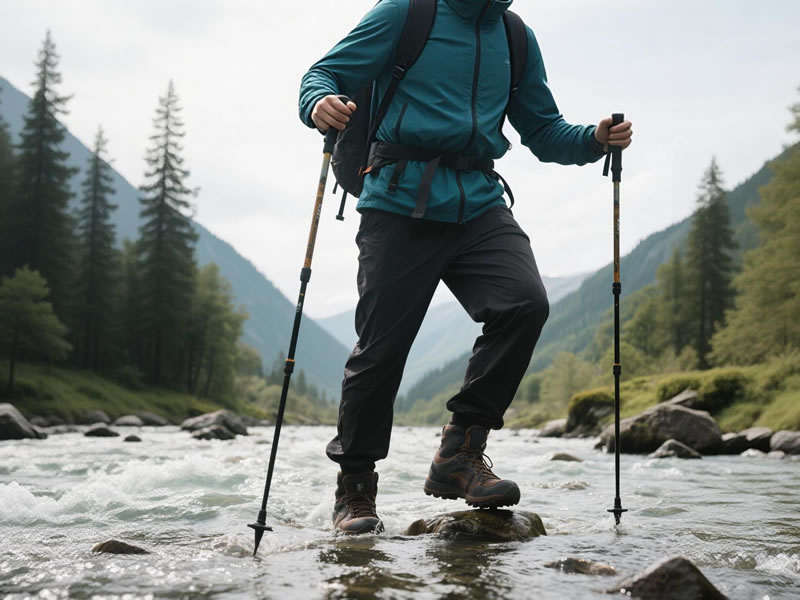
Recommended trekking pole purchase link: https://s.click.aliexpress.com/e/_c4M7OWaN
Preparation: Before You Get Your Feet Wet
- Scout the Best Crossing Point: Never just step into the water. Walk upstream and downstream to find the widest, shallowest section. A wider river is often slower and shallower. Look for sandbars or riffles that indicate shallower water. Avoid areas above waterfalls or log jams.
- Assess the Current: Watch the speed of the water. Is it moving fast enough to sweep you off your feet? Throw a large stick into the current to gauge its speed and see how it flows.
- Unbuckle Your Backpack: This is a critical safety step. Unbuckle your backpack's waist belt and sternum strap. If you fall, you need to be able to shed your pack quickly to avoid being pinned underwater by its weight.
- Choose Your Footwear: The debate is eternal, but for stability, crossing in your hiking boots is often safest. The grip protects you from slippery rocks. You can change into dry socks and shoes/sandals on the other side.
The Crossing Technique: A Step-by-Step Guide
Your goal is to maintain three points of contact with the riverbed at all times.
- Face Upstream: Position yourself facing diagonally across the river, leaning slightly into the current. This improves your stability against the flow.
- Plant Your Poles Ahead: Place both trekking poles firmly on the riverbed slightly upstream and ahead of you. Test the bottom—is it rocky, sandy, or slick? Use the poles to probe for a solid footing.
- The "Tripod" Method: With your poles securely planted, you have created a stable, three-point base (two poles + one foot). Now, carefully move one foot to a new position. Once that foot is secure, move your poles forward, and then your other foot.
- Move Deliberately: Take slow, shuffling steps. Do not cross your feet. Slide them along the bottom to maintain balance. Always keep two feet and one pole, or two poles and one foot, firmly planted.
- Use a Diagonal Path: Move diagonally downstream as you cross. Fighting the current head-on to go straight across requires more energy and is less stable.
Advanced Tips and Crucial Safety Warnings
- Never Cross Alone: A group of three or more, linked arm-in-arm or using a pole as a shared brace, is far more stable. The strongest member should be positioned upstream to break the current.
- Depth is a Key Factor: If the water is deeper than your knees, the risk increases exponentially. If it's above your thighs, strongly consider turning back. The force of the water is immense.
- Listen to Your Instincts: If you feel unsure or terrified, do not cross. Your anxiety will affect your balance and decision-making. There is no shame in turning around.
- What If You Fall? If you are swept off your feet, do not try to stand up. Your feet could get trapped between rocks. Immediately point your feet downstream and use your arms to backstroke towards the shore.
Conclusion
Trekking poles are invaluable for transforming a hazardous river crossing into a controlled, manageable task. By prioritizing preparation, using the "three points of contact" technique, and respecting the power of moving water, you can navigate these natural obstacles safely. Remember, the goal is not just to reach the other side, but to do so without incident, ready to enjoy the rest of your adventure.




