




Are Two Poles Better Than One? The Science Behind Balanced Trekking
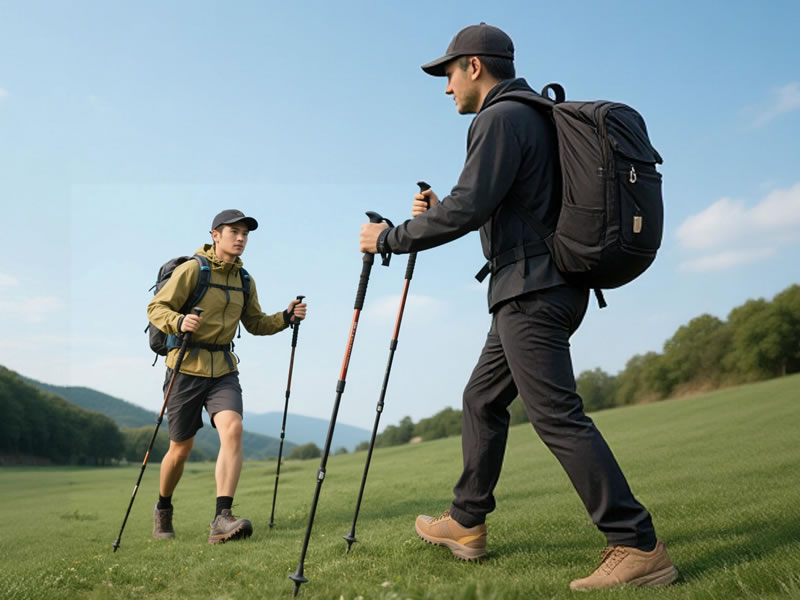
The sight of hikers with two trekking poles has become commonplace on trails worldwide, but many outdoor enthusiasts still wonder if this setup is truly necessary. Is doubling your poles simply following a trend, or does it offer genuine advantages over the traditional single walking stick approach? The answer, supported by biomechanical research and practical experience, reveals that while there are specific situations where one pole suffices, two poles generally provide superior benefits for most hikers and terrain types. This comprehensive analysis will explore the science, benefits, and practical considerations to help you make an informed decision about your trekking pole setup.
Recommended trekking pole purchase link: https://s.click.aliexpress.com/e/_c4M7OWaN
The Biomechanical Advantage: Why Two Poles Create Efficiency
Using two poles transforms hiking from a primarily lower-body activity into a full-body workout with significant mechanical advantages:
- Rhythmic Movement Pattern: Two poles establish a natural contralateral rhythm (right pole with left foot, left pole with right foot) that mirrors our innate walking pattern. This synchronization creates a fluid, efficient motion that can increase walking speed and reduce perceived exertion.
- Weight Distribution: Research shows that properly using two poles can redistribute up to 25% of your body weight from your lower to upper body during each step. This dramatically reduces cumulative impact on knees, hips, and ankles, particularly during descents where joint loading can exceed twice your body weight.
- Continuous Stability: With two poles, you maintain at least three points of contact with the ground at all times, creating a stable tripod base. This constant stability is especially valuable on uneven terrain where balance challenges occur unpredictably.
Quantifiable Benefits of Using Two Poles
The advantages of bilateral pole use extend beyond simple balance:
- Increased Caloric Expenditure: Studies indicate that using two poles can elevate energy expenditure by 20-50% compared to regular walking at the same speed, transforming your hike into a more comprehensive workout.
- Enhanced Endurance: By distributing workload across more muscle groups, two poles delay fatigue in your legs, potentially extending your hiking range by reducing localized muscle exhaustion.
- Improved Posture: Dual poles encourage an upright torso position, reducing the forward lean that often develops under a heavy backpack and helping to prevent back and shoulder strain.
- Superior Traction: On steep ascents, pushing down through both poles provides additional propulsion, while on descents they function as controllable brakes.
When One Pole Makes Sense: Practical Exceptions
Despite the clear advantages of two poles, specific scenarios may warrant using just one:
- Photography-Focused Hikes: When frequently stopping to take pictures, managing one pole is significantly easier while allowing some stability between shots.
- Simple Trail Navigation: On well-maintained, flat trails with minimal obstacles, a single pole may provide sufficient support without the encumbrance of two.
- One-Handed Tasks: Hikes requiring frequent map consultation, snack breaks, or dog handling might be more practically managed with one pole.
- Transition Period: New pole users sometimes start with one pole to adapt to the technique before progressing to two.
Technical Terrain: Where Two Poles Shine
The superiority of two poles becomes most apparent in challenging conditions:
- Stream Crossings: Two poles provide crucial stability in moving water where slippery rocks and strong currents demand multiple anchor points.
- Loose Scree and Steep Descents: The ability to plant both poles ahead carefully controls descent speed and prevents sliding on unstable surfaces.
- Heavy Backpacks: Under significant load, two poles offer the stability needed to maintain balance when fatigue sets in or when adjusting gear on the move.
- Injury Management: Two poles can effectively offload weight from an injured lower limb, potentially enabling a safe return to trailhead when an evacuation isn't necessary.
The Learning Curve: Mastering Two-Pole Technique
Many hikers who dismiss two poles as unnecessary haven't developed proper technique. Effective two-pole use requires:
- Proper Strap Adjustment: Ensuring straps transfer weight to your wrists rather than requiring tight gripping.
- Rhythm Development: Learning the natural pole planting sequence that matches your gait.
- Length Adjustment: Understanding how to modify pole length for ascending, descending, and flat terrain.
- Situational Awareness: Knowing when to shorten your grip in tight spaces or extend poles for specific obstacles.
Making Your Decision: Key Considerations
When choosing between one or two poles, consider these factors:
- Primary Hiking Terrain: Technical, uneven trails justify two poles more than paved paths or smooth dirt tracks.
- Physical Condition: Existing joint issues, particularly in knees or hips, may make the joint-sparing benefits of two poles more valuable.
- Trip Objectives: Fitness-focused hikers may prefer the full-body workout of two poles, while casual walkers might prioritize simplicity.
- Personal Preference: Some hikers simply feel more comfortable and natural with a single pole, and forced use of two may detract from their enjoyment.
Conclusion: Embracing Balanced Support
For the majority of hikers across most terrain types, the evidence strongly supports using two poles rather than one. The bilateral support system offers measurable advantages in safety, efficiency, and physiological benefits that extend beyond what a single pole can provide. While there are legitimate situations where one pole may be preferable, these represent the exception rather than the rule for serious trekking. The initial adjustment period for learning two-pole technique is a worthwhile investment that pays dividends in enhanced stability, reduced fatigue, and decreased joint impact. Ultimately, the question isn't whether two poles are better than one, but rather why you would choose to forego the significant benefits of balanced support system that could enhance both your performance and enjoyment on the trail.




