




Trekking Poles vs Walking Stick: Choosing Your Trail Companion
The age-old question of whether to use trekking poles or a traditional walking stick continues to spark debate among outdoor enthusiasts. While both serve the fundamental purpose of providing stability on uneven ground, they represent fundamentally different approaches to hiking support. The choice between modern engineering and traditional simplicity isn't merely aesthetic—it significantly impacts your safety, efficiency, and comfort on the trail. This in-depth analysis will explore the key differences, advantages, and limitations of each option to help you select the perfect trail companion for your specific needs.
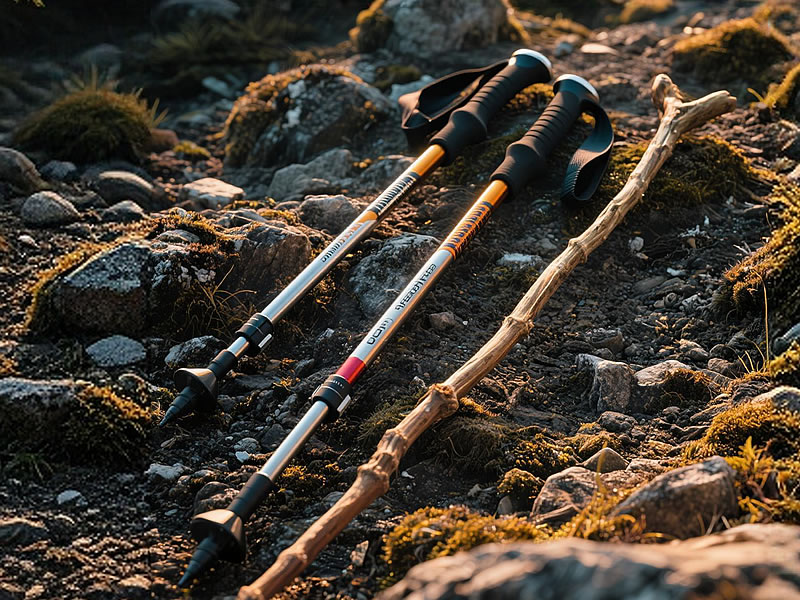
Recommended trekking pole purchase link: https://s.click.aliexpress.com/e/_c4M7OWaN
Understanding the Fundamental Differences
At first glance, both tools might seem interchangeable, but their designs reveal distinct philosophies:
Walking Stick:
- Typically a single, fixed-length staff
- Often made from natural wood or simple manufactured materials
- Functions as a third point of contact
- Focuses on basic stability and rhythm
Trekking Poles:
- Usually used in pairs with adjustable lengths
- Engineered from lightweight aluminum or carbon fiber
- Feature ergonomic grips, wrist straps, and often shock absorption
- Designed for efficient power transfer and weight distribution
Technical Advantages of Trekking Poles
Modern trekking poles offer several engineered benefits that extend beyond simple stability:
- Bilateral Support and Rhythm: Using two poles creates a natural, quadrupedal rhythm that engages your upper body and core muscles. This contralateral movement pattern (right pole with left foot) enhances balance and creates a more efficient walking motion.
- Joint Impact Reduction: Research demonstrates that proper use of trekking poles can reduce forces on knees by up to 25%, particularly during descents. This makes them invaluable for hikers with existing joint issues or those carrying heavy loads.
- Adjustable Performance: The ability to quickly adjust pole length allows optimization for different terrain—shorter for ascents, longer for descents, and customized for your height on flat ground.
- Enhanced Safety Features: Most trekking poles include:Interchangeable tips for various surfacesSnow baskets for winter useShock absorption for reducing arm fatigueQuick-release wrist straps for emergency situations
- Increased Caloric Burn: Studies show that using trekking poles can increase energy expenditure by 20-50% compared to regular walking, effectively turning a hike into a full-body workout.
The Case for the Traditional Walking Stick
Despite the technical advantages of trekking poles, walking sticks maintain several compelling benefits:
- Simplicity and Reliability: With no moving parts to malfunction, a well-made walking stick offers dependable performance in all conditions without mechanical failure concerns.
- Natural Connection: Many hikers appreciate the organic feel of wood and the connection to hiking traditions that span generations.
- Versatile Tool: Beyond stability, a sturdy walking stick can serve as:A probe for testing water depth or unstable groundA tool for moving vegetation or debrisA temporary support for tarps or equipment
- Minimalist Approach: For those who prefer traveling light on well-maintained trails, a single stick provides adequate support without the complexity of multiple components.
- Cost Effectiveness: Quality walking sticks are generally more affordable than technical trekking poles, making them accessible to casual hikers.
Scenario-Based Recommendations
Choose Trekking Poles When:
- Tackling technical terrain with significant elevation changes
- Carrying a heavy backpack (20+ pounds)
- Managing existing knee, hip, or balance issues
- Hiking in variable conditions requiring different tip types
- Maximizing workout efficiency and full-body engagement
- Navigating stream crossings or unstable surfaces
Choose a Walking Stick When:
- Enjoying gentle, well-maintained trails
- Preferring a traditional hiking experience
- Wanting a simple, reliable tool without mechanical components
- Seeking multi-purpose functionality beyond mere support
- Hiking in dry conditions without need for special tips
- Operating with a limited budget
The Compromise Solution: Hybrid Approaches
Many experienced hikers find value in both tools and employ them situationally:
- Seasonal Strategy: Using trekking poles for challenging summer hikes and a walking stick for casual winter walks
- Progressive Approach: Starting with a walking stick on easy trails and progressing to trekking poles for more demanding adventures
- Combo Method: Some hikers even use one trekking pole and one walking stick, though this requires adaptation to the different handling characteristics
Health and Biomechanical Considerations
Your physical condition should significantly influence your choice:
- Balance Issues: Two poles provide superior stability for those with vestibular or balance concerns
- Upper Body Strength: Trekking poles build arm, shoulder, and core strength more effectively
- Joint Preservation: The bilateral support of trekking poles significantly reduces cumulative impact on lower joints
- Rehabilitation: Physical therapists often recommend trekking poles for graduated return to activity after lower body injuries
Making Your Decision: Key Questions to Consider
Before purchasing either option, ask yourself:
- What types of terrain will I most frequently encounter?
- Do I have any existing physical limitations or joint concerns?
- How important is weight savings and packability?
- What's my budget for this purchase?
- Am I technically inclined or do I prefer simplicity?
- Will I primarily day hike or undertake multi-day adventures?
Conclusion: Matching Tool to Terrain and Tradition
The trekking poles vs walking stick debate ultimately resolves to personal preference matched with practical necessity. Trekking poles offer scientifically-proven advantages for technical terrain, heavy loads, and joint protection, representing the evolution of hiking aids through material science and biomechanical research. Walking sticks provide timeless simplicity, tradition, and versatile functionality that continues to serve hikers well on moderate trails.
Rather than declaring a universal winner, the wisest approach recognizes that both tools have their place in a hiker's arsenal. Your choice should reflect your typical terrain, physical needs, and personal hiking philosophy. Many outdoor enthusiasts eventually own both, selecting their tool based on the specific demands of each journey. Whether you choose the engineered efficiency of modern trekking poles or the elemental appeal of a traditional walking stick, what matters most is that your chosen support enhances your connection to the trail and the natural world you've ventured out to explore.




