




Walking Poles for a Herniated Disc: A Comprehensive Guide to Pain Management and Mobility
Living with a herniated disc can transform simple activities like walking into challenging exercises in pain management. While rest and medical treatments form the cornerstone of recovery, many physical therapists and rehabilitation specialists now recommend walking poles as a valuable tool for managing symptoms and promoting healing. When used correctly, trekking poles can significantly reduce spinal compression, improve stability, and help maintain mobility during recovery. This comprehensive guide explores the science behind walking poles for disc health, proper usage techniques, and important considerations for integrating poles into your rehabilitation routine.
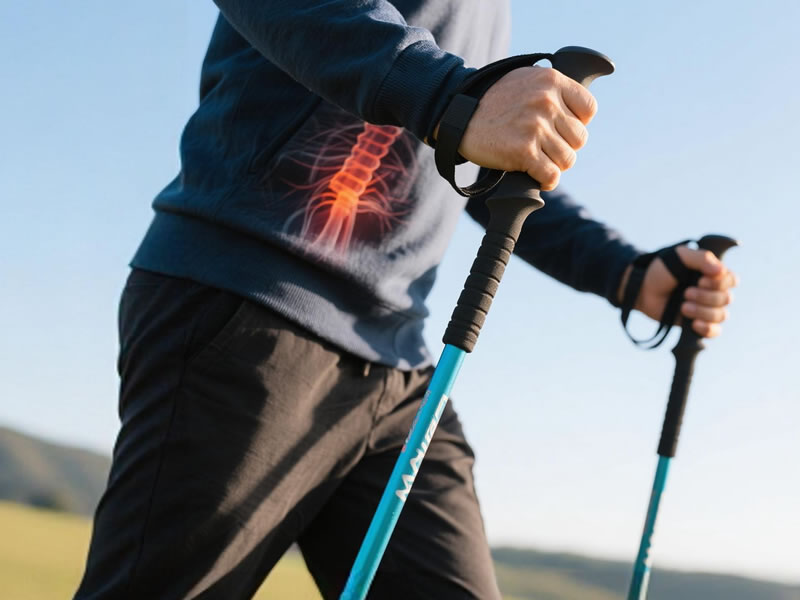
Recommended trekking pole purchase link: https://s.click.aliexpress.com/e/_c4M7OWaN
Understanding How Walking Poles Support Spinal Health
A herniated disc occurs when the soft inner material of a spinal disc bulges out through a tear in the tougher exterior, often pressing on nerves and causing pain, numbness, or weakness. Traditional walking can exacerbate this condition through repetitive impact and spinal loading. Walking poles address this problem through several mechanisms:
- Weight Distribution: Research shows that using walking poles can redistribute up to 25% of your body weight from your lower body to your upper body. This significantly reduces the compressive forces on the lumbar spine with each step, creating a more favorable environment for disc healing.
- Impact Reduction: The poles act as additional shock absorbers, dampening the forces that would normally travel up through your legs and into your spine. This is particularly beneficial on hard surfaces where ground reaction forces are highest.
- Improved Postural Alignment: Herniated discs often cause protective muscle guarding and abnormal movement patterns. Walking poles encourage a more upright posture, reducing the forward flexion that increases pressure on anterior disc regions.
- Enhanced Core Stability: The rhythmic use of poles engages core muscles more effectively than regular walking, providing natural bracing for the spine without the stiffness that can come from conscious core tightening.
The Evidence: What Research Reveals
Several studies support the use of walking poles for spinal conditions:
- A 2017 study in the Journal of Physical Therapy Science found that Nordic walking significantly reduced pain and improved functional ability in patients with chronic low back pain
- Research published in Clinical Biomechanics demonstrated that pole use reduced compressive forces on the lumbar spine during incline walking
- Multiple studies have shown that the contralateral movement pattern (right pole with left foot) promotes natural spinal rotation and discourages the protective stiffening that often accompanies back pain
Consultation and Professional Guidance
Before incorporating walking poles into your routine:
- Medical Clearance: Consult with your physician, physical therapist, or orthopedic specialist to ensure pole walking is appropriate for your specific condition and stage of healing.
- Physical Therapy Integration: Ask your physical therapist to demonstrate proper technique tailored to your limitations. Many therapists now incorporate poling into rehabilitation programs.
- Progressive Approach: Start with short, flat walks and gradually increase duration and intensity based on your tolerance and medical guidance.
Selecting the Right Equipment
Choosing appropriate poles is crucial for spinal safety:
- Adjustable Poles: Essential for finding the perfect height to maintain optimal posture without bending or reaching
- Shock Absorption: Consider poles with built-in shock absorbers for additional impact reduction
- Comfortable Grips: Ergonomically designed grips reduce hand strain and encourage proper technique
- Appropriate Length: When holding poles with tips on the ground, your elbows should form approximately 90-degree angles
Proper Technique for Spinal Protection
Mastering correct form is essential for therapeutic benefit:
- Postural Foundation: Begin standing tall with your shoulders relaxed back and down, chest open, and head balanced naturally.
- The Planting Motion: Plant the pole at a comfortable angle beside you, not too far forward. The motion should originate from your shoulder, not your elbow.
- Natural Rhythm: Establish a natural opposite arm/leg rhythm (right pole with left foot). This promotes normal spinal rotation and gait mechanics.
- Moderate Pressure: Apply enough pressure through the poles to unweight your spine but avoid leaning heavily on them, which can cause shoulder strain.
- Smooth Transitions: Focus on smooth pole plants and releases rather than jarring stabs at the ground.
Specific Techniques for Different Terrains
- Flat Ground: Use a natural arm swing with gentle pole plants to maintain rhythm and reduce cumulative spinal loading
- Inclines: Shorten poles slightly and use more deliberate planting to assist with propulsion without forward flexion
- Declines: Lengthen poles slightly to provide support as you lower yourself with control, minimizing compressive impact on the discs
Common Mistakes to Avoid
- Overstriding: Taking steps that are too long can increase pelvic rotation and shear forces on the spine
- Poor Posture: Allowing yourself to hunch over the poles defeats their postural benefits
- Excessive Grip Force: Gripping too tightly can create tension that travels up to the neck and shoulders
- Incorrect Pole Length: Poles that are too long or short will compromise your posture and biomechanics
Developing a Therapeutic Walking Program
A structured approach yields the best results:
- Frequency: Start with 2-3 sessions per week, gradually increasing as tolerated
- Duration: Begin with 10-15 minute walks and slowly extend time as your endurance improves
- Intensity: Focus on comfortable, conversational pace rather than speed or distance
- Progression: Gradually incorporate varied terrain and slight increases in pace as your symptoms allow
Complementary Strategies for Comprehensive Management
While walking poles can be highly beneficial, they work best as part of a comprehensive approach:
- Core Strengthening: Continue with prescribed core stabilization exercises
- Flexibility Maintenance: Incorporate gentle stretching as recommended by your healthcare provider
- Weight Management: Combine pole walking with appropriate nutrition for optimal disc health
- Activity Modification: Learn proper body mechanics for daily activities to support your spinal recovery
When to Exercise Caution
While walking poles help many people with herniated discs, certain situations require extra caution:
- Acute Inflammation: During periods of severe pain and inflammation, rest may be more appropriate than walking
- Neurological Symptoms: If you experience increasing weakness, numbness, or tingling, consult your physician immediately
- Balance Issues: If your disc condition affects your balance, ensure you have adequate support and supervision when first using poles
Conclusion: A Step Toward Better Spinal Health
Walking poles offer a practical, accessible approach to maintaining mobility while managing herniated disc symptoms. By reducing spinal compression, improving posture, and providing stability, they can serve as valuable tools in your recovery arsenal. However, they're not a substitute for professional medical care and should be used as part of a comprehensive treatment plan under appropriate supervision. When used correctly and consistently, walking poles can help you stay active during recovery, build confidence in your movement abilities, and contribute to long-term spinal health. Remember that healing from a herniated disc is a process, and walking poles can be your supportive companions on that journey back to comfortable, pain-free movement.




