




How to Pack Walking Poles for Air Travel: The Complete Guide
Navigating airline regulations with trekking poles can be confusing and stressful. Will security confiscate them? Should you check them or carry them on? How do you ensure they arrive undamaged? These questions trouble many travelers before outdoor adventures. The truth is that with proper knowledge and preparation, you can safely transport your walking poles by air. This comprehensive guide covers everything from understanding airline policies to practical packing techniques that will protect your equipment and ensure smooth travels.
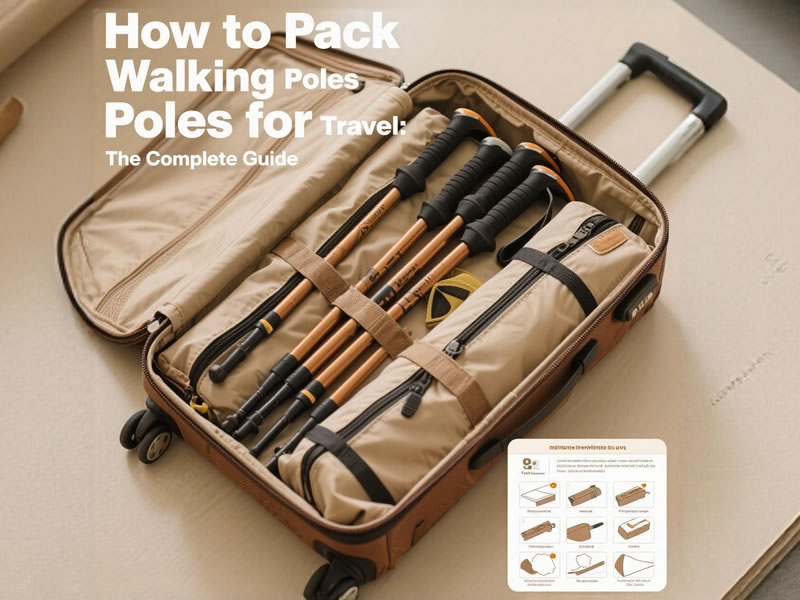
Recommended trekking pole purchase link: https://s.click.aliexpress.com/e/_c4M7OWaN
Understanding Airline Policies: The Critical First Step
Airline regulations regarding trekking poles vary significantly, making research your most important preparation:
Carry-On Limitations:
- Most major airlines, including Delta, American, and United, prohibit traditional trekking poles in carry-on luggage
- The Transportation Security Administration (TSA) and European counterparts classify poles as "potential weapons"
- Some airlines may make exceptions for mobility aids with proper documentation
- Always check your specific airline's website 24-48 hours before departure for policy updates
Checked Baggage Acceptance:
- Virtually all airlines permit trekking poles in checked luggage
- Some budget airlines may charge extra sports equipment fees
- International carriers may have unique restrictions worth verifying in advance
Regional Variations:
- European airlines tend to have stricter carry-on policies than US carriers
- Some Asian and South American airlines may be more lenient, but don't assume this
- Domestic flights within mountainous countries (Switzerland, Nepal) sometimes allow poles as carry-ons
Choosing the Right Poles for Air Travel
Your pole type significantly impacts packing ease:
Folding (Z-Poles) Advantages:
- Collapse to compact 12-16 inch bundles
- Fit easily into suitcases or attach externally to packs
- No external mechanisms that can snag or break
- Generally more airline-friendly
Telescopic Pole Considerations:
- Choose models that collapse to their shortest length
- Three-section poles typically pack smaller than two-section designs
- Ensure locking mechanisms are secure to prevent in-transit extension
Material Matters:
- Carbon fiber poles are lighter but more fragile—require careful packing
- Aluminum poles are more durable but heavier, increasing baggage weight
Step-by-Step Packing Methods
Method 1: Checked Luggage Internal Packing (Safest)
- Collapse Completely: Ensure poles are at their shortest length
- Protect Tips: Cover carbide tips with rubber protectors or wrap in bubble wrap
- Cushioning: Place poles along your suitcase's length, surrounded by clothing
- Reinforcement: Position poles against the suitcase's frame rather than in the middle
- Secure: Use packing cubes or compression straps to prevent shifting
Method 2: Backpack Attachment (For Adventure Travel)
- External Storage: Use your backpack's compression straps or dedicated pole attachments
- Tip Protection: Ensure sharp tips are covered and pointing downward
- Security Check: Test that poles won't loosen during baggage handling
- Balance: Distribute weight evenly if carrying multiple external items
Method 3: Dedicated Pole Case (For Expensive Equipment)
- Hard Case Investment: Provides maximum protection for premium poles
- Organization: Many cases include compartments for tips, baskets, and tools
- Identification: Clearly label the case with contact information
Carry-On Strategies (When Possible)
While most airlines prohibit poles in cabins, these strategies sometimes work:
Discreet Approaches:
- Ultra-compact folding poles stored diagonally in your backpack
- Separating pole sections among different bags
- Using backpacking packs with integrated pole storage systems
Documentation for Medical Needs:
- Obtain a doctor's note if poles serve as mobility aids
- Contact airline accessibility services in advance
- Be prepared for additional screening
Pre-Flight Preparation Checklist
24 Hours Before Flight:
- Verify your airline's current pole policy
- Weigh your bag with poles to avoid overweight fees
- Take photos of your poles for insurance purposes
- Remove any worn components that might fail during transport
At the Airport:
- Have your pole policy research readily accessible on your phone
- Be polite and flexible if agents request pole checking
- Consider gate-checking as a compromise if available
- Keep essential components (rubber tips, tools) in your carry-on
International Travel Considerations
Country-Specific Regulations:
- Research destination country's import rules for sports equipment
- Some countries tax high-value equipment brought across borders
- Verify return flight policies, which may differ from departure regulations
Language Preparation:
- Learn key phrases like "hiking poles" in local languages
- Have airline policy screenshots in the local language
- Know how to politely explain your equipment's purpose
Protective Measures and Damage Prevention
Essential Precautions:
- Tip Protection: Always cover sharp carbide tips with rubber protectors
- Shaft Protection: Use foam pipe insulation or padded wraps for carbon fiber
- Mechanism Care: Loosen twist locks slightly during transit to preserve spring tension
- Component Security: Tape small parts together or store in separate bags
DIY Protection Ideas:
- Create tip protectors from plastic bottles and duct tape
- Use pool noodles or foam tubing for shaft protection
- Sew a simple fabric sleeve for added scratch protection
Alternative Solutions
Rental Options:
- Research pole rental at your destination
- Many popular hiking areas offer quality equipment rentals
- Cost-effective for occasional travelers
Shipping Ahead:
- Ship poles to your hotel or first destination
- Provides certainty but requires advanced planning
- Compare costs against airline baggage fees
Local Purchase:
- Consider buying inexpensive poles at your destination
- Donate or resell before returning home
- Eliminates transport hassles entirely
Post-Flight Inspection and Assembly
Upon Arrival:
- Immediately inspect poles for damage before leaving baggage claim
- Report any issues to airline staff immediately with documentation
- Test extension mechanisms and locks before hitting the trail
- Replace any lost components using your spare parts kit
Conclusion: Stress-Free Pole Travel
Successfully packing walking poles for air travel requires research, preparation, and flexibility. By understanding airline policies, choosing appropriate equipment, and implementing careful packing strategies, you can ensure your poles arrive ready for adventure. Remember that checked baggage remains the most reliable option, while creative solutions may occasionally work for carry-on transport. The peace of mind that comes from proper preparation lets you focus on what truly matters—the incredible experiences awaiting at your destination. With these strategies, you're equipped to navigate airport logistics confidently, ensuring your trusted trail companions are there when you need them most.




