




Walking Poles for Dog Walking: The Ultimate Guide to Safer, More Enjoyable Walks
Dog walking seems simple enough—until you're being pulled by an excited Labrador, navigating icy sidewalks with a senior dog, or trying to manage multiple leashes simultaneously. Increasingly, dog owners are discovering what hikers have known for years: walking poles provide stability, security, and comfort that transforms daily walks. Whether you have a powerful puller, a reactive dog, or simply want to make your walks more comfortable, walking poles offer surprising benefits for both human and canine companions. This comprehensive guide explores how to safely integrate poles into your dog walking routine for more enjoyable adventures together.
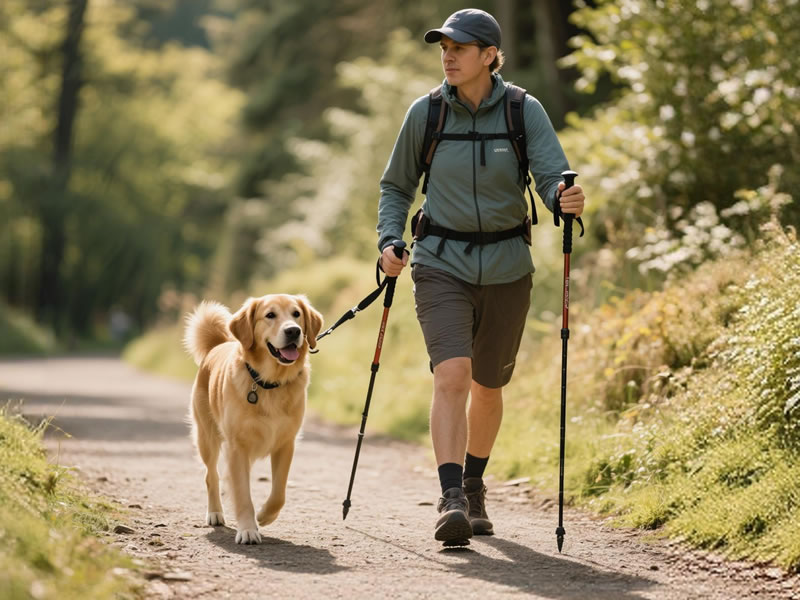
Recommended trekking pole purchase link: https://s.click.aliexpress.com/e/_c4M7OWaN
The Benefits: Why Poles Make Dog Walking Better
Enhanced Stability and Safety:
- Sudden Movement Protection: When dogs lunge after squirrels or react to other dogs, poles provide instant stability, preventing falls and reducing strain on your joints.
- Uneven Terrain Confidence: Icy paths, muddy trails, and uneven sidewalks become more manageable with the additional points of contact poles provide.
- Balance for All Ages: Senior dog owners particularly benefit from the added stability during walks with sometimes-unpredictable canine companions.
Training and Behavior Applications:
- Consistent Pacing: The rhythmic nature of pole walking helps establish a steady walking tempo that can calm anxious dogs and discourage pulling.
- Distance Maintenance: Poles naturally create space between you and your dog, helpful for managing reactivity or simply establishing better walking manners.
- Non-Verbal Communication: The sound and visual presence of poles can serve as subtle cues to help guide your dog's position and pace.
Physical Advantages:
- Reduced Joint Impact: Transferring some weight to your poles reduces stress on knees, hips, and back—especially valuable during long walks or when managing a strong puller.
- Improved Posture: Poles encourage upright posture, counteracting the tendency to lean forward against a pulling dog.
- Full-Body Workout: While your dog gets their exercise, you engage your upper body and core muscles, turning a simple dog walk into a comprehensive fitness session.
Choosing the Right Equipment
Pole Selection Criteria:
- Quick-Release Straps: Essential for quickly freeing your hands to manage leashes, pick up waste, or handle emergencies.
- Shock Absorption: Valuable for reducing impact on joints, particularly when walking powerful dogs on hard surfaces.
- Adjustable Length: Allows customization for different terrains and whether you're walking on flat surfaces or hills.
- Durable Tips: Carbide tips provide reliability on trails, while rubber tips are essential for pavement walking.
Leash Management Solutions:
- Hands-Free Leash Systems: Waist-attached leashes work exceptionally well with poles, allowing natural arm movement.
- Leash Attachment Accessories: Specialized clips can attach leashes to pole straps or shafts, though this requires training and caution.
- Traditional Leash Holding: With practice, many users comfortably hold both leash and pole in the same hand.
Training Your Dog to Walk with Poles
Introduction Process:
- Familiarization Without Movement: Let your dog investigate the poles while they're stationary, rewarding calm behavior.
- Static Practice: Hold poles while standing still with your dog on leash, rewarding them for maintaining position.
- Short Trial Walks: Begin with brief walks in low-distraction environments, gradually increasing duration and complexity.
Addressing Common Concerns:
- Startle Responses: If your dog is initially wary of the poles' motion, use high-value treats to create positive associations.
- Leash Tangling: Practice clear pole movements and consistent dog positioning to minimize entanglement risks.
- Space Management: Teach your dog to maintain position on one side rather than weaving around the poles.
Technique Mastery for Combined Use
Proper Pole Positioning:
- Maintain a natural arm swing while keeping poles slightly wider than usual to avoid interfering with your dog's movement.
- Plant poles at an angle that doesn't encroach on your dog's walking space.
- Develop awareness of your pole tips' location relative to your dog's position.
Leash Management Techniques:
- Dual Grip Method: Hold both leash and pole grip together in one hand, maintaining separate control of the other pole.
- Strap Integration: Loop the leash around your wrist strap for temporary security while maintaining pole control.
- Alternating Attention: Learn to smoothly transition attention between pole placement and dog management.
Specific Scenario Applications
For Strong Pullers:
- Use poles to anchor yourself against sudden pulls
- The additional stability provides confidence to practice loose-leash walking techniques
- Poles allow you to maintain better posture rather than being dragged forward
For Senior Dogs:
- Provides support for both aging dog and owner
- Allows assistance for your dog on difficult sections without compromising your balance
- Makes gentle elevation changes more manageable for arthritic dogs
For Reactive Dogs:
- Creates natural personal space boundaries
- Provides stability during reactive episodes
- Helps maintain calm, upright body language rather than tense leash responses
For Multiple Dogs:
- Enables better management of several leashes simultaneously
- Provides stability when dogs move in different directions
- Allows for clearer positioning cues for each dog
Safety Considerations and Precautions
Priority Safety Rules:
- Always prioritize leash control over pole use—be prepared to drop a pole if necessary for dog management.
- Maintain awareness of pole tips to avoid accidental contact with your dog.
- Use rubber tips on hard surfaces to prevent slipping and reduce noise that might startle your dog.
- Practice emergency procedures, such as quickly securing poles to manage dog-related incidents.
Environmental Awareness:
- Crowded Areas: Collapse poles in tight spaces to avoid interfering with other people or dogs.
- Dog Interactions: Be prepared to quickly secure poles when meeting other dogs to prevent territorial responses or accidents.
- Wildlife Encounters: Poles can provide additional security during unexpected wildlife encounters on trails.
Advanced Techniques and Applications
Trail-Specific Strategies:
- Use poles to test footing before allowing your dog to proceed on questionable terrain.
- Create a "blocking position" with poles to prevent your dog from approaching hazardous areas.
- Employ poles for additional leverage when assisting your dog over obstacles.
Weather Adaptations:
- Icy Conditions: Specialized ice tips provide security for both you and your dog on slippery surfaces.
- Muddy Trails: Wider baskets prevent sinking in soft ground, making muddy walks more comfortable.
- Hot Pavement: Rubber tips protect both pole tips and surfaces while providing secure traction.
Common Challenges and Solutions
Pole Anxiety:
- If your dog fears the poles, begin with them collapsed and gradually introduce movement
- Pair pole presentation with high-value treats
- Progress at your dog's pace, never forcing interaction
Coordination Difficulties:
- Practice without your dog first to build muscle memory
- Start in open areas without distractions
- Use a waist leash initially to free both hands for poles
Equipment Conflicts:
- Choose poles with simple designs that minimize snagging risks
- Consider shorter poles for better maneuverability in tight spaces
- Use brightly colored poles to increase visibility to your dog
Conclusion: A Worthwhile Investment for Dog Owners
Walking poles represent more than just hiking equipment for dog owners—they're tools that can significantly enhance safety, comfort, and enjoyment during daily walks. The learning curve is modest compared to the substantial benefits: improved stability, better posture, reduced joint impact, and enhanced walking control. Whether you're managing a powerful puller, navigating challenging terrain with an aging companion, or simply seeking to make your walks more comfortable and efficient, walking poles offer a practical solution.
Like any new skill, successful integration requires patience and practice. Start with short sessions in familiar environments, gradually building both your confidence and your dog's comfort. The result—safer, more enjoyable walks that benefit both human and canine—makes the effort unquestionably worthwhile. In the partnership between person and dog, walking poles can become the third component that makes every adventure more secure and pleasurable for everyone involved.




